


Energy Investment Bank
Table of Contents
Comprehensive Energy Investment Banking Services
Zaidwood Capital serves as a comprehensive energy investment bank, delivering Full-Cycle M&A advisory, capital formation, and project finance. For an introduction to the role of an investment bank, see what is an investment bank.
Our renewable energy M&A advisory and energy infrastructure project finance services support both conventional and renewable energy sectors, including oil & gas, solar, wind, and energy storage. We also arrange capital formation through debt and equity placements. Our processes follow SIFMA industry standards for securities transactions.
As an energy investment bank, we differentiate through Sovereign Data Nexus market intelligence and Precision Catalyst AI-driven matching, underpinned by Financial Services 3.0. We use the Velocity Matrix for rapid execution; securities are offered through Finalis Securities LLC.
1. Full-Cycle M&A Advisory
As a boutique energy investment bank, our full-cycle M&A advisory is the cornerstone of our investment banking services for the energy sector. We guide clients through the entire transaction lifecycle from initial strategy to final integration, delivering transformative outcomes for companies in renewable energy M&A advisory and energy infrastructure project finance.
Our approach spans strategic planning, target sourcing, valuation, due diligence, negotiation, deal structuring, closing, and post-merger integration.
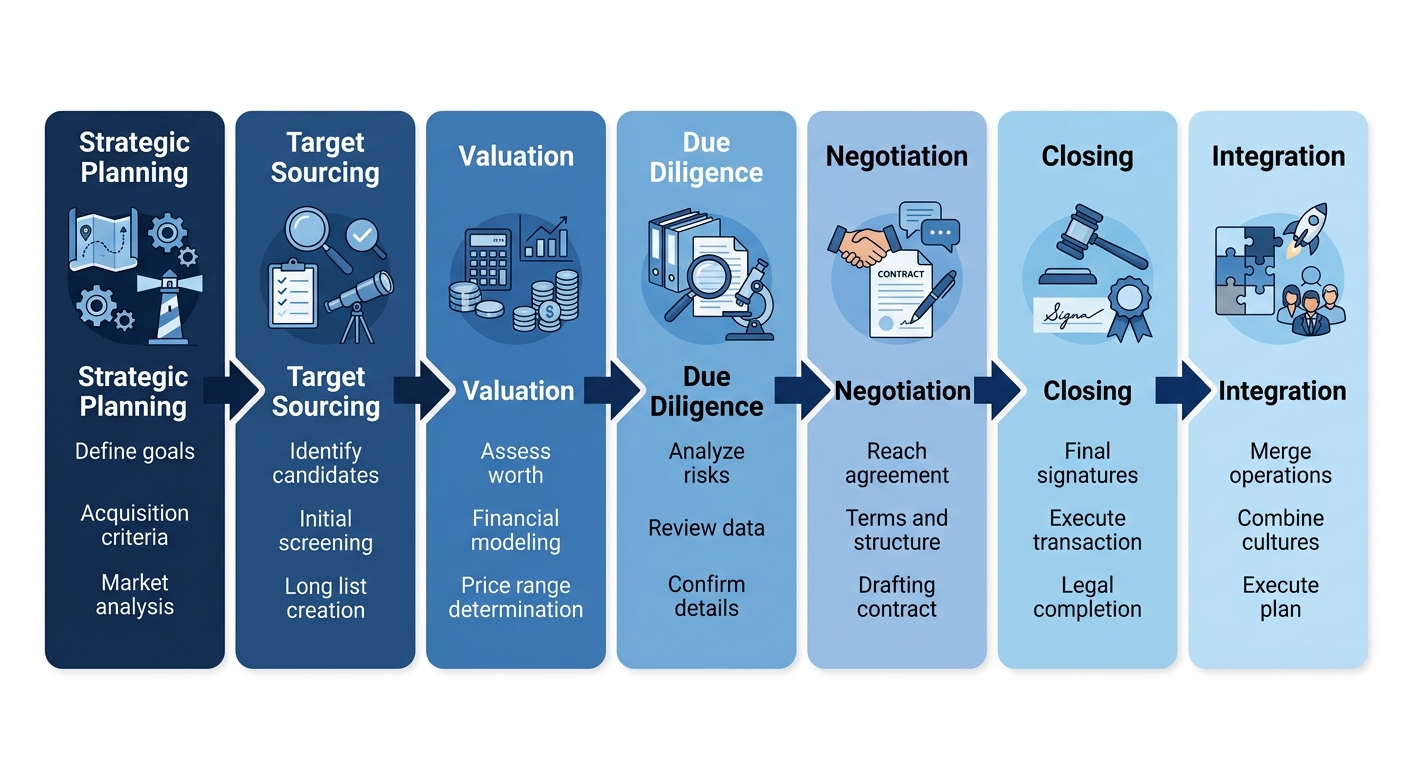
Visualizing the seven stages of full-cycle M&A advisory
Each stage is enhanced by our proprietary data platform, Sovereign Data Nexus, which provides actionable market intelligence, while Precision Catalyst’s AI engine matches sellers with the most aligned investors from our 4,000+ institutional network. SIFMA data confirms that sophisticated energy deals benefit from the embedded intelligence of platforms like Sovereign Data Nexus. For energy infrastructure project finance, this technology-enabled rigor ensures that complex deals receive the precision and speed required.
Backed by a network of over 4,000 institutional investors and the Velocity Matrix execution framework, we compress deal timelines while delivering superior outcomes for middle-market energy companies. Beyond M&A, our capital formation services offer complementary funding solutions. Securities offered through Finalis Securities LLC; Zaidwood Capital is not a registered broker-dealer.
2. Growth-Stage Capital Formation
Growth-stage capital formation describes the process of raising equity or debt financing for companies that have moved beyond seed stage and are actively scaling operations. As an energy investment bank, Zaidwood Capital helps founders and CFOs of growth-stage energy companies navigate this critical phase with tailored capital solutions.
Common instruments include private placements, growth equity, mezzanine debt, and project finance–each suited to the capital-intensive nature of energy projects. As a Oil And Gas Investment Bank, we structure capital raises that align with expansion goals, drawing on our proprietary platforms Sovereign Data Nexus for data-driven investor matchmaking and Precision Catalyst for digital engagement. Our Boutique M&A and Capital Advisory Firm delivers full-cycle support from valuation and term sheet negotiation to close. The team provides renewable energy M&A advisory for clean-infrastructure developers and deep expertise in energy infrastructure project finance, covering both conventional oil and gas and next-generation renewable assets.
We connect clients with a curated network of over 4,000 investors and $15B+ in committed capital, always emphasizing that capital formation involves risk and requires rigorous due diligence. Expert advisory helps growth-stage energy companies minimize execution risk and position themselves for sustainable expansion.
3. Specialized Energy Expertise
While our full-cycle M&A advisory serves multiple industries, we bring deep specialization to the energy sector. As a Boutique M&A and Capital Advisory Firm, our Energy Mergers And Acquisitions Advisory provides full-cycle support from sell-side preparation to post-merger integration. In the energy investment bank landscape, boutique firms like ours deliver hands-on, data-driven execution.
We advise on transactions ranging from $10 million to $500 million in enterprise value, spanning conventional oil and gas upstream/midstream and renewables–including solar, wind, and battery storage. Our renewable energy M&A advisory capabilities extend to project finance and growth equity, ensuring a holistic approach.
Powered by the Sovereign Data Nexus platform, we capture real-time energy market data to pinpoint valuation and timing. The Precision Catalyst engine matches clients with over 4,000 institutional investors who command $15B+ in committed capital, while our Velocity Matrix framework accelerates transaction timelines by 30-40%. For energy infrastructure project finance, we structure capital solutions that align with long-term asset lifecycles.
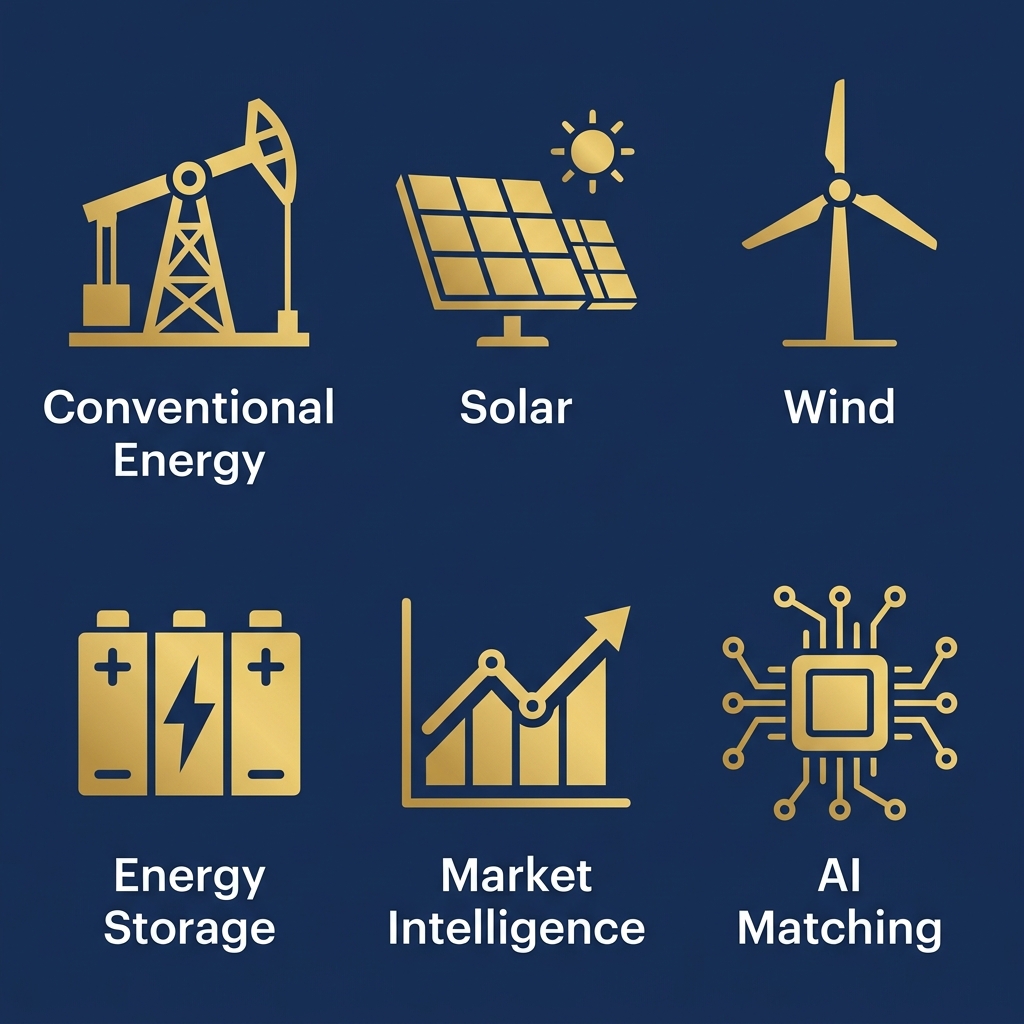
Specialized energy expertise icons for Zaidwood Capital
This integrated approach ensures that every engagement taps the deep institutional network essential for closing energy deals.
4. Asset Valuation Methodology
Valuation is foundational to any M&A transaction. As an energy investment bank, we apply a rigorous methodology combining income, market, and asset-based approaches with proprietary data insights.
The income approach (DCF and earnings multiples) is central to renewable energy M&A advisory, projecting cash flows from long-term contracts. The market approach benchmarks against comparable companies and precedent transactions. The asset-based approach, often used in energy infrastructure project finance, values physical assets net of depreciation.
Sovereign Data Nexus supplies real-time sector benchmarks; Precision Catalyst AI refines discount rates and growth assumptions. The Velocity Matrix aligns the timeline with deal pace without compromising rigor. For tech mergers and acquisitions, where intangible assets and rapid growth projections demand specialized modeling, we leverage these tools to capture value.
All valuations are estimates based on current data. Synthesizing these methods yields a defensible range that strengthens negotiation and risk management. With a sound valuation in hand, we proceed to execute the transaction.
5. Partner Selection Criteria
When selecting an energy investment bank, companies must apply a disciplined evaluation framework. The right partner ensures regulatory integrity, deep sector knowledge, and reliable transaction execution.
Key selection criteria include:
- Regulatory compliance: Confirm that any broker-dealer partner holds active FINRA membership–a credential overseen by the Financial Industry Regulatory Authority (FINRA) for securities transactions.
- Sector specialization: Prioritize a firm with a demonstrated track record in renewable energy M&A advisory and energy infrastructure project finance.
- Deal-execution capability: Evaluate the volume and success rate of closed energy M&A deals–a history of full-cycle execution signals process discipline.
- Investor network depth: Assess access to institutional capital; a partner with a network of 4,000+ investors and strong energy relationships is more effective.
- Valuation and structuring expertise: Confirm the partner offers robust business valuation and can structure equity, debt, or asset-based instruments for energy projects.
Applying these criteria will help identify an advisor aligned with your strategic and financial goals, which we discuss in the next section.
6. Renewable Energy M&A Strategy
Whereas conventional M&A targets EBITDA synergies, renewable energy transactions require specialized regulatory and valuation expertise. As an energy investment bank in West Palm Beach, our boutique M&A and capital advisory firm applies its Full-Cycle M&A model to this capital-intensive sector.
Our renewable energy M&A advisory rests on three strategic pillars:
- Regulatory intelligence via Sovereign Data Nexus deciphers policy incentives, permitting requirements, and interconnection queue positions.
- AI-driven investor matchmaking through Precision Catalyst aligns clean-energy assets with our network of 4,000+ institutional investors for acquisition financing and growth equity.
- Capital-structure optimization blends energy infrastructure project finance and tax-equity structures to maximize returns while mitigating risk.
Unlike traditional EBITDA-focused valuations, we target project pipelines, Power Purchase Agreements, and tax-equity structures. For a solar portfolio acquisition, we combine project-finance modeling with our data platform to identify hidden value in PPA terms. With $15B+ in committed capital from our investor network, we have the financial bandwidth to structure deals at scale.
This framework illustrates how the Velocity Matrix accelerates execution across clean-energy deals, positioning us for other evolving industries. All investments carry risk; we do not guarantee any particular outcome.
7. Infrastructure Project Finance
Within the energy investment bank ecosystem, infrastructure project finance funds large-scale energy and renewable projects by relying on future cash flows rather than corporate balance sheets. As a technology investment bank, we bring data-driven execution to these complex transactions.
The typical structure uses a special purpose vehicle (SPV) that isolates risk and secures debt from project lenders, complemented by equity from sponsors or institutional investors. This ring-fenced approach enables lenders to rely on project cash flows, the cornerstone of energy project finance. Our advisory harnesses the Velocity Matrix for rapid execution and Precision Catalyst for AI-driven investor matching, accessing over 4,000 investors and more than $15 billion in committed capital. For renewable energy M&A advisory, we integrate project finance with M&A execution to structure acquisitions and recapitalizations. Sovereign Data Nexus enriches our analysis with real-time market data, strengthening our clients’ positions.
Our energy infrastructure project finance expertise spans wind, solar, and battery storage assets, providing a disciplined approach to capital formation. Beyond project finance, our advisory services extend to full-cycle M&A and growth equity. Investments in infrastructure projects involve risk and are not guaranteed.
8. Due Diligence and Market Trends
As an energy investment bank dedicated to advisory, Zaidwood Capital combines data-driven due diligence with market trend analysis to support clients across the full M&A lifecycle. Our proprietary platform, the Sovereign Data Nexus, aggregates and analyzes energy asset and infrastructure data, providing a robust foundation for evaluating risks and value drivers. Complementing this, the Precision Catalyst employs AI-driven analytics to surface emerging opportunities in energy infrastructure project finance, enabling us to identify early-stage trends before they become mainstream.
We monitor evolving dynamics in renewable energy M&A advisory, continuously assessing regulatory shifts, capital flows, and technology advancements. This ongoing analysis–not a one-time step–feeds directly into transaction structuring and risk mitigation. By differentiating our advisory approach from that of a registered broker-dealer, we deliver independent insights that reduce uncertainty without claiming to eliminate it.
Through our due diligence process, we surface the market signals that shape every transaction phase. These actionable insights inform our final recommendations, bridging the gap between analysis and execution.
Achieving Strategic Outcomes with an Energy Investment Bank
Building on our energy-sector specialization, we act as an energy investment bank headquartered in West Palm Beach, Florida, helping clients nationwide achieve strategic outcomes. We advise on renewable energy M&A advisory and energy infrastructure project finance. Our proprietary data platform Sovereign Data Nexus and AI-driven investor matchmaking engine Precision Catalyst enable precise targeting of the right capital sources for energy-sector transactions. Through our Velocity Matrix full-cycle approach and a network of over 4,000 institutional investors with access to more than $15 billion in committed capital, we help energy companies secure growth capital; all securities are offered through Finalis Securities LLC, a FINRA member. We deliver capital access, market positioning, and long-term growth for renewable energy firms, achieving strategic outcomes without guaranteed results. These outcomes are illustrated in our recent engagements below.
Resources


