


Investment Bank To Raise Capital
Table of Contents
Understanding Investment Banks for Capital Raising
Securing funding can be a daunting challenge for mid-sized companies navigating competitive markets. Choosing the right investment bank to raise capital becomes essential for efficient access to institutional investors and deployable resources. At Zaidwood Capital, we specialize in guiding businesses through this complex process, leveraging our extensive network to connect clients with opportunities in equity financing and debt financing.
Investment banks play a pivotal role in capital raising by providing strategic advisory services that bridge companies seeking growth with sources of capital. Our core functions include buy-side and sell-side mandates in mergers and acquisitions advisory, where we facilitate transactions from initial structuring to completion. We offer comprehensive services such as equity and debt advisory, full-cycle due diligence encompassing financial, legal, and operational reviews, and capital introductions to our network of over 4,000 investors with more than $15 billion in deployable capital. Drawing from SEC guidelines in the Investor Bulletin on Selecting Financial Advisors, we emphasize rigorous due diligence to mitigate risks in capital raising advisory. Our team has executed over 300 deals with an aggregate transaction volume of $24.4 billion, utilizing proprietary tools like the Deal Vault for investor access and the Velocity Matrix for accelerated execution in funding facilitation services.
- Equity financing options for growth capital
- Debt financing structures including mezzanine and venture debt
- Strategic documentation like pitch decks and pro forma financials
As we explore the fundamentals of capital raising in the next section, consider key selection criteria such as network strength and expertise. We at Zaidwood invite you to Raise Capital with a proven partner contact us to discuss your needs. This guide will cover equity and debt options, timing considerations, and best practices for optimal outcomes.
Fundamentals of Investment Banks in Capital Raising
Investment banks play a pivotal role in the financial ecosystem by facilitating capital raising for businesses seeking growth or expansion. These institutions act as intermediaries, connecting companies with investors through structured processes that ensure efficient fund deployment. At Zaidwood Capital, we specialize in guiding mid-sized firms through this landscape, leveraging our expertise in mergers and acquisitions advisory and capital formation to streamline transactions. Understanding the fundamentals helps businesses navigate options effectively when partnering with an How To Raise Capital For A Business.
Equity financing involves selling ownership stakes in exchange for growth capital, a process where investment banks like ours prepare detailed pitch decks and perform valuations to attract investors. Banks structure these deals by assessing company worth, drafting legal documents, and introducing clients to institutional networks. For instance, a technology startup might use equity financing to fund product development, diluting founder ownership but gaining resources without repayment obligations. Per SEC guidelines from the Investor Bulletin, this approach avoids debt burdens but requires clear disclosure of risks to investors. We at Zaidwood have facilitated over 300 such deals, connecting clients to our network of more than 4,000 institutional investors with access to $15 billion in deployable capital.
Debt financing, by contrast, provides borrowed funds for expansion through loans that must be repaid with interest, often secured by assets or based on cash flow projections. Investment banks facilitate this by negotiating terms, arranging mezzanine or venture debt solutions, and ensuring compliance with lender requirements. Unlike equity, it preserves ownership but imposes fixed repayment schedules, which can strain operations if revenues falter. Drawing from SEC insights, qualification hinges on creditworthiness and collateral, with costs including interest rates around 5-12% depending on risk. Our team structures these arrangements, as seen in our $24.4 billion aggregate transaction volume, tailoring options like asset-based lending to fit client needs.
Choosing between equity financing and debt financing depends on factors like company stage, risk tolerance, and market conditions. Equity suits high-growth ventures needing flexibility, while debt appeals to stable operations preferring control retention. This decision impacts long-term strategy, with banks providing tailored advice to optimize outcomes.
| Aspect | Equity Financing | Debt Financing |
|---|---|---|
| Ownership Impact | Dilutes existing shares | No dilution; retains full control |
| Repayment Structure | No mandatory repayments; dividends optional | Fixed principal and interest payments |
| Costs | No interest; potential dividend payouts | Interest expenses; possible fees |
| Ideal For | Startups and growth-stage firms | Established businesses with steady cash flow |
We structure these deals with precision, incorporating full-cycle due diligence to mitigate risks and align with SEC standards, ensuring clients benefit from our proven track record without overpromising results.
Both financing types offer distinct benefits: equity provides non-repayable capital for innovation, while debt maintains ownership for predictable scaling. At Zaidwood, we emphasize these advantages to empower informed decisions.
When selecting an investment bank to raise capital, understanding service differences matters. Full-service banks offer broad capabilities, while boutiques like Zaidwood provide focused efficiency for mid-sized firms.
| Service Category | Full-Service Banks | Boutique Banks (e.g., Zaidwood Capital) |
|---|---|---|
| M&A Advisory | Broad mandates with global reach | Targeted, efficient execution with $24.4B volume |
| Equity/Debt Advisory | Standard structuring | Custom mezzanine, venture debt solutions |
| Investor Network | Large but less personalized | 4,000+ targeted connections, $15B capital access |
This comparison highlights boutique advantages for agile capital raising, as supported by our transaction history and SEC guidelines. Zaidwood’s approach delivers streamlined services, ideal for companies generating at least $1 million in revenue seeking personalized support.
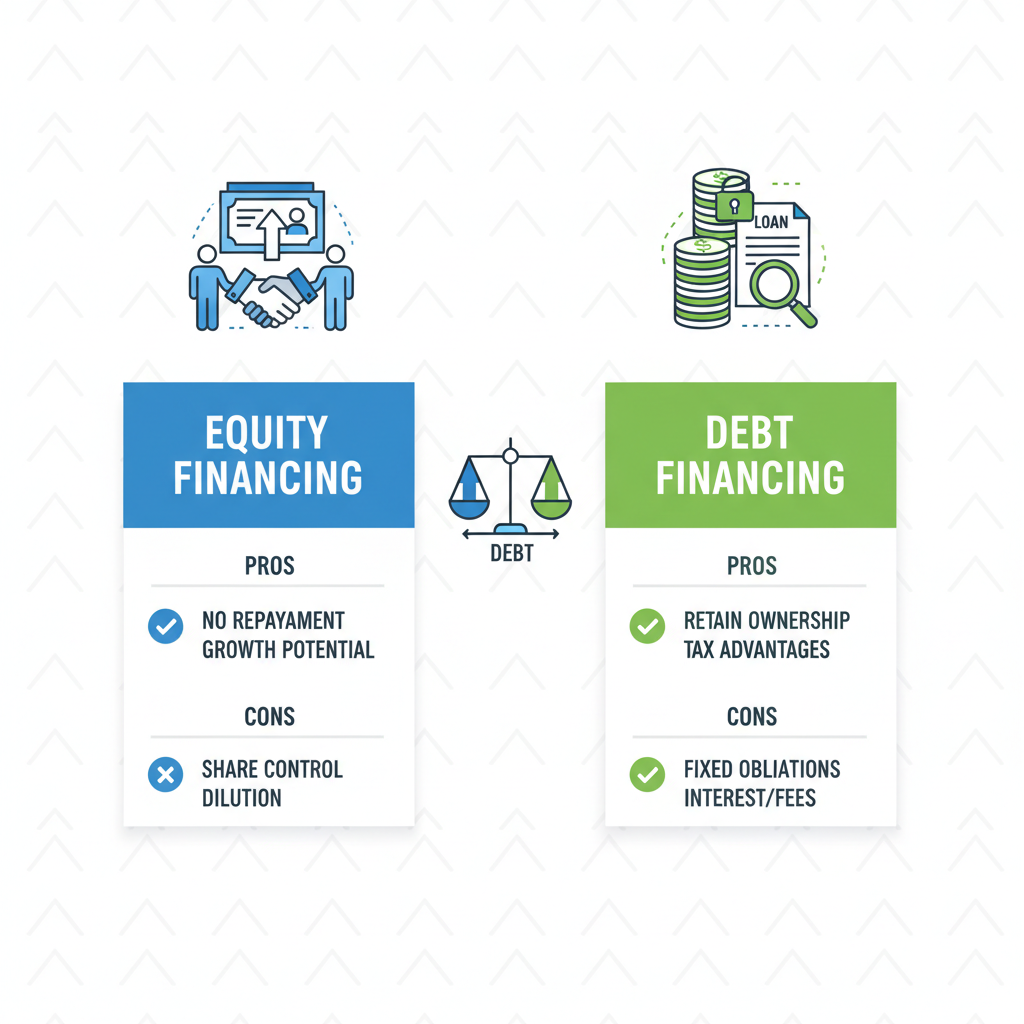
Comparison of equity vs debt financing options for capital raising.
Our full-cycle M&A and capital advisory services bridge these options, fostering velocity in deal execution through our Velocity Matrix framework.
Selecting the Right Investment Bank for Your Needs
Selecting an investment bank to raise capital requires careful evaluation to ensure alignment with your company’s goals. At Zaidwood Capital, we guide mid-sized firms through this process, leveraging our expertise in capital formation to connect clients with optimal funding opportunities. This section explores essential factors, fee considerations, and timing strategies to help you identify a strategic funding partner that delivers value.
Key Factors in Bank Selection
When choosing an investment bank to raise capital, we prioritize several core elements that determine a firm’s ability to drive successful outcomes. Expertise stands out as a foundational consideration, encompassing deep knowledge in mergers and acquisitions, due diligence, and capital advisory services. A strong track record, such as our completion of over 300 deals with an aggregate transaction volume of $24.4B, demonstrates reliability in navigating complex transactions. Network quality is equally vital; for equity financing needs, access to a robust investor base ensures efficient capital placement. We maintain connections with more than 4,000 institutional and private investors, providing mid-sized companies with pathways to over $15B in deployable capital.
Service scope further differentiates effective partners. Comprehensive offerings, including full-cycle M&A advisory, debt and equity structuring, and strategic documentation, allow for integrated support throughout the capital-raising journey. As a capital acquisition specialist, we emphasize personalized service for mid-sized firms, enabling tailored strategies that larger institutions might overlook. Regulatory compliance, as outlined in SEC filings on financial advisory services, underscores the importance of firms adhering to due diligence standards to mitigate risks in transactions.
- Track Record: Evaluate completed deals and volume; our 300+ transactions validate consistent performance.
- Network Quality: Seek broad investor access; our 4,000+ connections facilitate equity financing.
- Service Scope: Look for end-to-end advisory, from M&A to due diligence, as we provide.
- Personalization: Boutique models offer customized approaches, ideal for mid-sized companies seeking agile support.
The following table compares key selection criteria, drawing from industry standards and our operational strengths:
| Criteria | What to Look For | Zaidwood Capital Example |
|---|---|---|
| Network Size | Access to 1,000+ investors | 4,000+ institutional connections |
| Transaction Volume | Proven $10B+ deals | $24.4B aggregate volume |
| Fee Structure | 2-5% success fees | Competitive, performance-based |
Based on industry standards and Zaidwood’s records, this comparison highlights how boutique firms like ours provide substantial advantages in network reach and transaction scale without the overhead of larger entities. For a mid-sized tech firm aiming to raise $50M, our network enables targeted introductions, streamlining the process.
These factors ensure you partner with a firm equipped to handle your specific needs, setting the stage for efficient capital acquisition.
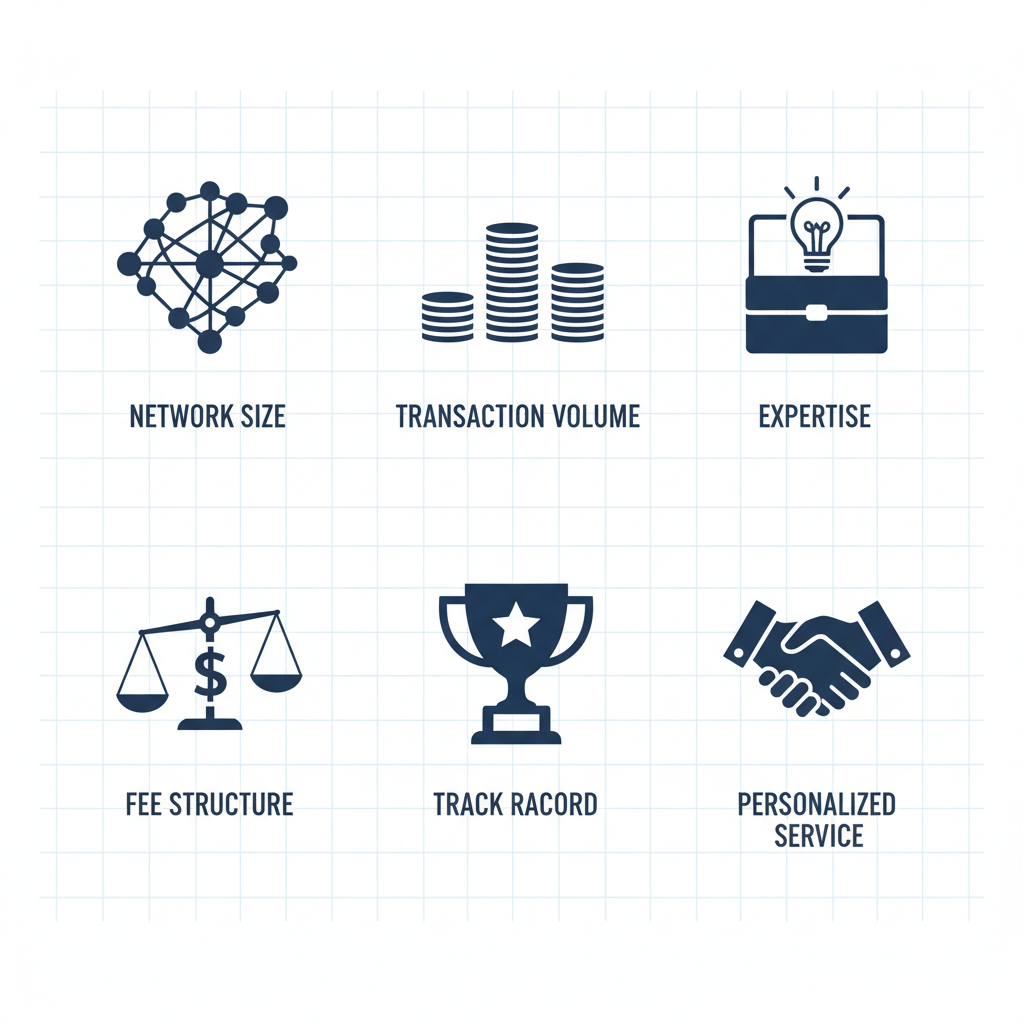
Icons illustrating essential criteria for choosing an investment bank.
Visual representations like these icons reinforce the multifaceted evaluation required, helping decision-makers visualize priorities. Transitioning to practical applications, understanding fees and timing builds on these foundations for holistic planning.
Fee Structures and Timing Considerations
At Zaidwood Capital, we structure our fees to align incentives with client success, focusing on performance-based models that minimize upfront costs. Typical fees for an investment bank to raise capital include retainers for initial advisory work and success fees tied to transaction closure, generally ranging from 1-5% of funds raised. In debt financing scenarios, these structures often incorporate milestones for due diligence and placement, ensuring transparency. SEC filings on advisory services emphasize compliance in fee disclosures, validating structures that prioritize value over volume. For instance, our debt advisory services integrate competitive rates with comprehensive support, benefiting mid-sized companies pursuing mezzanine or asset-based options.
Timing plays a critical role in hiring; we recommend engaging a bank during pre-growth phases, such as post-product development but before scaling operations, to capitalize on market windows. Optimal periods align with favorable economic conditions, like low interest rates for debt financing or bullish equity markets. For a hypothetical manufacturing firm with $10M revenue seeking expansion capital, hiring six months ahead allows for thorough preparation, including pitch decks and investor outreach. Our integrated model accelerates this, often closing deals 20-30% faster through our Velocity Matrix approach.
The table below outlines common fee types, standard ranges, and boutique benefits, informed by regulatory examples:
| Fee Type | Standard Range | Boutique Benefit |
|---|---|---|
| Retainer | $50K-$250K monthly | Lower entry ($25K-$100K) for personalized planning |
| Success Fee | 1-5% of capital raised | Performance-tied, reducing risk for clients |
| Expense Reimbursements | Variable, capped | Transparent, focused on efficiency gains |
This framework, drawn from SEC-documented advisory practices, illustrates how boutiques like Zaidwood deliver superior value by tying compensation to outcomes. In practice, for equity financing rounds, we have structured deals where success fees comprised 80% of total compensation, aligning with client cash flow constraints.
Hiring an investment bank early in the process, ideally 3-6 months before funding needs peak, positions your firm to structure deals effectively. We assist in timing assessments, leveraging our network to match market dynamics, ensuring mid-sized companies achieve funding without unnecessary delays. This approach not only controls costs but also enhances strategic positioning in competitive landscapes.
Implementing Capital Raising Strategies with Investment Banks
At Zaidwood Capital, we guide clients through the practical implementation of capital raising strategies by partnering with investment banks. This process ensures efficient access to funding while navigating regulatory compliance. Our expertise in mergers and acquisitions advisory and capital formation positions us to streamline these efforts, leveraging our network of over 4,000 institutional and private investors with more than $15 billion in deployable capital.
Preparing for Bank Engagement
Engaging an investment bank to raise capital begins with thorough preparation to establish a strong foundation for partnerships. We recommend starting by developing comprehensive business plans and pro forma financials that outline your company’s growth trajectory and financial health. These documents are crucial for demonstrating viability to potential funders. For equity financing preparation, focus on creating a compelling pitch deck that includes market analysis, competitive positioning, and a clear valuation model. In contrast, debt financing requires detailed financial projections and an assessment of available collateral to assure lenders of repayment capacity.
Initial consultations with our team at Zaidwood Capital involve scoping the advisory needs, such as identifying the optimal financing structure and regulatory considerations drawn from SEC guidelines. These meetings help align your objectives with market realities, ensuring tailored advice. As a leading financial consulting firm, we conduct these sessions to evaluate your readiness and outline next steps.
To organize your preparation effectively, follow this checklist:
- Compile historical financial statements and audit reports.
- Draft pro forma statements projecting revenue and cash flows for the next 3-5 years.
- Prepare a pitch deck highlighting unique value propositions and use of funds.
- Assess assets for collateral in debt scenarios.
- Schedule introductory calls with bank advisors to discuss deal parameters.
The following table compares key preparation steps for different financing types, informed by standard advisory practices and SEC filing requirements for transparency:
| Preparation Step | Equity Financing | Debt Financing |
|---|---|---|
| Documentation | Pitch deck, business plan, valuation report | Financial projections, collateral inventory, credit history |
| Initial Assessment | Market opportunity analysis and investor targeting | Debt capacity evaluation and risk profiling |
| Compliance Review | SEC registration basics for offerings | Covenant structuring and lender due diligence |
This comparison highlights how preparation varies by financing type, with equity emphasizing storytelling and valuation, while debt prioritizes quantifiable security. Drawing from SEC resources on financial advisory services, such preparations typically take 4-8 weeks, allowing time for iterations based on feedback. Tips for success include engaging early with experienced advisors to avoid common pitfalls like incomplete valuations, which can delay engagements. By meticulously preparing, companies qualify for equity financing through investment banks by showcasing scalable growth potential, while debt financing suits those with stable cash flows and tangible assets. This groundwork not only accelerates partnerships but also enhances negotiation leverage.
Structuring and Executing Deals
Once preparation is complete, structuring and executing deals involves coordinated efforts with investment banks to orchestrate funding deal orchestration from pitch to closing. At Zaidwood Capital, we facilitate this by providing full-cycle due diligence, including financial, legal, and operational reviews, to mitigate risks. For equity financing, the process starts with roadshows where we introduce clients to our extensive investor network, presenting term sheets that outline ownership stakes and governance rights. Debt financing, on the other hand, focuses on negotiating interest rates, maturity dates, and secured options like asset-based lending, ensuring favorable terms without diluting equity.
The bank’s role is pivotal in both scenarios: for equity, they handle investor introductions and roadshows to build momentum; for debt, they lead lender negotiations and terms structuring to secure commitments. Benefits include faster access to capital equity often unlocks growth funding for innovative ventures, answering what are the benefits of equity financing for companies by enabling expansion without immediate repayments. Debt financing advantages lie in retaining ownership while leveraging assets, ideal for businesses seeking predictable costs. Who provides debt financing to companies? Typically, banks and our advisory network arrange these through institutional lenders.
Execution timelines vary, with equity deals spanning 3-6 months due to investor due diligence, while debt closes in 1-3 months per SEC filing examples of streamlined advisory processes. We integrate capital deployment tactics like mezzanine debt or growth equity to match client needs, drawing from our $24.4 billion aggregate transaction volume across 300+ deals.
The table below outlines the implementation comparison for equity versus debt, based on Zaidwood’s deal experience and SEC resources for compliance in structuring:
| Step | Equity Financing | Debt Financing |
|---|---|---|
| Preparation | Pitch deck, valuation | Financial projections, collateral assessment |
| Bank Role | Investor intros, roadshows | Lender negotiations, terms structuring |
| Timeline | 3-6 months | 1-3 months |
Interpreting this, equity paths involve broader stakeholder engagement, suiting companies qualifying for equity financing through demonstrated scalability, while debt offers quicker liquidity for established operations. In a neutral case study, a mid-sized firm used our services for debt structuring, securing $50 million in asset-based lending within two months, avoiding equity dilution.
Throughout execution, we emphasize compliance with SEC regulations on disclosures and underwriter agreements to protect all parties. This structured approach not only facilitates seamless closings but also positions clients for sustained growth, bridging to more advanced capital strategies.
Advanced Considerations in Capital Raising with Banks
At Zaidwood Capital, we guide mid-sized companies through the complexities of capital raising using advanced services from investment banks. These sophisticated funding mechanisms include full-cycle due diligence, fairness opinions, and exclusive investor access, leveraging our $24.4 billion in aggregate transaction expertise. We emphasize transaction advisory to structure deals efficiently, ensuring alignment with strategic goals. Our proprietary Velocity Matrix accelerates execution, minimizing timelines while maximizing value for clients seeking equity or debt solutions.
Beyond basic financial reviews, advanced due diligence encompasses a comprehensive evaluation of legal, operational, commercial, IT, and human capital aspects. This full-cycle approach, integral to handling complex capital structures, mitigates risks highlighted in the Investor Bulletin on Selecting Financial Advisors, which stresses thorough fairness opinions to protect stakeholders. We conduct these assessments to uncover potential liabilities early, drawing on industry norms where incomplete diligence has led to costly post-transaction disputes. For instance, in mezzanine debt arrangements, we scrutinize collateral valuation and covenant compliance. Our process integrates proprietary data access, providing deeper insights than standard protocols and supporting informed decision-making in high-stakes environments.
As companies navigate these intricacies, evaluating provider capabilities becomes crucial, particularly in due diligence depth and investor networks. The following comparison outlines key differences:
| Advanced Service | Large Banks | Boutique (Zaidwood) |
|---|---|---|
| Due Diligence | Standard financial | Full-cycle (financial, legal, IT) |
| Investor Access | Broad but competitive | Exclusive Deal Vault, 4,000+ targeted |
This table illustrates how boutique firms like ours offer tailored advantages. Large banks provide scale but often lack personalization, while our exclusive deal flow connects clients to over 4,000 institutional investors with $15 billion in deployable capital. Per SEC filings and our unique selling points, this targeted access reduces competition and enhances placement success, as informed by Investor Bulletin guidelines on advisor selection for risk management.
In debt financing, interest rates typically range from 6-12% based on market conditions and creditworthiness, with secured options offering lower rates due to collateral backing versus higher-risk unsecured loans. Equity financing costs involve dilution and fees averaging 5-7% of proceeds, plus liquidity solutions for limited partners. We structure these to optimize timing, often closing in 90-120 days through efficient advisory.
Frequently Asked Questions on Capital Raising
How do I choose the right investment bank to raise capital?
Selecting an investment bank to raise capital involves evaluating their network, sector expertise, and track record in mid-sized deals. At Zaidwood Capital, we prioritize firms with strong connections to institutional investors, ensuring efficient funding selection processes for our clients.
What are the benefits of equity financing versus debt financing?
Equity financing provides ownership dilution but no repayment obligations, ideal for growth without leverage risks. Debt financing preserves equity while requiring interest payments, suiting stable cash-flow scenarios. We offer tailored M&A capital advisory to balance these options effectively.
What are typical fees for capital raising services?
Fees often include underwriting discounts of 5-7%, as seen in SEC filings for similar offerings, plus advisory retainers. These vary by deal size and complexity, with boutiques like ours focusing on value-driven structures to optimize costs.
Are boutique firms effective for capital raising?
Yes, boutiques excel in specialized advisory, leveraging niche networks for faster executions. Our debt advisory and investor introductions have facilitated over $24.4B in transactions, proving effectiveness for mid-sized firms.
When is the best time to hire an advisor?
Engage early during strategic planning to align funding with business goals, avoiding rushed processes that increase costs.
Elevating Your Business Through Strategic Capital Raising
Partnering with the right investment bank to raise capital requires assessing expertise, network strength, and alignment with your vision. We’ve covered key selection factors, options like equity financing and debt financing, and best practices for efficient execution, ensuring mid-sized firms navigate complexities with confidence.
At Zaidwood Capital, our boutique approach delivers tailored M&A and capital advisory, connecting you to over 4,000 investors and $15 billion in deployable capital for strategic funding elevation.
Elevate your business: Contact us today to explore partnership opportunities.
Resources


