



What is Series B Funding
Table of Contents
Understanding Series B Funding
At Zaidwood Capital, we often field questions from ambitious founders asking, ‘What is Series B Funding?’ This Series B Funding represents a pivotal moment in a startup’s journey, marking the second major equity financing round following Series A. It shifts focus from initial product validation to aggressive scaling and market expansion, typically attracting institutional series b investors eager to fuel proven concepts.
Series B Funding: The second-stage venture capital round where startups secure growth round financing, usually between $10 million and $50 million, to accelerate operations after demonstrating revenue traction and product-market fit, as outlined in expert guides on startup funding rounds.
Unlike Series A, which emphasizes building a viable product and early customer acquisition, Series B targets companies with established metrics, such as consistent revenue streams and user growth. According to funding lifecycle analyses, these rounds often value startups at higher series b valuation multiples, reflecting reduced risk and greater potential. For instance, companies like Airbnb leveraged Series B to expand globally after initial successes. This stage demands sophisticated strategies to meet investor expectations for scalable operations and efficient capital deployment.
We at Zaidwood Capital guide clients through these transitions with our capital advisory expertise, connecting them to venture networks for optimal outcomes. In the following sections, we delve deeper into the mechanics of Series B preparation and execution.
Fundamentals of Series B Funding
What is Series B Funding? At its core, Series B represents a pivotal growth-stage investment for startups that have validated their product-market fit and are ready to accelerate expansion. We at Zaidwood Capital observe that this round typically follows Series A, where initial traction has been established, and now the focus shifts to scaling operations efficiently. Startups pursuing mid-round financing like this often aim to enter new markets, enhance their product lines, and build robust teams to support rapid growth. Understanding these fundamentals equips entrepreneurs to navigate the funding landscape with confidence, especially as they seek advisory support in capital formation to optimize outcomes.
One of the key evolutions from Series A to Series B lies in the shift from validation to execution. Series A primarily tests ideas and builds minimum viable products, while Series B emphasizes leveraging proven models for broader impact. This progression allows startups to transition from survival mode to strategic dominance, addressing challenges like operational scaling and competitive positioning. According to startup funding reports, such as those referenced in expert guides on funding rounds, this stage demands a refined business strategy backed by tangible metrics.
The following table outlines the core differences between these rounds:
| Aspect | Series A | Series B |
|---|---|---|
| Primary Focus | Product development and market validation | Market expansion and scaling |
| Typical Capital Raised | $2M – $15M | $10M – $50M |
| Key Milestones | MVP launch, initial traction | Revenue growth, team expansion |
| Valuation Drivers | Early market validation and team strength | Scalable business model and revenue metrics |
This comparison highlights how Series B builds on Series A foundations, with higher capital enabling ambitious goals. For startups, these implications underscore the need for strategic planning; pursuing Series B without solid milestones can dilute equity unnecessarily and complicate future rounds. We advise clients to interpret these shifts as opportunities to demonstrate scalability, ensuring alignment with investor priorities for long-term success.
Having achieved product-market fit, startups should pursue Series B when they reach milestones like $1M+ in annual recurring revenue (ARR) and consistent user growth. Timing is critical–typically 18-24 months after Series A–to capitalize on momentum without overextending resources. Typical capital raised ranges from $10M to $50M, as noted in analyses from sources like the Quantic Blog’s expert guide, allowing investments in hiring, marketing, and infrastructure. Series b valuation at this stage often reflects proven traction, with averages around $30M-$100M based on metrics like customer acquisition costs and lifetime value. This influx supports geographic expansion and product diversification, reducing risks associated with stagnant growth.
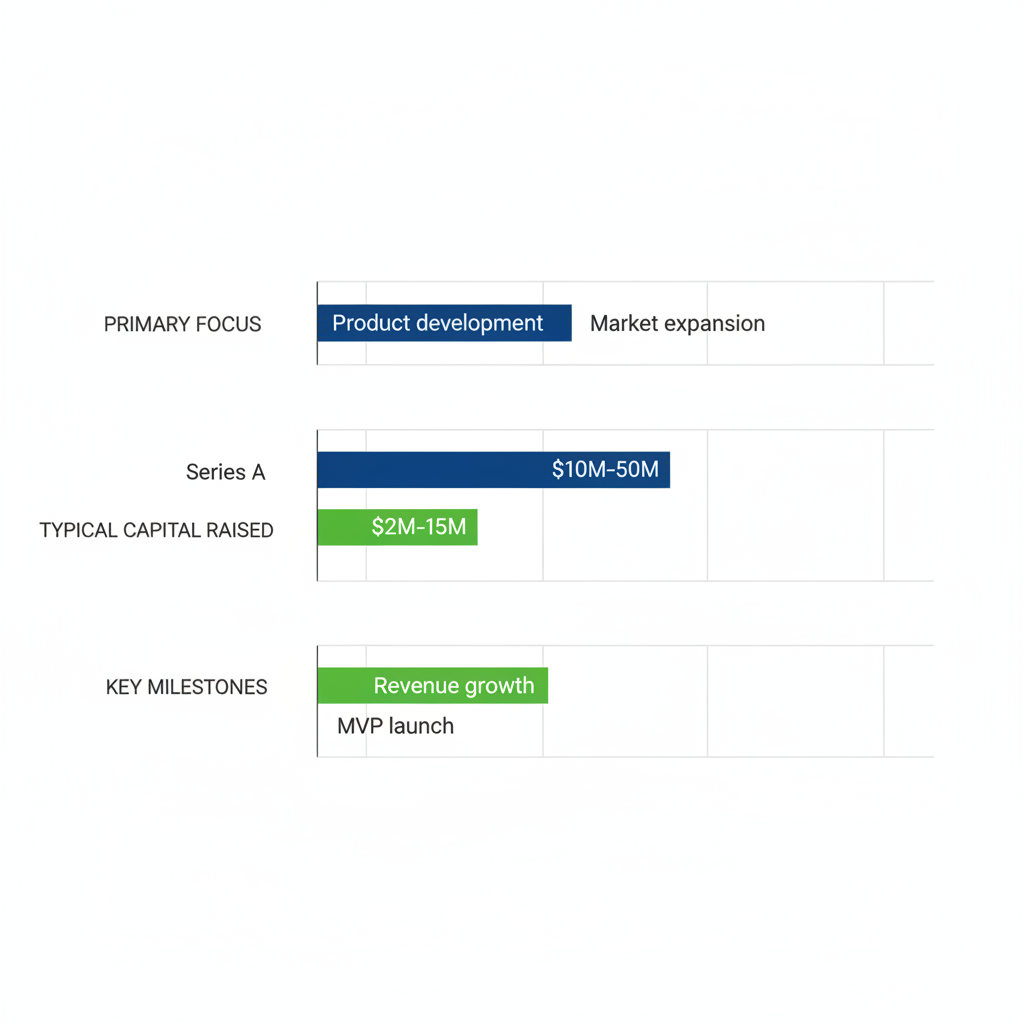
Visual comparison of Series A and Series B funding fundamentals
Investor expectations in Series B evolve toward institutional backers who prioritize data-driven decisions. Series b investors, including venture capital firms and strategic partners, seek evidence of scalable teams and strong unit economics. Equity dilution averages 15-25%, structured to balance founder control with growth needs. At Zaidwood Capital, we facilitate these connections through our network of over 4,000 investors, guiding clients on term sheets and due diligence to secure favorable terms. Successful transitions, as seen in case studies from funding round deep dives, often result from meticulous preparation and alignment with market demands.
Deep Dive into Series B Dynamics
Series B funding represents a pivotal stage where startups transition from early validation to aggressive scaling, often requiring sophisticated support from institutional backers for growth. At Zaidwood Capital, our experience in ma and capital advisory has shown us how this round fuels operational expansion and market penetration, drawing on a network that connects founders to over 4,000 investors managing billions in deployable capital. This deep dive explores the investor landscape and valuation mechanics, equipping founders with insights to navigate these complexities effectively.
Exploring Series B Investors
Typical series b investors at this stage include venture capital firms and private equity groups, each bringing distinct perspectives and resources to fuel scaling. Venture capital firms often target high-growth tech startups with proven product-market fit, expecting 2-3x revenue growth year-over-year to demonstrate scalability. Private equity investors, on the other hand, focus on more mature operations, prioritizing strong governance and consistent cash flows. Our advisory work highlights how these institutional backers for growth seek companies with robust metrics, such as customer acquisition costs below lifetime value and clear paths to profitability.
The investor landscape has evolved, with over 2,000 VC funds managing around $330 billion in assets as of recent reports, underscoring their role in tech innovation. Drawing from regulatory contexts like the Investment Advisers Act, these entities operate under exemptions that allow focused portfolio management, emphasizing high-potential exits through IPOs or acquisitions. Strategies for securing funding, informed by industry analyses, stress tailoring pitches to investor theses–VCs value disruption in sectors like SaaS, while PE favors operational efficiency.
The following table compares profiles of common Series B investor types, based on industry reports, to illustrate their diversity and strategic fit:
| Investor Type | Focus Areas | Typical Check Size | Requirements |
|---|---|---|---|
| Venture Capital Firms | Growth-stage tech, sector-specific scaling | $10M-$30M | Proven metrics, board seats |
| Private Equity | Mature startups, operational maturity | $20M+ | Strong governance |
This comparison reveals how VC firms enable rapid expansion through expertise in tech scaling, whereas PE provides stability for established trajectories. In our network, we’ve seen founders attract these investors by showcasing anonymized traction data, like a SaaS platform achieving 150% ARR growth, leading to successful rounds. To draw interest, emphasize alignment with fund mandates and leverage introductions–our capital advisory services facilitate such connections without promising outcomes. This preparation not only meets criteria but positions startups for sustained growth in competitive markets.
An infographic can further clarify these dynamics:
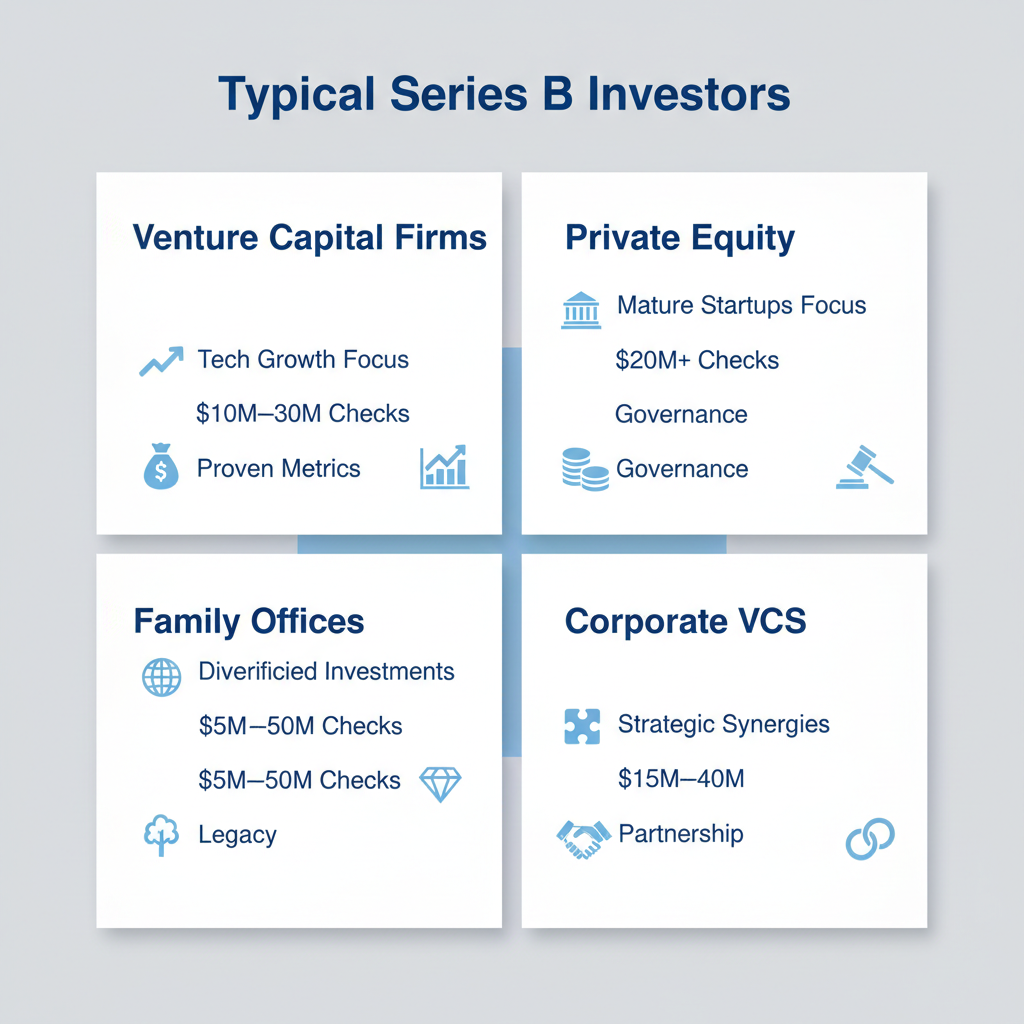
Visual comparison of typical Series B investors for tech funding strategies.
Building on these profiles, understanding investor expectations answers key questions about what series b investors look for in startups: tangible progress and a vision for dominance. Transitioning to valuations, these relationships directly influence funding terms and company worth.
Valuation Considerations in Series B
Determining series b valuation involves applying revenue multiples to annual recurring revenue (ARR) or trailing twelve-month figures, often ranging from 8-15x for high-growth tech firms. This mid-stage pricing dynamics stage assesses not just current numbers but future potential, with investors discounting risks like market saturation. For instance, a startup with $5M ARR at a 10x multiple might secure a $50M pre-money valuation, adjusted for competitive bids and economic conditions.
Key factors include traction metrics, team expertise, and addressable market size–larger TAMs can justify premiums, as seen in sectors like fintech where scalability drives 20% higher multiples per industry data. Regulatory environments, per congressional reports, also play a role by shaping investor confidence through compliance exemptions for VC funds. Our observations from advisory engagements reveal that strong due diligence, covering financial and operational aspects, mitigates valuation haircuts, often adding 15-20% uplift for well-prepared companies.
The table below outlines critical valuation factors, their impacts, and examples drawn from funding strategies:
| Factor | Impact | Example |
|---|---|---|
| Revenue Growth | Positive: Higher multiples for 2-3x YoY | SaaS firm with 250% growth valued at 12x ARR |
| Market Size | Expansive TAM boosts confidence | $10B+ market leading to 15x premium |
| Competitive Landscape | Risks from rivals lower offers | Unique IP in crowded space yielding 8x multiple |
| Team and Traction | Strong execution raises value | Proven founders securing board influence |
Interpreting these, revenue growth emerges as the strongest driver, aligning with VC cycles that prioritize commercialization at Series B. Factors like operational maturity from PE perspectives can stabilize valuations during volatility, as evidenced by funds exempt under the Investment Company Act. In practice, anonymized cases from our portfolio show valuations rising 30% when founders present comprehensive pro formas alongside traction evidence.
Overall, these considerations underscore the need for strategic preparation. By addressing investor criteria and valuation levers, startups can optimize terms–our full-cycle advisory supports this without guarantees, focusing on data-driven narratives for effective capital formation.
Practical Steps for Series B Preparation
Preparing for Series B funding requires a strategic approach that builds on your startup’s early traction and positions it for scalable growth. We at Zaidwood Capital emphasize actionable steps to engage series b investors effectively while navigating the complexities of series b valuation. By focusing on refined strategies and data-driven decisions, founders can enhance their appeal to institutional backers and secure favorable terms.
Attracting Series B Investors
Attracting series b investors demands a shift from initial validation to demonstrating market dominance potential. These venture backers engagement typically involves larger funds seeking proven scalability, so preparation starts with identifying aligned investors through industry networks and databases. We recommend leveraging connections from prior rounds, attending targeted events, and utilizing warm introductions to build credibility.
Key strategies include crafting a compelling narrative around your growth trajectory. Begin by refining your pitch deck to highlight key metrics such as user acquisition rates and revenue projections, which resonate with institutional interests. For instance, emphasize how your product addresses competitive gaps, backed by market research data showing expansion opportunities.
To prepare an effective pitch, follow these numbered steps:
- Research Investor Fit: Analyze past investments of potential series b investors to ensure alignment with your sector and stage. Prioritize those with experience in your vertical, as they value domain expertise.
- Tailor Your Materials: Customize pitch decks and one-pagers to showcase milestones achieved since Series A, including customer testimonials and operational efficiencies.
- Network Strategically: Engage advisors and peers for introductions. Platforms like LinkedIn or industry forums can amplify reach, but personal referrals yield higher response rates.
- Practice Delivery: Rehearse presentations to convey confidence and address tough questions on risks and scalability.
Common tactics versus pitfalls highlight the need for authenticity. Successful approaches involve data-backed storytelling, while mistakes like overhyping unproven metrics can erode trust. Drawing from best practices in securing tech funding, effective pitches incorporate clear ROI projections and team strengths to foster investor confidence.
As a leading boutique ma advisory firm, we assist clients in optimizing these elements, connecting them to our network for enhanced venture backers engagement. This preparation not only attracts interest but also sets the stage for substantive discussions, addressing queries on funding requirements like detailed financials and growth plans.
Navigating Series B Valuation
Navigating series b valuation involves balancing ambition with realism, especially as investors scrutinize scalability metrics. In the US, pre-money valuations typically range from $30M to $60M, influenced by factors like revenue traction and market positioning. Founders must prepare for negotiations by gathering comprehensive data, including financial audits and competitive benchmarks, to substantiate their ask.
Effective negotiation preparation starts with understanding investor perspectives. Compile a valuation range based on recent comparables in your sector, factoring in economic conditions and your unique differentiators. We advise conducting internal scenario planning to anticipate counteroffers and identify non-negotiable terms, such as equity dilution limits. This groundwork ensures discussions remain productive and aligned with long-long goals.
The following table contrasts key valuation elements between Series A and Series B rounds, aiding in contextualizing expectations:
| Metric | Series A Typical | Series B Typical |
|---|---|---|
| Pre-Money Valuation | $5M – $20M | $20M – $100M+ |
| Revenue Multiple | 5-10x | 8-15x |
| Key Driver | Traction potential | Proven growth |
This comparison underscores how Series B shifts focus from potential to demonstrated results, with higher multiples reflecting investor confidence in expansion. US market data from industry reports reinforces these ranges, showing averages climbing with strong performance indicators like recurring revenue.
Valuation calculations often employ methods like discounted cash flow (DCF) models, projecting future cash flows adjusted for risk, alongside comparables analysis of similar exits or rounds. Consider the competitive landscape, where unique IP or market share can justify premiums, but overvaluation risks prolonged negotiations or down rounds.
Common pitfalls in this process include relying on outdated data or ignoring macroeconomic trends, which can lead to misaligned expectations. We recommend engaging experts early to mitigate these, ensuring robust defenses during due diligence. By addressing investor requirements for transparent financials and growth forecasts, founders can achieve valuations that fuel sustainable scaling in hiring, product development, and geographic expansion.
Advanced Series B Strategies
Navigating Series B funding requires sophisticated strategies that go beyond initial capital raises. In our advisory work at Zaidwood Capital, we emphasize advanced negotiation tactics to secure favorable terms with capital advisory services. Startups often focus on term sheet analysis, scrutinizing liquidation preferences, anti-dilution provisions, and board composition to protect founder equity. Engaging series b investors demands demonstrating scalable business models, typically with proven revenue streams exceeding $1 million annually and clear paths to profitability. For instance, sophisticated funding partners prioritize metrics like customer acquisition costs and lifetime value ratios during due diligence.
Post-Series B, capital infusion enables aggressive scaling, transforming startups into market leaders. According to funding guides like the expert overview from Quantic, companies post-Series B often achieve 3-5x growth in operations within 18-24 months by reallocating funds strategically. This stage supports team expansion, technology upgrades, and geographic outreach, aligning with our full-cycle support to optimize trajectories.
The following table outlines key scaling strategies enabled by Series B capital:
| Strategy | Focus | Expected Impact |
|---|---|---|
| Team Expansion | Hiring key roles | 20-50% efficiency gain |
| Market Entry | New geographies | Revenue doubling |
These approaches, drawn from industry benchmarks, highlight how targeted investments yield measurable outcomes. After implementing team expansions, startups report streamlined leadership and operations, fostering innovation. For market entry, international pushes into high-growth regions like Southeast Asia can double revenues by tapping underserved segments.
To measure success, we recommend tracking KPIs such as burn rate and runway extension quarterly. Closing the scaling phase involves rigorous post-funding audits to ensure alignment with investor expectations.
Best practices for Series B include comprehensive due diligence preparation, simulating investor queries to refine pitches. Address series b valuation intricacies by benchmarking against peers, aiming for elevated round metrics between $30-100 million based on sector multiples. In our experience, integrating advisory expertise early mitigates risks and accelerates execution. Numbered tips for success: 1. Conduct mock negotiations to hone responses; 2. Leverage data rooms for transparent due diligence; 3. Align scaling plans with long-term vision to build investor trust. This strategic elevation prepares founders for sustained growth, addressing queries on operational scaling and investor criteria through practical, scenario-based insights.
Series B Funding FAQ
Who are typical Series B investors? Growth investors, including venture capital firms and corporate venture arms, provide capital for scaling proven products. These investors seek companies with strong revenue traction, often managing portfolios worth billions to fuel expansion.
How to attract Series B funding investors? Demonstrate consistent revenue growth, a scalable business model, and a clear path to market dominance. Building relationships through networks and leveraging advisory expertise can position your startup effectively for investment.
What is a typical Series B valuation? Across the US, series b valuation averages range from $30 million to $60 million, depending on industry and traction. Factors like market size and competitive edge heavily influence round valuation.
What are the differences between Series A and Series B? Series A focuses on product development and initial market fit, while Series B emphasizes scaling operations and customer acquisition. Series B rounds typically involve larger amounts to support rapid growth.
What are the benefits of Series B funding for scaling? It enables hiring key talent, expanding marketing, and entering new markets, accelerating growth toward profitability. Partnering with a financial advisory firm ensures strategic capital deployment for long-term success.
Key Takeaways on Series B Funding
What is Series B Funding? It represents a pivotal scaling stage, distinct from Series A by focusing on market expansion rather than model validation, with investments typically ranging from $20 million to $50 million. This scaling capital fuels product diversification, geographical growth, and operational optimization, as validated by industry analyses on funding round impacts.
Series B investors prioritize proven traction, influencing series B valuation through rigorous due diligence. At Zaidwood Capital, we emphasize strategic preparation and investor partnerships to navigate these dynamics successfully. Explore our capital advisory services to enhance your raise prospects–contact us for tailored guidance grounded in our extensive network and 24.4 billion USD transaction experience.
Resources


