


Series B Funding
Table of Contents
After validating product-market fit and securing early traction, founders often look to growth-stage financing. What is Series B Funding is a capital raise that typically follows Series A and aims to scale the business aggressively. Proceeds are generally deployed to expand sales and marketing, hire senior talent, enter new geographies, and build scalable infrastructure.
Institutional investors evaluating a Series B round scrutinize unit economics, market size, and business model defensibility closely. Series B valuation multiples often range from 3-10x annual recurring revenue (ARR) for SaaS companies, though specific outcomes depend on sector dynamics and competitive positioning. Institutional investor due diligence criteria encompass the strength of the founding team, the company’s ability to sustain rapid growth, and the defensibility of its market position.
At Zaidwood Capital, we help growth-stage founders navigate the Series B process with precision. Our proprietary Sovereign Data Nexus platform and AI-driven Precision Catalyst technology match companies with institutional investors aligned to their sector and stage. We prepare investor-ready materials and manage the diligence process to streamline capital formation.
As a Boutique M&A and Capital Advisory Firm specializing in Full-Cycle M&A and venture capital fundraising, we bring a disciplined approach to scaling companies. It is important to note that specific transaction outcomes are not guaranteed, and investments involve risk. Prospective founders should consult appropriate advisors. By successfully completing a Series B round, businesses lay the groundwork for subsequent growth equity financing and eventual exit opportunities.
Fundamentals of Series B Funding
While Series A establishes product-market fit, Series B funding marks the transition to scaling operations. Series B funding is the growth-stage equity round that follows Series A, typically raising between $10 million and $50 million from institutional venture capitalists and growth-equity firms. Industry data from SIFMA underscores that later-stage rounds routinely fall within this range, as institutional investors look for proven traction. The primary goal of series b funding is to accelerate expansion–hiring sales teams, entering new markets, and scaling infrastructure. At this stage, companies have moved beyond proof of concept and are ready to capture market share at scale.
The infographic below depicts the classic Series A funding profile, which provides a useful baseline for understanding how Series B diverges on each key dimension.
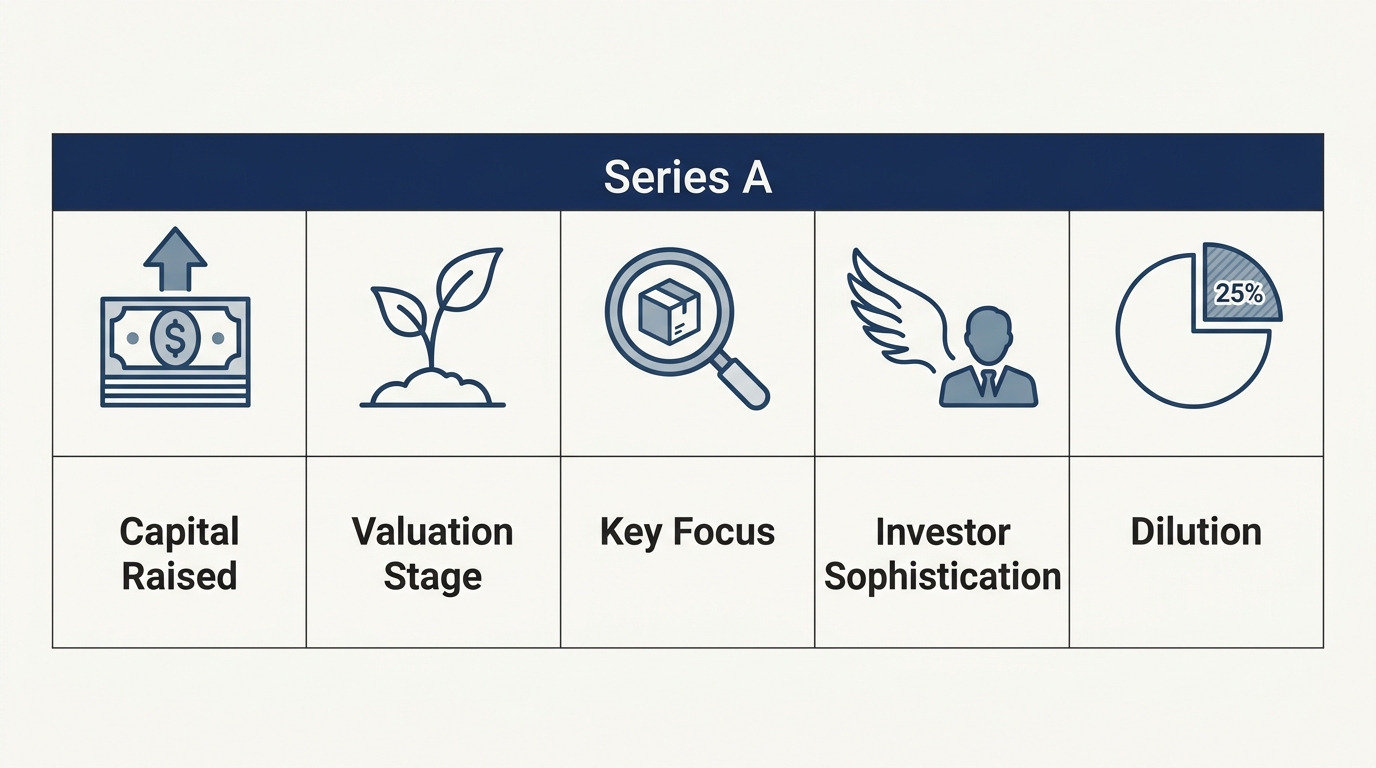
Series A funding dimensions with capital, valuation, focus, investor type, and dilution.
The shift from Series A to Series B brings notable changes across capital raised, valuation stage, key focus, investor profile, and dilution. Series A rounds typically attract $2 million to $15 million from angels and early-stage VCs, while Series B rounds secure $10 million to $50 million from institutional VC and growth-equity firms. Valuation stage shifts from seed-stage metrics such as active users and burn rate to growth-stage metrics including revenue growth, gross margin, and series b valuation multiples. The emphasis moves from proving product-market fit to scaling operations, and the investor base transitions from early-stage backers to sophisticated institutional funds. Institutional investors bring deeper due diligence requirements and larger capital commitments, reflecting the maturity of the round. Dilution also moderates, with Series A rounds typically resulting in 20% to 30% dilution, while Series B rounds tend to dilute existing shareholders by 15% to 25%. The table below summarizes these differences.
Series A vs. Series B: Round Comparison
Key Differences at a Glance
| Dimension | Series A | Series B |
|---|---|---|
| Capital Raised | $2M-$15M | $10M-$50M |
| Valuation Stage | Seed-stage metrics | Growth-stage metrics |
| Key Focus | Product-market fit | Scaling operations |
| Investor Sophistication | Angels, early VCs | Institutional VCs, growth equity |
| Dilution | 20%-30% | 15%-25% |
The progression from Series A to Series B reflects a fundamental shift from validation to expansion, with investors requiring concrete evidence of scalable unit economics and market demand. For founders, this means assembling financial models that withstand rigorous scrutiny and demonstrate a clear trajectory toward profitability.
In our experience, institutional investors apply rigorous institutional investor due diligence criteria when evaluating Series B opportunities. They scrutinize financial performance, total addressable market size, sustainable competitive advantages, and the management team’s track record. Metrics like series b valuation multiples, revenue growth trajectory, gross margin stability, and customer acquisition costs play a decisive role. SIFMA data confirms that institutional venture capital funds deploy the majority of growth-stage capital, making it imperative for founders to present a clear, evidence-based path to market leadership.
Understanding these fundamentals is the first step; next, we examine the specific due diligence criteria institutional investors apply in Series B.
Deep Dive into Series B Valuation and Investor Metrics
Building on the foundational overview of Series B funding dynamics, we now turn to the specific metrics, valuation frameworks, and market forces that shape successful rounds. A deep dive into Series B funding reveals distinct investor priorities that go beyond mere revenue growth, emphasizing capital efficiency and scalable unit economics.
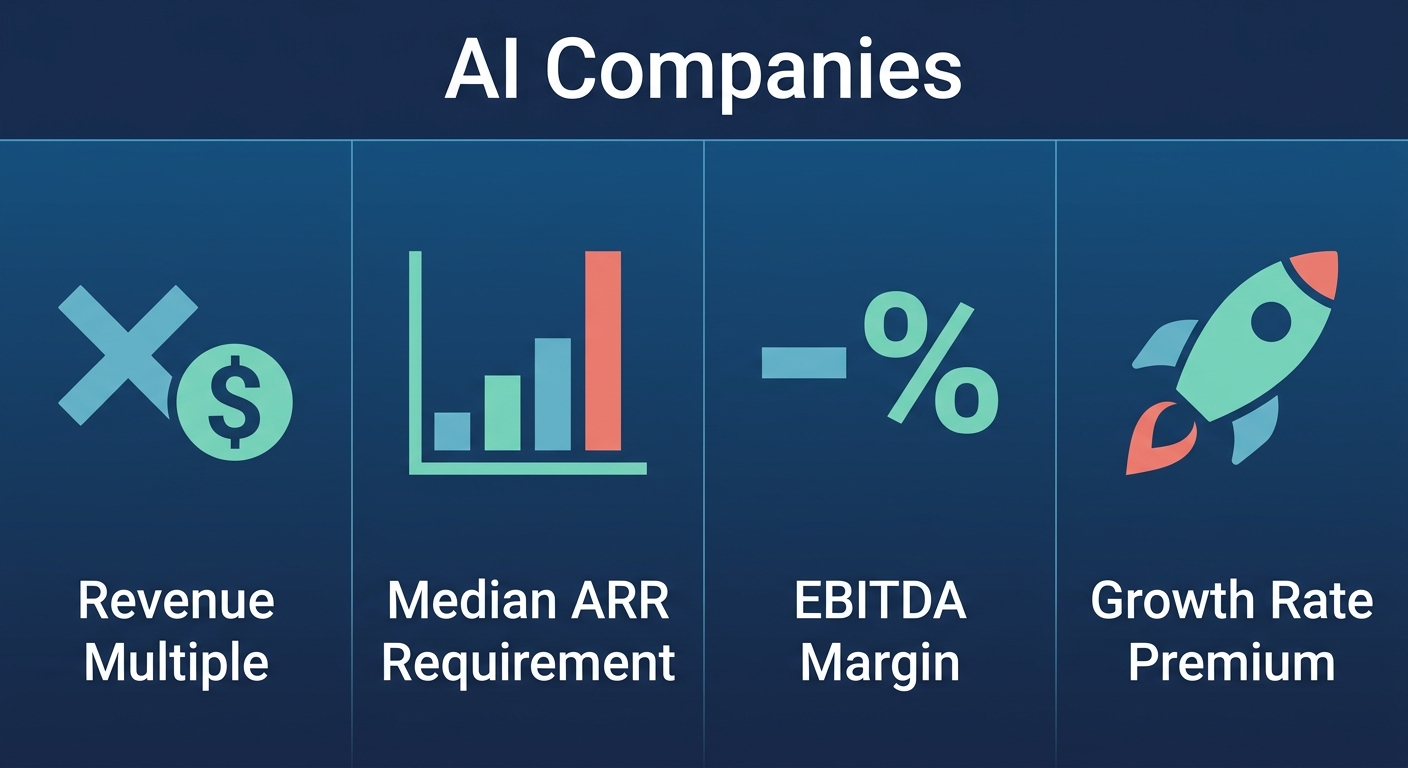
Series B valuation metrics for AI companies
Key Metrics Investors Evaluate in Series B Rounds
Institutional investors apply rigorous institutional investor due diligence criteria, scrutinizing gross margin (ideally ≥70%), net revenue retention (≥120%), an LTV/CAC ratio exceeding 5x, and monthly net dollar churn below 2%. These benchmarks represent typical expectations, not guarantees, and may vary by sector and business model. A company that successfully raised series a funding and progressed to Series B must demonstrate significant acceleration in these metrics, reflecting a scalable, defensible growth trajectory. Additionally, in the U.S. private placement market, compliance with SEC and FINRA standards–including accredited investor verification–adds a regulatory dimension to the due diligence process, reinforcing the need for transparent financial disclosures. For founders, understanding these institutional investor due diligence criteria is critical to positioning a compelling Series B narrative. Ultimate-ly, Series B investors look for evidence of product-market fit, sustainable competitive advantage, and a clear path to profitability–benchmarks that we, at Zaidwood Capital, systematically help founders articulate and quantify.
Understanding Series B Valuation Multiples and Market Benchmarks
Series B valuation multiples are typically expressed as a multiple of annual recurring revenue (ARR). Current market benchmarks for growth-stage companies range from 6x to 20x ARR, heavily influenced by sector, growth rate, and capital efficiency. While trailing twelve-month revenue forms the baseline for most negotiations, forward revenue projections are gaining traction in 2026 as investors place greater weight on near-term growth trajectories. EBITDA multiples are rarely applied at this stage unless the company is consistently profitable–a scenario more typical of later-stage growth. The following table compares current (2026) revenue multiples, ARR thresholds, EBITDA margin requirements, and growth rate premiums for AI and non-AI growth-stage companies.
AI vs. Non-AI Series B Valuation Multiples
Key Metrics 2026
| Metric | AI Companies | Non-AI Companies |
|---|---|---|
| Average Revenue Multiple | 15x-20x | 6x-10x |
| Median ARR Requirement | $10M-$20M | $8M-$15M |
| EBITDA Margin Requirement | Negative to -30% | 0%-15% |
| Growth Rate Premium | 50%-100% YoY | 30%-50% YoY |
AI companies command a premium revenue multiple of 15x-20x, driven by higher expected growth rates and market expansion potential, not current profitability; indeed, EBITDA margins for AI firms often range from slight negativity to -30%. Non-AI growth companies, by contrast, typically exhibit multiples between 6x and 10x ARR and must demonstrate breakeven or positive margins. The median ARR requirement is also higher for AI companies ($10M-$20M vs. $8M-$15M), reflecting the need for scale to justify premium valuations. Correspondingly, AI companies target growth rates of 50%-100% YoY to maintain their valuation premium, while non-AI companies typically achieve 30%-50% YoY growth. It is essential for founders to understand how these series b valuation multiples are derived, as they directly influence ownership dilution and the size of the capital raise.
How Interest Rates and Market Conditions Affect Series B Valuations
Since early 2025, the Federal Reserve’s interest rate policy has directly affected Series B valuation dynamics. Rising rates increase the cost of capital, compressing valuation multiples as investors discount future cash flows more heavily. High inflation scenarios further amplify scrutiny of unit economics, with gross margin and net revenue retention becoming even higher-priority metrics. In this environment, growth-stage companies with strong capital efficiency and predictable recurring revenue typically secure more favorable terms. The current 2025-2026 Fed funds rate trajectory has noticeably widened the bid-ask spread between founders and investors, making alignment on pre-money valuation more challenging. Founders who proactively stress-test their models under varying rate and inflation assumptions can present a more resilient case to institutional investors.
As a boutique capital advisory firm, we help founders benchmark these metrics against institutional expectations, leveraging the proprietary Sovereign Data Nexus to identify valuation trends and positioning strategies that resonate with today’s investors.
Practical Steps for Series B Fundraising Success
With the strategic context set, let’s turn to the tactical playbook. When preparing for series b funding, founders must shift from startup to institutional discipline. This section walks through the essential steps: building a robust data room that meets investor scrutiny, managing a tight 4-6 month timeline, and avoiding the most common pitfalls that derail growth-stage raises.
Building Your Data Room for Institutional Scrutiny
Institutional investors evaluate growth-stage companies through a rigorous lens. Your data room must address institutional investor due diligence criteria by including audited financial statements for at least the past two fiscal years, along with monthly profit-and-loss statements for the trailing twelve months. Provide a detailed capitalization table showing current ownership, option pools, and all convertible instruments. Full customer lists with contract terms and revenue contribution demonstrate revenue quality. Supplementary materials such as a 3-5 year strategic plan, granular budget allocation for the new funding, and legal documents (incorporation, IP assignments, regulatory filings) complete the package.
Having this information organized and accessible before you begin outreach is critical. We recommend building the data room to a standard where you can share it within one week of a first investor conversation, because momentum is everything.
To illustrate the jump in rigor, the table below compares typical Series A and Series B data room expectations.
Series A vs. Series B Data Room Requirements
Document Checklist Comparison
| Requirement | Series A | Series B |
|---|---|---|
| Financial Statements | Annual summaries, projections | Audited financials, monthly breakdowns |
| Cap Table | Simple cap table | Detailed cap table with option pool |
| Business Plan | 1-3 year outlook | 3-5 year strategic plan |
| Use of Funds | General description | Granular budget allocation |
| Customer Contracts | Top 5-10 accounts | Full customer list + contract terms |
As the comparison shows, Series B investors expect far greater transparency and institutional-grade documentation. Audited statements provide an external validation of financial health, and monthly breakdowns allow a forensic view of revenue trends. The jump from a simple cap table to one that models dilution scenarios underscores the shift toward long-term strategic planning. At this stage, a boutique capital advisory firm can help you assemble and pressure-test the data room, ensuring it meets the expectations of institutional investors. We treat the data room as the foundation of a full-cycle M&A fundraising process — complete it properly, and the subsequent steps become dramatically smoother.
Managing the Fundraising Timeline and Investor Outreach
A typical Series B raise takes 4-6 months, with each phase requiring disciplined execution. This timeline roadmap helps you stay on track:
- Month 1 — Preparation: Finalize your data room and key materials. Secure a third-party valuation assessment to benchmark your ask against recent series b valuation multiples. Draft a compelling teaser and a polished pitch deck that highlight unit economics, market momentum, and use of funds.
- Month 2 — Outreach: Pre-qualify investors into tiers: Tier 1 (high-fit, sector-focused), Tier 2 (medium-fit, generalist), Tier 3 (low-fit, opportunistic). Send personalized teasers to Tier 1 firms first, tailoring the message to each fund’s thesis. Track responses and schedule initial calls.
- Months 3-4 — Meetings & Diligence: Conduct management presentations and respond to due diligence requests. Be prepared for deep dives into customer contracts, cohort analysis, and cap-table mechanics. Keep the data room refreshed with updated monthly metrics.
- Month 5 — Term Sheet & Negotiation: Narrow to the leading investor and negotiate terms. Legal review of the term sheet and governance provisions is essential.
- Month 6 — Final Diligence & Close: Complete confirmatory due diligence, finalize legal documents, and coordinate the closing wire. While some rounds close faster, expecting a full six months prevents last-minute panic.
Throughout this timeline, avoid the common misstep of starting investor conversations before the virtual data room is complete; experienced institutional investors will expect a thorough package within days of the first meeting, and delays can signal unpreparedness. A well-executed outreach strategy, powered by a tiered approach, increases your odds of securing the right lead investor on the right terms.
Avoiding Common Pitfalls in Series B Fundraising
Even experienced founders can stumble when navigating a growth-stage raise. We see four missteps most often:
- Unrealistic Valuation: Over-optimistic pricing that ignores market series b valuation multiples leads to stalled negotiations or lack of interest. Before setting your ask, commission an independent valuation to anchor your number in empirical data.
- Sparse or Incomplete Data Room: Beginning conversations without a fully populated virtual data room undermines credibility. Institutional investors expect audited financials, detailed customer metrics, and a clean cap table to be available on demand. If your data room isn’t ready, postpone outreach until it is.
- Poor Investor Targeting: Mass-emailing a generic pitch to every venture fund wastes time and hurts your reputation. Instead, build a tiered list, prioritize high-fit investors, and craft custom teasers that address their specific focus areas. The right investor can accelerate due diligence, while the wrong one may string you along.
- Going It Alone without Advisory Support: The complexity of a Series B round — from negotiating terms to managing multiple investor workstreams — demands experienced guidance. As a Boutique M&A and Capital Advisory Firm, we help founders navigate the entire full-cycle M&A process, from investor introductions to closing. However, engaging an advisor without clear fee visibility can derail momentum — review typical tech M&A advisory fees to benchmark costs and ensure alignment from the start.
Once these steps are executed cleanly, you’ll be ready to engage institutional investors and close the round.
This article is for informational purposes only and does not constitute an offer, solicitation, or recommendation to buy or sell any security. Securities are offered through Finalis Securities LLC; Zaidwood Capital is not a registered broker-dealer.
Advanced Strategies for Institutional Investor Due Diligence
Now that we’ve covered the fundamentals of Series B funding, let’s examine the advanced due diligence strategies institutional investors use to evaluate companies. While the fundamentals of series a funding center on product-market fit, Series B due diligence demands evidence of scalable growth and institutional-grade operations. To navigate this heightened scrutiny, we break down institutional due diligence into four core categories: financial, legal, operational, and team.
Institutional Due Diligence Criteria for Series B
Category Breakdown
The following table outlines the key criteria and red flags across each category:
| Category | Key Items | Red Flags |
|---|---|---|
| Financial | Audited statements, ARR, gross margin, burn rate | Restated revenue, high churn, unexplained cash burn |
| Legal | IP ownership, regulatory compliance, cap table integrity | Unresolved litigation, IP disputes, missing board minutes |
| Operational | Customer concentration, vendor agreements, SaaS metrics | Single customer >50% revenue, poor net retention |
| Team | Founder experience, management depth, hiring plan | Key person risk, lack of succession plan, cultural issues |
Among these categories, red flags like restated revenue or a single customer representing over 50% of revenue can derail a Series B round. Institutional investors apply these criteria with far greater rigor in Series B funding than in earlier stages, often mandating third-party audits and background checks. Legal due diligence is underpinned by FINRA’s regulatory framework, which ensures securities compliance and investor protection standards are met. While series b valuation multiples may capture headlines, the true differentiator is passing the institutional investor due diligence criteria that safeguard long-term value. At Zaidwood Capital, our proprietary platform, Sovereign Data Nexus, aggregates and normalizes due diligence information, while Precision Catalyst uses AI-driven investor matchmaking to accelerate the path to a successful Series B close.
Financial, legal, operational, and team due diligence form the bedrock of institutional investor evaluation. With these criteria in mind, the next step is preparing your data room for institutional scrutiny. As a Boutique M&A and Capital Advisory Firm, Zaidwood Capital guides founders through every stage of due diligence, leveraging our Sovereign Data Nexus and Precision Catalyst platforms to present a compelling, de-risked profile to investors. From assembling audited financials to verifying cap table integrity, our full-cycle approach ensures your startup is ready for the rigorous evaluation of Series B investors.
Frequently Asked Questions About Series B Funding
Having outlined how Series B funding works, we answer the most common questions companies face.
What is series b funding? Series B is a growth-stage funding round for companies with proven product-market fit, typically raising $10 M-$50 M to scale operations and expand market share.
What are typical series b valuation multiples? Series B valuation multiples typically range from 5x to 10x trailing revenue, varying by industry and growth rate.
What do institutional investors look for during Series B due diligence? Key institutional investor due diligence criteria include product-market fit validation, strong unit economics, a defensible competitive moat, an experienced management team, and a scalable business model. We see investors seeking evidence of consistent traction and a clear path to profitability.
How can my company prepare for a Series B capital raise? As a Boutique M&A and Capital Advisory Firm in West Palm Beach, we help companies navigate series b funding with our data-driven investor matching (Precision Catalyst) and rapid-execution framework (Velocity Matrix).
For tailored guidance, explore how our platforms accelerate capital formation.
Charting Your Path to a Successful Series B Raise
Transitioning from series a funding to a Series B round demands more than early-stage momentum; it requires proven scalability, solid unit economics, and institutional readiness. Securing growth capital at this stage means investors expect consistent revenue growth, a defensible market position, and a management team capable of executing at scale.
Our team guides founders through the rigorous institutional investor due diligence criteria, aligning valuation narratives with the metrics that matter most, including sustainable gross margins and recurring revenue trends. We help position your capital raise by refining your strategic story around series B valuation multiples and clear use of proceeds.
As a boutique M&A and capital advisory firm, we specialize in navigating this pivotal transition, leveraging a disciplined process to connect your vision with experienced institutional capital.
Resources


