



Mobile Credit Card Processing
Table of Contents
Mobile Credit Card Processing: A Financial Diligence Perspective
Beyond operational efficiency, a thorough financial diligence review of mobile credit card processing reveals critical valuation drivers. We at Zaidwood Capital examine the underlying cost structure–interchange fees set by card networks, assessment fees, and processor markup–each shaped by the pricing model.
We assess pricing structures such as interchange plus pricing, which offers transparency, versus tiered or flat-rate models that can obscure margins. PCI DSS 4.0 compliance adds recurring costs for quarterly scans, assessments, and potential remediation; these must be factored into post-transaction projections.
The integration of omnichannel payment platforms increases data complexity in mobile credit card processing. We validate that a target’s reporting can segment mobile transactions accurately, as misclassification distorts volume forecasts. Chargeback ratios and processing history serve as key risk underwriting metrics–elevated rates may signal fraud or customer dissatisfaction that threatens revenue stability.
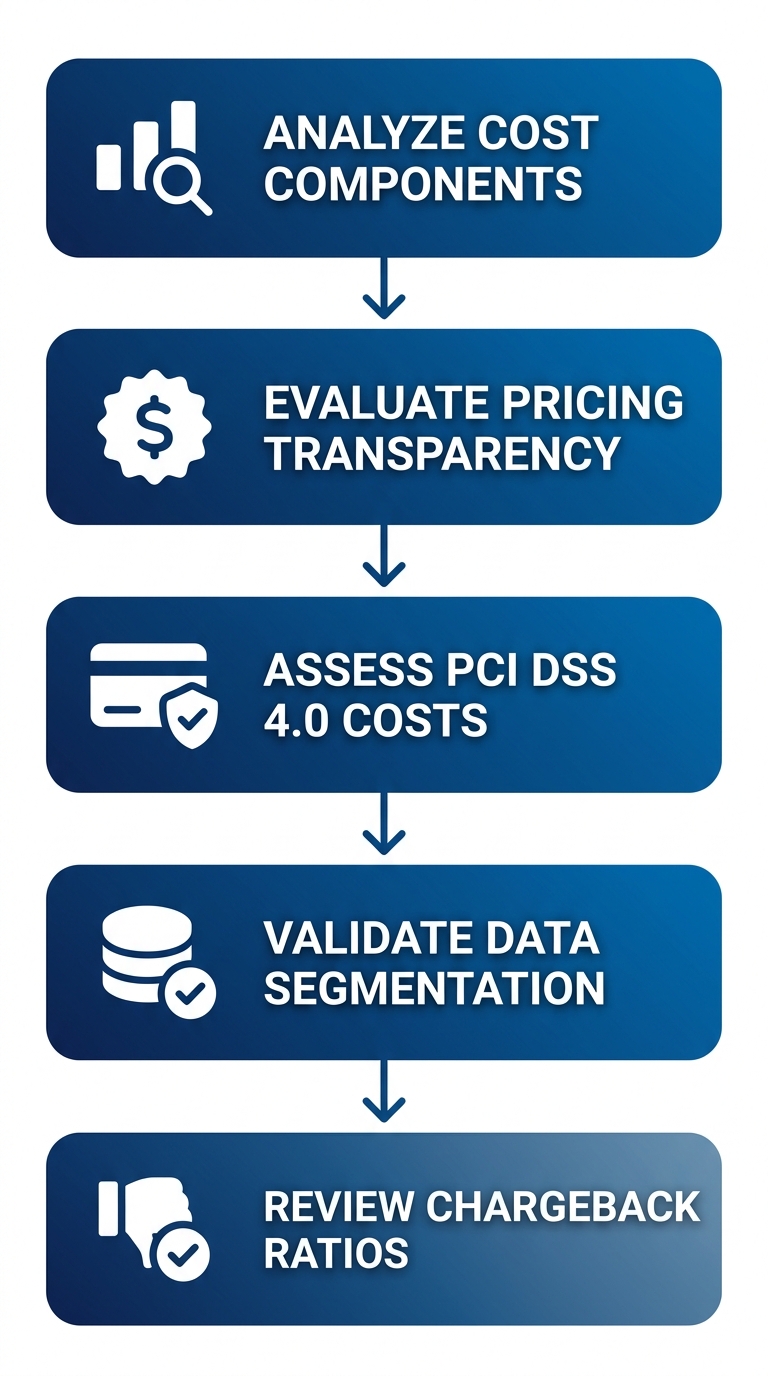
Five key financial due diligence steps for mobile credit card processing.
Where payment companies securitize receivables, the capital markets framework–aligned with International Capital Market Association (ICMA) standards–adds a diligence layer on the consistency of cash flows. The same framework applies across industries, including our dedicated energy mergers and acquisitions advisory practice, and further informs deal structuring in the next section on transaction risk allocation.
Top Mobile Credit Card Processing Solutions for M&A Diligence
Armed with an understanding of why financial data transparency matters in diligence, we now examine the top mobile credit card processing solutions. As a firm guiding clients through m&a due diligence services, we know the choice of payment processor directly impacts data traceability. When advising on m&a due diligence services, we assess processors for transaction traceability, integration with accounting systems, and compliance posture.
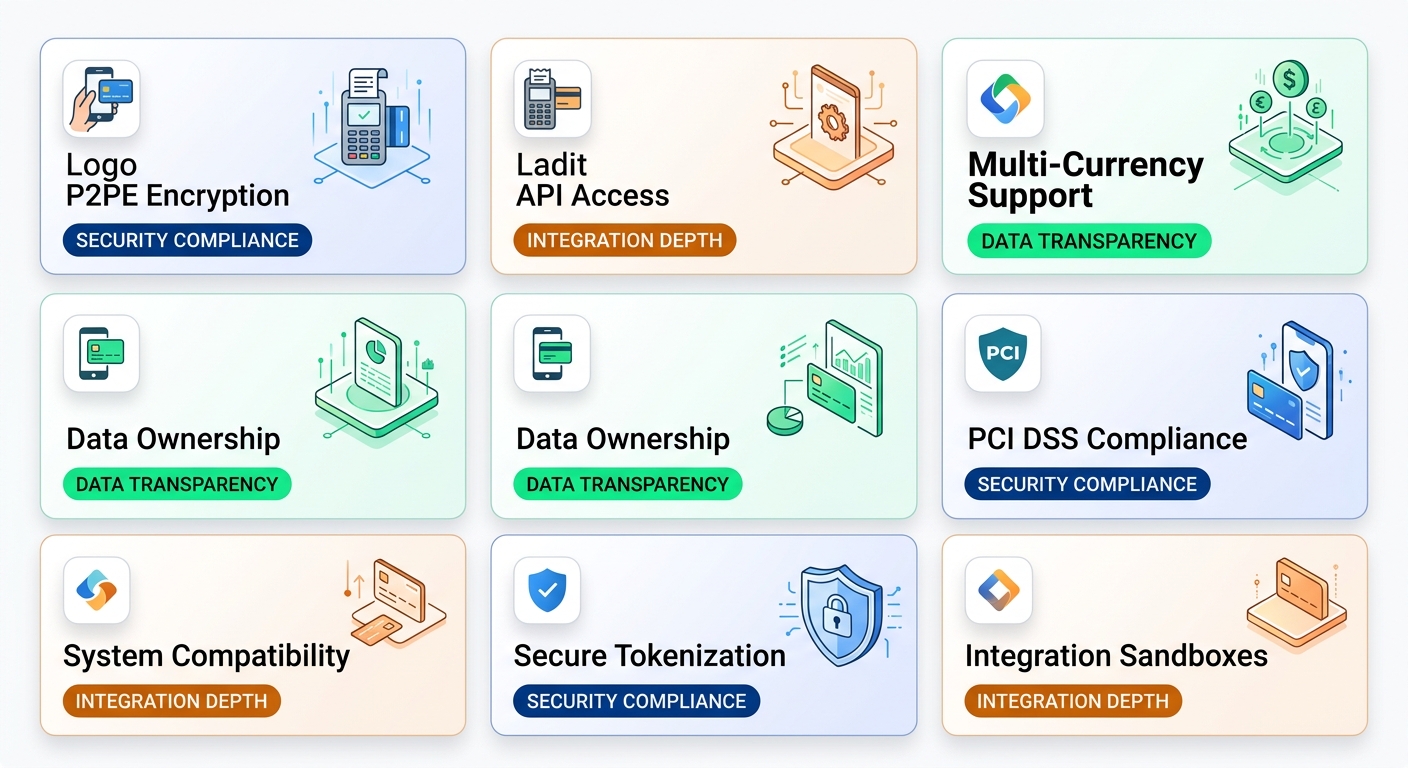
Ten mobile payment processors evaluated for M&A due diligence.
Square
Square’s mobile reader and POS integrate easily with major financial platforms, providing real-time reporting and API access that streamlines transaction data extraction during due diligence. Multi-location management and customizable dashboards enhance visibility, while strong security features protect data integrity. Priced at 2.6% + 10 cents per tap, it requires no monthly minimum. The simple setup is ideal for small to mid-market firms, though limited enterprise customization and global currency gaps exist.
Stripe Terminal
Stripe Terminal offers a programmable point-of-sale synced with Stripe’s full stack, making it a powerful asset for managing financial data in complex transactions. For our clients navigating tech mergers and acquisitions, the custom checkout flow and webhook integration enable automated ledger updates. With end-to-end encryption and PCI DSS 4.0 readiness, as defined by the PCI Security Standards Council, it ensures enterprise-grade security. The 2.7% + 5 cents per-transaction cost requires technical resources, suiting growth-stage firms building scalable payment flows.
PayPal Zettle
PayPal Zettle unifies online and in-store payments through a simple card reader and app, serving as one of the effective omnichannel payment platforms for retailers. Features include inventory sync with PayPal Business, instant transfer, and global currency support, which simplify reconciliation for international diligence. Priced at 2.29% + 9 cents per transaction, fast onboarding is a major advantage. The familiar brand and worldwide acceptance benefit mid-market retailers already using PayPal, though limited advanced reporting may not fully satisfy deep financial analysis requirements.
Clover
Clover offers a robust Android-based POS with multiple hardware options and integrated payments. Its advanced inventory system, employee scheduling tools, and real-time sales dashboards provide a comprehensive view of operational health crucial for demonstrating control to investors. The app marketplace allows for further customization. Starting at $14.95 per month plus 2.3% + 10 cents per transaction, the rich feature set suits restaurants and retail. Monthly fees can accumulate, and contract terms may be rigid for some firms.
Shopify Payments
Shopify Payments is the native gateway for Shopify stores, extending seamlessly to mobile POS. This integration creates a direct connection to Shopify analytics, providing multi-channel data and automated reconciliation, which makes financial trail verification straightforward for e-commerce and omnichannel merchants. Priced at 2.4% for online and 2.7% for in-person transactions with no additional gateway fees, the ecosystem lock-in means it is not available for standalone use. It is best for businesses fully committed to the Shopify platform.
SumUp
SumUp provides a low-cost mobile card reader with a simple interface and flat-rate pricing, a practical entry point for credit card processing on mobile devices. Its real-time transactions, basic reporting, and automated settlement are easy to deploy with no monthly fee, charging just 1.95% per transaction. The ultra-low fees and lack of a contract are appealing, but limited scalability and minimal advanced features mean it is best for very small merchants or pop-ups where M&A readiness is not yet a critical priority.
Helcim
Helcim offers interchange-plus pricing with no monthly fees, distinguishing itself with transparent fee reporting that supports thorough financial diligence. Customizable receipts, chargeback management, and automated batch settlement are managed through a robust developer API. The cost structure of interchange + 0.30% + 8 cents appeals to cost-conscious firms. While the smaller brand presence and lack of 24/7 support are drawbacks, it is ideal for mid-size firms wanting to minimize processing costs while producing clean data for analysis.
CardConnect
CardConnect by Fiserv provides secure mobile processing with P2PE encryption and tokenization, aligning with the latest PCI DSS 4.0 compliance standards mandated by the PCI Security Standards Council. Encrypted transactions flow through a unified gateway with detailed reporting, creating a secure data pipeline for deal readiness. Pricing is custom but typically starts around 2.0% + 10 cents. This contract-based solution is best for enterprises and regulated verticals like healthcare, where paramount data protection is non-negotiable for high-stakes M&A evaluations.
Toast
Toast offers an integrated restaurant-focused mobile POS with online ordering and payments. Its purpose-built features, including menu management, tableside payments, and advanced analytics, deliver sector-specific reporting valued in hospitality M&A. Starting at $0 per month for basic plans plus 2.49% + 15 cents per transaction, the high functionality justifies the cost for food businesses. It is not suitable for non-food industries, making it a specialized choice for restaurant and hospitality groups undergoing deal evaluation.
Poynt
Poynt by Fiserv offers a smart terminal with a customizable Android interface, functioning as a unified commerce hub that syncs real-time data. Its PoyntOS supports multiple apps, enabling integration with various payment methods and reporting tools to create an adaptable due diligence framework. While the security is strong, the higher cost per terminal and complexity for simple use cases are notable. This makes Poynt best for mid-market merchants seeking a platform that can be tailored to complex transaction data needs in a dynamic deal environment.
Selecting the right processor among these options ensures the due diligence process rests on clean, auditable transaction data, reinforcing our commitment to Streamlining Transactions with true Full-Cycle M&A precision.
Comparing Mobile Credit Card Processing Platforms
When evaluating mobile credit card processing infrastructure in healthcare mergers and acquisitions, we assess each platform through a transaction readiness lens. Due diligence demands rigorous examination of cost structures, integration depth, security posture, reporting capabilities, multi-currency reach, and scalability–criteria that directly influence post-close operational continuity and risk allocation. At Zaidwood Capital, we apply these standards to help acquirers identify payment infrastructure gaps before they become liabilities. The Consumer Financial Protection Bureau provides authoritative guidelines on fee transparency and disclosure, setting expectations that shape how we evaluate the cost models below.
The following comparison examines ten leading omnichannel payment platforms and payment processing solutions across six due-diligence-relevant dimensions:
| Feature | Square | Stripe Terminal | PayPal Zettle | Clover | Shopify Payments | SumUp | Helcim | CardConnect | Toast | Poynt |
|---|---|---|---|---|---|---|---|---|---|---|
| Transaction Fees | 2.6% + 10¢ | 2.7% + 5¢ | 2.29% + 9¢ | From $14.95/mo + 2.3% + 10¢ | 2.7% + 0¢ | 1.95% | Interchange + 0.30% + 8¢ | Custom (~2.0% + 10¢) | 2.49% + 15¢ | Custom (~2.3% + 10¢) |
| Integration | Good (API, QuickBooks sync) | Excellent (webhooks) | Good (PayPal tools) | Good (app integrations) | Very Good (Shopify ecosystem) | Basic (manual export) | Good (API, automated batch) | Excellent (P2PE, tokenization) | Good (restaurant sync) | Very Good (PoyntOS apps) |
| PCI DSS 4.0 Readiness | Compliant | Compliant | Compliant | Compliant | Compliant | Compliant | Compliant | Compliant | Compliant | Compliant |
| Reporting | Real-time, multi-location | Custom via API | Basic | Advanced, granular | Integrated with admin | Minimal | Detailed, CSV export | Detailed gateway reports | Restaurant analytics | Unified commerce |
| Multi-Currency | Limited | 135+ currencies | 25+ currencies | Limited | Yes (Shopify Markets) | Multiple EU currencies | US and Canada only | Multiple | Main economies | Broad |
| Scalability | Good | Excellent | Moderate | Very Good | Excellent | Limited | Good | Excellent | Good | Very Good |
PCI DSS 4.0 compliance readiness stands out as a primary gating factor. Platforms offering P2PE-ready architectures–Stripe Terminal, CardConnect, Poynt, and Clover–provide acquirers with stronger encryption boundaries, reducing scope during security assessments. For cross-border targets, Stripe Terminal’s 135+ currency support makes it the clear leader, while Helcim and Square remain geographically constrained. Custom pricing models from CardConnect and Poynt offer enterprise flexibility, but interchange-plus structures like Helcim’s can deliver savings at higher volumes. We recommend acquirers prioritize integration depth and scalability aligned with the target’s growth trajectory rather than optimizing for fees alone.
Building Payment Infrastructure Readiness for Transaction Success
Payment infrastructure readiness forms the operational backbone of any successful transaction, and in healthcare mergers and acquisitions it directly influences whether a deal closes on schedule or stalls on preventable friction. We consider PCI DSS 4.0 compliance the non-negotiable baseline: the PCI Security Standards Council mandates encryption, access controls, and regular security testing that together protect cardholder data during even the most complex multi-party fund movements. With that foundation secured, we integrate omnichannel payment platforms that unify card-present, online, and mobile payment channels into a single reconciliation environment, removing the fragmented reporting that routinely delays due-diligence verification. Equally critical is investment in mobile credit card processing capability, which allows principals and advisors to execute authorized charges instantly during site visits, final negotiations, or time-sensitive escrow instructions. When these three layers — PCI DSS 4.0 compliance, omni-channel readiness, and mobile payment capabilities — operate together, the payment stack ceases to be a source of delay and becomes a quiet accelerator that builds buyer and seller confidence throughout the closing cycle.
Resources


