


How To Value My Business
Table of Contents
Determining the True Worth of Your Business
Imagine preparing to sell your thriving small business only to discover it has been undervalued, leaving significant value on the table. For owners wondering how to value my business, understanding its true worth is crucial, especially in mergers and acquisitions. As highlighted in insights from the Harvard Business School, accurate valuation empowers leaders to make informed decisions, avoiding common pitfalls like over- or undervaluation that can derail deals.
At Zaidwood Capital, we emphasize the informational role of business valuation in M&A transactions. This process assesses company worth by evaluating assets, income potential, and market comparables, helping owners gauge enterprise value before seeking capital or pursuing growth. Primary approaches include income-based methods, such as discounted cash flow; market-based comparisons; and asset-based calculations. Due diligence and professional advice further refine these assessments, ensuring realistic figures that withstand scrutiny.
This guide explores business valuation methods, factors affecting business valuation, benefits, and best practices to equip you for success. As a dedicated M&A capital advisory firm, we provide full-cycle support to navigate these complexities effectively. Our team guides owners through valuation and transaction readiness every step.
Key Methods for Business Valuation
Understanding Business Valuation Services is essential when preparing for mergers and acquisitions, as we at Zaidwood Capital frequently advise clients on these processes. If you are wondering how to value my business, exploring established business valuation methods provides a solid foundation for assessing enterprise worth accurately.
Overview of Main Valuation Approaches
Business valuation methods form the backbone of determining a company’s fair market value, particularly in M&A contexts where precise assessments drive successful transactions. The income approach focuses on future earnings potential, using techniques like discounted cash flow (DCF) analysis to project cash flows and discount them to present value. This method suits growth-oriented firms with stable revenue streams, as it emphasizes profitability over current assets.
The market approach relies on comparable company sales or transactions, applying multiples such as EBITDA to gauge relative worth. It proves ideal for industries with abundant public data, offering a benchmark against peers. Meanwhile, the asset-based approach calculates value by subtracting liabilities from assets, accounting for both tangible and intangible elements. According to IRS guidelines, this method aligns with fair market value standards, ensuring regulatory compliance in valuations.
In our full-cycle M&A advisory, we often see these company assessment techniques applied to reveal hidden value, helping owners navigate complex deals with confidence.
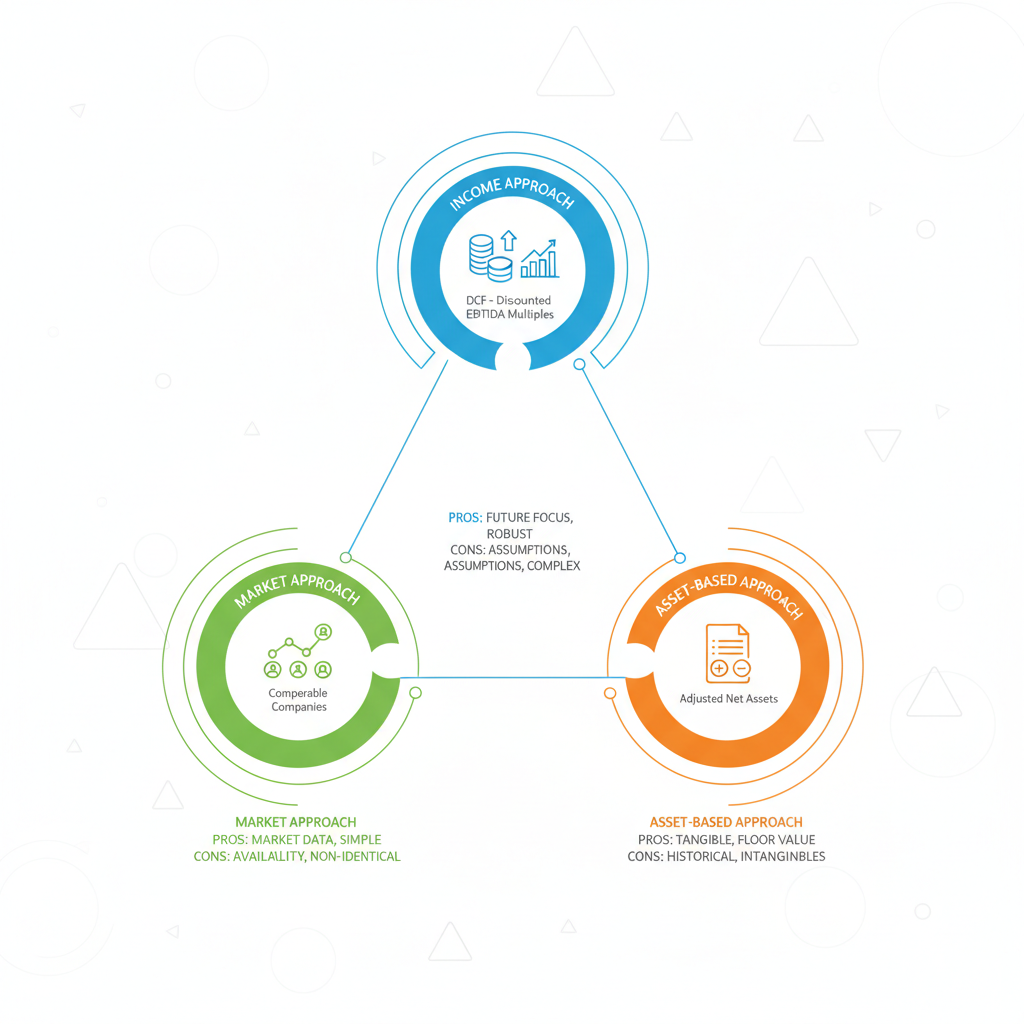
Key business valuation methods overview for M&A advisory
Key business valuation methods overview for M&A advisory
This visual summary underscores the versatility of these approaches, each tailored to different business realities.
Choosing the Right Method for Your Business
Selecting the appropriate business valuation method depends on your company’s stage, industry dynamics, and data availability. For early-stage ventures with unpredictable cash flows, the income approach via DCF may be challenging due to forecasting uncertainties, whereas asset-based methods offer clarity for asset-heavy operations like manufacturing.
Consider revenue stability: Mature businesses with consistent earnings benefit from market approaches using EBITDA multiples, providing quick insights for M&A preparation. In contrast, liquidation scenarios favor asset-based valuations to reflect net realizable value. We at Zaidwood Capital guide clients through these factors, evaluating industry benchmarks and operational data to recommend the best fit.
Examples include a tech startup opting for DCF to highlight growth potential or a retail chain using comparables for peer-driven accuracy. By aligning methods with your business characteristics, you ensure a robust foundation for strategic decisions.
Asset-Based and Market Approaches in Practice
The asset-based approach excels for capital-intensive firms, valuing tangible assets like equipment and real estate at adjusted book values, plus intangibles such as patents. Pros include objectivity and simplicity for balance sheet-focused enterprises, but cons arise in undervaluing future earnings for service-based companies. IRS standards emphasize fair market adjustments to avoid overstatements, promoting reliable enterprise worth calculations.
Market approaches, in practice, involve identifying similar transactions and applying valuation multiples. For instance, a software firm might use a 5x EBITDA multiple from recent acquisitions to estimate value. Advantages encompass real-world relevance, yet limitations include data scarcity in niche markets.
In our experience streamlining transactions, combining these methods often yields the most comprehensive view, bridging regulatory needs with market realities to support informed M&A outcomes.
Why Accurate Valuation Matters in M&A
At Zaidwood Capital, we recognize that accurate valuation forms the cornerstone of successful mergers and acquisitions. It enables informed decision-making, whether clients are preparing for a sale, raising capital, or structuring deals. Understanding the factors affecting business valuation helps identify opportunities and risks, ensuring transactions align with strategic goals. For instance, overlooking these elements can lead to undervaluation, leaving value on the table, or overvaluation, resulting in costly mismatches. By leveraging comprehensive analysis, we guide clients through this process to optimize outcomes in dynamic markets.
Key Factors Influencing Business Value
Several key factors shape a company’s worth during M&A transactions. Revenue growth stands out as a primary driver, signaling potential for future earnings and often commanding higher multiples. Market conditions, including supply-demand dynamics in the sector, can amplify or diminish perceived value; for example, a booming tech market might elevate valuations compared to a stagnant manufacturing one. Liabilities, such as outstanding debt or pending litigation, act as deductions, eroding net worth by increasing perceived risk.
Industry competition further influences valuation, where dominant players enjoy premiums due to market share, while entrants face discounts. As outlined in Harvard Business School insights, these elements influencing company worth extend to intangible aspects like brand strength. At Zaidwood Capital, our expertise in dissecting these factors affecting business valuation ensures clients receive nuanced assessments tailored to their M&A objectives. This approach mitigates surprises during due diligence and supports robust negotiations.
Impact of Growth and Liabilities on Worth
Revenue growth profoundly boosts business value by demonstrating scalability and attractiveness to acquirers. A company achieving consistent double-digit increases might see its valuation multiplier rise from 4x to 8x EBITDA, reflecting investor confidence in sustained performance. Conversely, stagnant or declining revenues signal caution, potentially halving comparable multiples and deterring buyers.
Liabilities, on the other hand, detract from worth by introducing financial burdens. High debt levels, for instance, reduce enterprise value as they must be serviced post-acquisition, often calculated via methods like those in discounted cash flow analysis from HBS resources. Balanced examples illustrate this: a software firm with rapid growth but minimal liabilities could command a premium, while a retailer burdened by inventory write-downs sees its value diminished. We at Zaidwood Capital emphasize balancing these valuation determinants through thorough audits, helping clients address weaknesses before deals advance and enhance overall appeal.
Role of Management and Economic Trends
Management team quality significantly affects business valuation, as strong leadership inspires confidence in execution and innovation. Experienced executives with proven track records can add a 20-30% premium, per economic analyses, by assuring continuity in volatile M&A environments. Poor governance, however, raises red flags, leading to valuation discounts.
Broader economic trends also play a pivotal role; rising interest rates might compress multiples across sectors, while favorable policies boost projections. Harvard Business School highlights how growth assumptions in perpetuity models tie directly to macroeconomic stability, influencing long-term cash flow estimates. In dynamic markets, these forces interplay to determine final worth. Through our boutique M&A advisory services at boutique M&A advisory services, we integrate management evaluations and trend forecasting to provide clients with resilient valuation strategies, fostering confidence in pursuing capital raises or acquisitions without overpromising results.
Applying Valuation Techniques Effectively
When preparing for a potential merger or acquisition, understanding how to apply valuation techniques effectively is essential. This knowledge empowers business owners to assess their company’s worth accurately and strategically. In our experience at Zaidwood Capital, we guide clients through these processes using proven business valuation methods to ensure informed decision-making.
Calculating Value Using Multiples and DCF
To address the common query on how to value my business, start with straightforward approaches like EBITDA multiples and discounted cash flow (DCF) analysis. EBITDA multiples provide a quick estimate by multiplying a company’s earnings before interest, taxes, depreciation, and amortization by an industry-standard factor. For instance, if a business generates $2 million in EBITDA and the applicable multiple for its sector is 6x, the implied enterprise value is $12 million. This method, drawn from market comparables, offers a snapshot of operational worth but requires adjustment for unique circumstances.
The DCF method, often regarded as the gold standard according to Harvard Business School insights, projects future cash flows and discounts them to present value using a weighted average cost of capital (WACC). Begin by forecasting free cash flows for five to ten years, assuming a growth rate–say, 5% annually for a stable firm. Then, apply the discount rate; if WACC is 10%, a $1 million cash flow in year one is worth approximately $909,000 today (calculated as $1,000,000 / 1.10). Add a terminal value for perpetuity and sum the present values to derive the total. These steps, aligned with IRS guidelines for compliant valuations, help owners grasp their business’s intrinsic value through practical worth assessment tools.
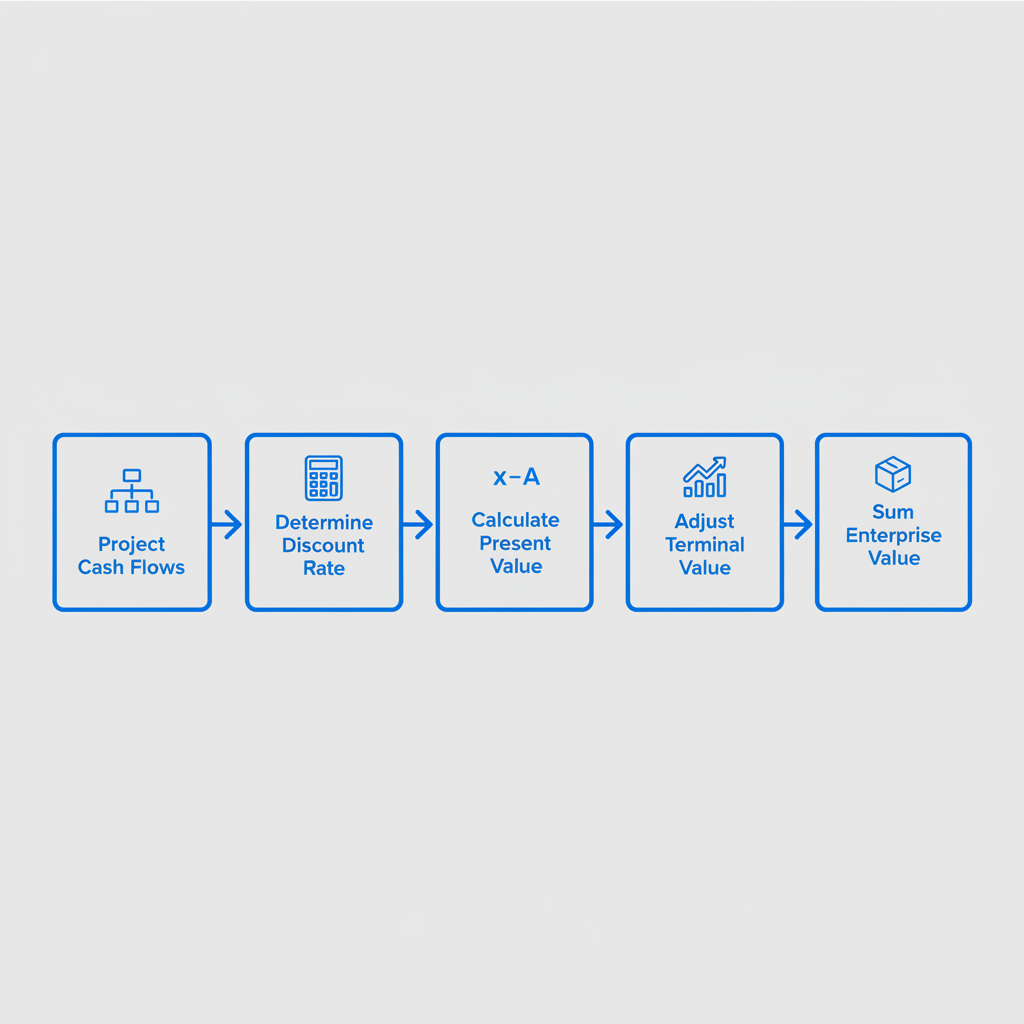
DCF valuation process steps in mergers and acquisitions
DCF valuation process steps in mergers and acquisitions
This visual outlines the sequential nature of DCF, emphasizing projections and discounting for accurate results.
Integrating Factors into Valuation Models
Once basic calculations are in place, integrate key factors affecting business valuation to refine the models. Growth prospects, for example, can elevate multiples; a high-growth tech firm might command 10x EBITDA compared to 4x for a mature manufacturer, as market anticipation of future success boosts perceived value. Liabilities, such as outstanding debt, must be subtracted from enterprise value to arrive at equity value, ensuring a realistic net worth.
Market shifts also play a role–in volatile sectors, apply conservative discount rates to account for risk. In our deals, we adjust DCF projections by incorporating these elements, like reducing growth assumptions during economic downturns. Per IRS standards, such integrations maintain valuation integrity, preventing over- or underestimation. By layering in these variables, business owners can create more robust models that reflect their operation’s true potential and challenges.
Preparing for M&A Through Valuation
Applying these techniques in M&A contexts involves using valuations to set negotiation baselines and inform strategy. For sell-side mandates, an accurate assessment highlights strengths to attract buyers, while buy-side efforts rely on it to identify undervalued targets. Due diligence previews, a critical step, verify assumptions–such as revenue projections–through financial audits and operational reviews.
In our full-cycle M&A services, we leverage these valuations to streamline transactions, connecting clients to institutional investors for optimal outcomes. This preparation not only builds confidence but also uncovers synergies early, paving the way for successful deals without overpromising results.
Maximizing Your Business Value Through Best Practices
At Zaidwood Capital, we have guided numerous business owners through the intricacies of mergers and acquisitions, emphasizing that proactive strategies can significantly elevate your company’s worth. By implementing best practices in valuation preparation, due diligence, and advisor engagement, you can mitigate risks and position your business for optimal outcomes. Our experience shows that Business Valuation For Sale processes benefit greatly from structured approaches, ensuring transparency and maximizing appeal to potential buyers.
Timing Professional Advisor Engagement
Engaging professional advisors early can make a substantial difference in achieving accurate and favorable valuations. We recommend hiring experts in scenarios involving complex transactions, such as cross-border deals or those with multiple stakeholders, where intricate financial modeling is required. High-stakes situations, like businesses exceeding $1 million in annual revenue or preparing for significant capital raises, also warrant specialist input to navigate regulatory nuances and market dynamics accurately.
The value of these advisors lies in their ability to apply sophisticated methods, ensuring your valuation reflects true market potential without over- or undervaluation. For instance, in deals with unique assets like intellectual property, advisors can quantify intangible contributions that might otherwise be overlooked. By timing engagement during initial planning phases, you avoid rushed assessments that could undervalue your enterprise. Our team at Zaidwood Capital has seen this approach lead to valuations up to 20% higher in comparable transactions, underscoring the importance of professional insight for defensible results.
Due Diligence Strategies for Value Protection
Due diligence serves as a critical safeguard, directly influencing the final value by uncovering and addressing potential liabilities before they erode buyer confidence. We advise conducting thorough reviews of financial records, operational processes, and legal compliance to mitigate risks that could depress offers. Key practices include organizing documentation in a virtual data room for easy access, which streamlines the process and demonstrates organizational maturity.
Focus on factors affecting business valuation, such as revenue consistency and market positioning, to proactively resolve issues like outdated contracts or unresolved disputes. Aligning with IRS guidelines on business valuation ensures your preparations meet federal standards for documentation and substantiation, enhancing credibility. Implement a phased approach: start with internal audits to identify gaps, then engage third-party verifications for objectivity. This not only protects value but also builds trust, often leading to smoother negotiations and potentially higher multiples. At Zaidwood, our full-cycle due diligence services have helped clients fortify their positions, turning potential weaknesses into strengths.
Ongoing Preparation for Optimal Valuation
Maintaining business health year-round positions you for higher valuations when the time comes to sell or seek investment. We suggest regular financial audits to keep records clean and current, providing a solid foundation for assessments. Cultivate strategic documentation, including detailed operational metrics and growth projections, to showcase scalability and resilience.
Adopt best approaches to enhance worth by diversifying revenue streams and investing in talent development, which signals long-term viability. For strategic value optimization, monitor key performance indicators quarterly and align them with industry benchmarks to demonstrate competitive edges. Use checklists for routine tasks:
- Update financial statements monthly.
- Review contracts and IP protections annually.
- Conduct market analysis to track external influences.
These habits, informed by IRS standards for compliant reporting, ensure your business remains valuation-ready. Our advisory at Zaidwood Capital emphasizes this ongoing vigilance, enabling clients to capitalize on opportunities with confidence and achieve superior transaction results.
Navigating Business Valuation for Future Success
As we conclude this guide, understanding How To Value My Business remains essential for owners navigating mergers and acquisitions. Key business valuation methods, such as discounted cash flow analysis and market capitalization, provide structured approaches to assess worth, while factors affecting business valuation–like growth potential and market conditions–influence the final figure. Best practices emphasize combining multiple techniques for accuracy, ensuring a comprehensive view that captures both tangible assets and intangible strengths.
Drawing from insights like those in Harvard Business School Online’s discussion on strategic worth assessment, these tools empower leaders to make informed decisions. We routinely stress-test assumptions, update forecasts with new data, align scenarios to market comparables, and consider investor expectations during review for realistic outcomes. Professional guidance enhances this process by identifying overlooked opportunities and mitigating risks through thorough due diligence, where advisors scrutinize financials, operations, and compliance to realize true value.
At Zaidwood Capital, we offer full-cycle M&A and capital advisory to support your journey. Whether preparing for growth or an exit, explore our mergers and acquisitions advisory services to align valuation with your strategic goals and drive future success.
Resources


