

Table of Contents
Mastering Post-Merger Integration
Mergers spark excitement for growth and expansion, yet they carry risks of operational disruption if mishandled. At Zaidwood Capital, we understand that successful mergers and acquisitions advisory hinges on robust post merger integration to capture intended value and foster post-acquisition synergy.
Post merger integration is the strategic process of blending operations, cultures, and systems following a merger. It unfolds in key phases: planning to align objectives, execution to merge resources efficiently, and optimization to sustain long-term efficiency. Studies indicate 70-90% of mergers fail due to poor integration, eroding shareholder value as reported by IMAA Institute insights.
We support clients with full-cycle due diligence and strategic documentation, leveraging our network of over 4,000 investors and 24.4B USD in transaction volume. Discover our eight essential best practices, starting with meticulous integration planning process to ensure seamless transitions and maximized outcomes.
1. Strategic PMI Planning
Effective post merger integration begins with a robust planning phase that sets the foundation for seamless deal execution. At Zaidwood Capital, we emphasize creating a synergy roadmap and developing successful merger integration plans that align objectives, allocates resources, and establishes timelines to capture maximum value from the merger. This proactive approach, informed by our experience structuring over 300 deals, helps corporate clients navigate complexities and avoid common pitfalls.
Developing a comprehensive PMI plan starts with defining a clear governance structure, including a dedicated integration team comprising representatives from both organizations. We recommend setting critical milestones based on project management frameworks from PMI.org, prioritizing tasks with the highest rewards and dependencies. Communication protocols ensure transparency across stakeholders, while risk assessment draws directly from merger due diligence findings to address potential disruptions early. This planning directly supports broader merger strategies for growth, such as expanding market reach through private equity networks.
For streamlined processes, Zaidwood employs our proprietary Velocity Matrix to accelerate timelines, as seen in recent integrations where planning reduced execution phases by up to 30 percent. By incorporating pro forma financials and strategic documentation, we enable clients to quantify synergies and mitigate risks effectively.
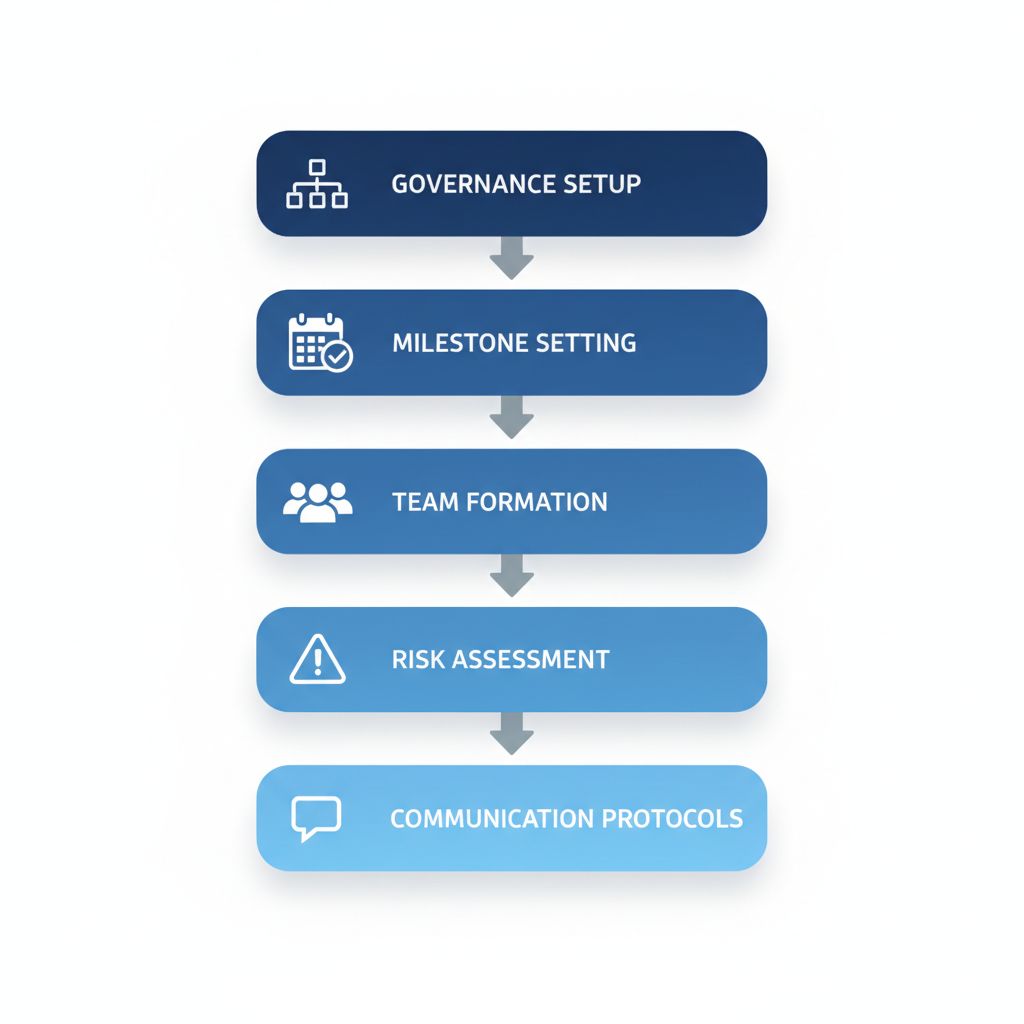
Strategic PMI planning phases: governance, milestones, team, risks, and communication.
While this strategic framework drives operational success, it must also consider human factors like culture to pave the way for alignment in subsequent phases.
2. Cultural Alignment Practices
In post merger integration, cultural alignment serves as the bedrock for sustainable success, mitigating conflicts and enhancing employee engagement. Misaligned values can erode productivity, but harmonizing behaviors fosters organizational synergy building. At Zaidwood Capital, our human capital due diligence expertise, drawn from over 300 deals, guides clients in creating unified cultures that drive long-term value.
Assessing cultural compatibility begins with thorough merger due diligence pre-merger and continues post-merger through structured evaluations. Effective methods include transparent communication channels and targeted training programs to promote values harmonization. Leadership plays a pivotal role by modeling inclusive behaviors, especially in international mergers where trends show heightened cultural clashes due to diverse norms. Common mistakes, such as ignoring employee input, often lead to disengagement; instead, we recommend inclusive workshops to build trust. Drawing from IMD’s four success factors—select, secure, search, and match—successful integration balances adaptation with autonomy, as validated by 20 post-merger cases.
We facilitate team-led cultural audits for private equity firms, ensuring seamless integration. This approach, informed by our full-cycle services, has empowered clients to achieve higher retention and performance in complex deals.
3. Operational Synergies Realization
In post merger integration, we prioritize realizing operational synergies to drive efficiency consolidation and system harmonization across merged entities. By streamlining processes, integrating IT systems, and optimizing supply chains, our approach captures cost savings of up to 15-20% as evidenced in FTC merger retrospectives, while fostering revenue growth through enhanced capabilities.
We begin with comprehensive process mapping to eliminate redundancies, a key step in addressing how mergers affect companies by disrupting workflows. IT integration presents challenges like data migration and compatibility, which we mitigate through rigorous merger due diligence and phased rollouts—best practices include piloting changes in select departments before full deployment. For supply chain optimization, we consolidate vendors and logistics to reduce lead times. Our merger and acquisitions success steps emphasize early identification of these hurdles to ensure smooth execution and minimize risks uncovered during pre-integration assessments.
At Zaidwood Capital, our operational due diligence, including IT evaluations, supports clients in pro forma planning for seamless transitions, as seen in manufacturing deals where synergies boosted margins by 10%. A practical tip: Leverage our full-cycle assessments to flag integration pitfalls early. These operational shifts, however, demand clear communication to align teams effectively.
4. Effective Communication Strategies
Effective communication forms the cornerstone of successful post merger integration, ensuring transparency and preserving employee morale amid organizational changes. We at Zaidwood Capital recognize that clear messaging aligns stakeholders, fosters trust, and prevents disruptions from misinformation. By prioritizing transparent dialogue, companies can navigate merger complexities with confidence.
A robust multi-channel communication plan is essential for seamless transitions. This includes regular town halls for leadership updates, email newsletters for key milestones, and intranet portals for ongoing information. Addressing rumors promptly through fact-based responses maintains credibility and reduces anxiety. Linking these efforts to merger due diligence processes ensures that pre-close communications set the stage for post-close activities, as highlighted in our diligence frameworks. Best practices for consistent messaging emphasize tailored content for diverse audiences, promoting stakeholder engagement across all levels. As noted in integration models from leading institutes, real-time collaboration tools enhance reporting and coordination from Day One.
In our strategic consulting, Zaidwood Capital draws on post merger integration best practices to develop customized plans that mitigate risks and drive value, supporting smooth transitions to talent retention strategies.
5. Talent Retention Initiatives
In post merger integration, retaining key talent is essential for sustained success. We at Zaidwood Capital emphasize human capital due diligence during the merger process to identify and mitigate retention risks early, ensuring workforce stability. By conducting thorough talent assessments, we help clients secure key personnel through targeted strategies that address common pitfalls, such as talent loss from uncertainty.
Effective initiatives include offering retention bonuses to incentivize critical employees and implementing role mapping to provide clear career paths. Managing uncertainty involves transparent communication about future opportunities, while fostering a unified culture plays a pivotal role in boosting engagement. We recommend regular engagement surveys as a best practice to gauge employee sentiment and refine retention efforts, ultimately supporting seamless integration and long-term value creation. We also build retention playbooks and succession plans to protect institutional knowledge during transition periods and align incentives with strategic objectives.
6. Financial Integration Approaches
Effective post merger integration requires seamless financial systems alignment to realize cost synergies and ensure accurate reporting. At Zaidwood Capital, we leverage our expertise in financial due diligence and pro forma financials to guide clients through this critical phase. Accounting harmonization begins by standardizing policies and procedures across merged entities, mitigating discrepancies that could distort financial statements.
ERP integration unifies enterprise resource planning systems, enabling real-time data flow and operational efficiency. Establishing robust financial controls safeguards assets and complies with regulatory standards, directly informed by insights from merger due diligence processes. These steps tie back to due diligence documentation, where we identify potential fiscal risks early.
Financial metrics serve as the best tools for measuring success in post merger integration, tracking key performance indicators like cost savings and revenue growth. By focusing on reporting consolidation and fiscal alignment, organizations achieve sustainable value creation in the merger landscape.
7. Risk Management Techniques
Effective risk management is essential in post merger integration, where unforeseen challenges can impact financial stability and operational synergy. At Zaidwood Capital, our full-cycle due diligence process plays a core role in merger due diligence by identifying potential operational disruptions, regulatory hurdles, and market shifts early on. This proactive approach allows us to foresee issues such as integration delays or cultural clashes that often arise post-merger.
Common risks uncovered in merger due diligence include antitrust concerns and competitive dynamics, as evidenced by the U.S. Federal Trade Commission’s retrospective studies. These analyses reveal how mergers can affect prices, innovation, and consumer welfare, underscoring the need for robust compliance assurance. To mitigate these threats, we recommend establishing comprehensive risk registers that catalog identified vulnerabilities and assign monitoring responsibilities.
Ongoing monitoring involves regular audits and key performance indicators to track integration progress. Best practices for contingency planning include developing scenario-based response strategies, ensuring swift threat mitigation. By linking these techniques to our due diligence expertise, we help clients navigate post merger integration challenges with confidence and precision.
8. Ongoing Monitoring Evaluation
Effective post merger integration requires vigilant ongoing monitoring and evaluation to ensure strategies evolve and deliver measurable returns on investment. At Zaidwood Capital, we provide comprehensive transaction advisory that extends beyond closing, supporting clients through sustained performance tracking and adjustments.
We begin by establishing key performance indicators and interactive dashboards tailored to each merger’s objectives, allowing real-time visibility into operational synergies and financial outcomes. Regular audits, informed by frameworks like those outlined in IMD’s M&A success steps, help identify deviations early, enabling proactive refinements based on stakeholder feedback. This iterative process ties directly to success measurement, focusing on value realization over the long term.
For our clients, including leading private equity firms, this approach mitigates risks uncovered during initial merger due diligence and fosters sustained growth. By continuously adapting, we help secure enduring competitive advantages and resilience, paving the way for comprehensive deal success.
Seamless PMI Execution
Achieving seamless post merger integration requires interconnected best practices, from cultural alignment to operational synergy, ensuring sustained value beyond the deal close. As highlighted in industry insights, up to 85% of mergers fail due to integration shortcomings, underscoring the need for rigorous execution. We at Zaidwood Capital emphasize integration mastery through our comprehensive advisory, linking back to robust merger due diligence foundations that inform every step.
Our expertise provides access to over $15 billion in deployable capital and a global network of 4,000+ investors, facilitating deal optimization and ongoing evaluation for long-term success. Contact us to leverage our full-cycle M&A support for your next transaction, empowering informed strategic growth without undue risks.
Resources
- Get Expert Mergers and Acquisitions Advisory Services
- Discover Leading U.S. Private Equity Firms Overview
- Learn Private Equity Firm Operations and Strategies
- Explore Boutique Investment Banking for Middle Market M&A
- Understand Private Equity Firms Structure and Investments
- Find U.S. Private Equity Firms Using Key Strategies
- Profile Top U.S. Private Equity Firms by Assets
- Master Post-Merger Integration Best Practices Guide
- Develop Successful Merger Integration Project Plans
- Bust M&A Myths with Four Success Steps
- Analyze FTC Merger Retrospective Program Studies