


Get A Loan To Buy A Business
Table of Contents
Understanding Business Acquisition Financing
Business acquisition financing is the capital (debt or equity) used to purchase an existing company, frequently combining multiple funding sources. For entrepreneurs aiming to get a loan to buy a business, understanding the primary pathways is essential. At Zaidwood Capital, we guide clients through Business Acquisition Financing solutions designed for businesses in West Palm Beach and across the United States.
One widely used option is the SBA 7(a) business acquisition loan, a government-backed program administered by the U.S. Small Business Administration. According to the SBA, eligible borrowers can access up to $5 million for acquiring a business, injecting working capital, and purchasing equipment, making it a versatile tool for qualified buyers.
Seller financing business acquisition is another common avenue, where the seller agrees to accept a portion of the purchase price as a promissory note, often bridging gaps that conventional lenders cannot fill. The viability of this approach depends on buyer qualifications–credit history, relevant industry experience, and a well-developed business plan. Eligibility requirements vary by program; the following section outlines the specific criteria for SBA-backed and seller-financed transactions.
Preparing for Your Business Acquisition Loan
Once you have identified the right loan structure, thorough preparation is critical to securing approval. If you aim to get a loan to buy a business, careful planning strengthens your application. Our step-by-step approach ensures you present a compelling case to lenders.
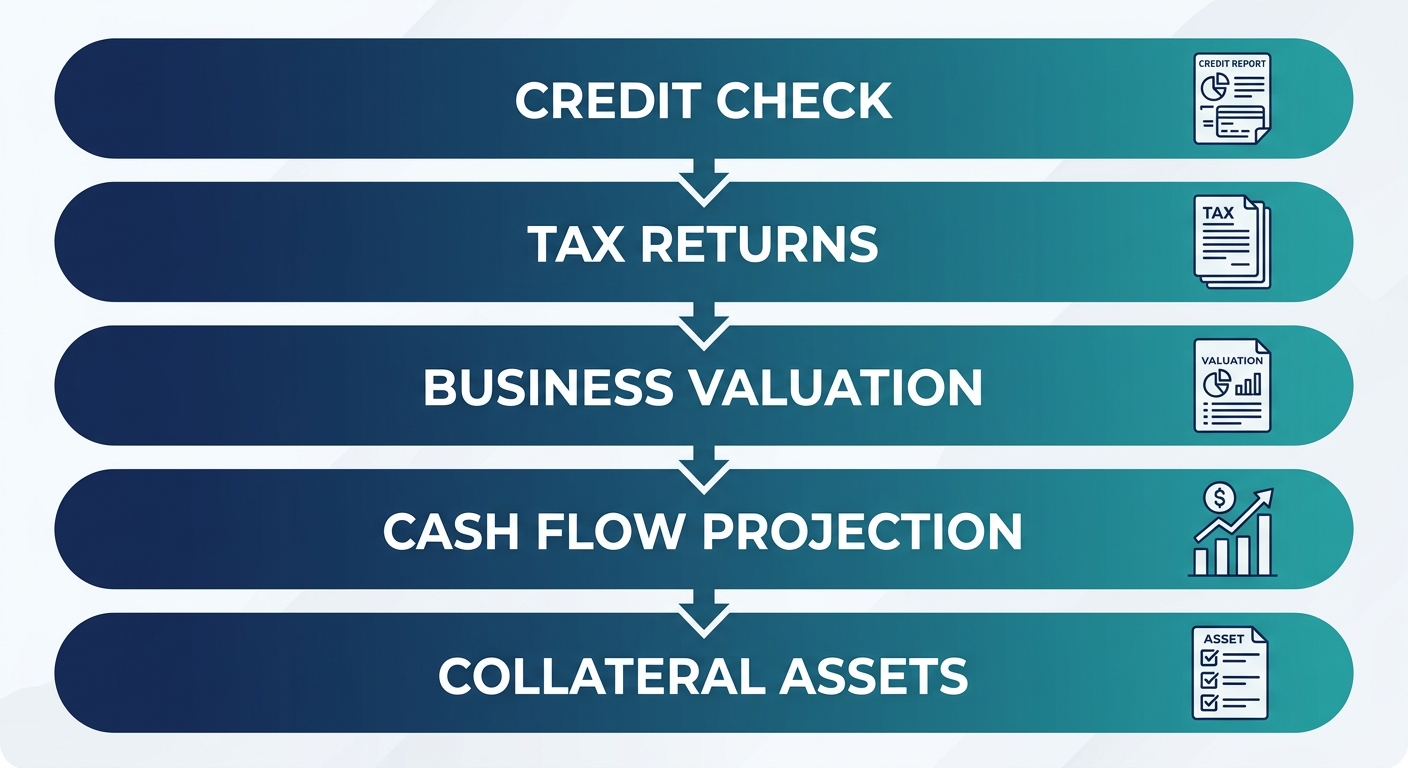
Prepare for your business acquisition loan with these five steps.
- Gather three core financial documents: personal and business tax returns (last three years), profit & loss statements, and current balance sheets.
- Obtain a professional business valuation — a certified valuation sets a credible purchase price and helps lenders evaluate loan-to-value ratios. Our business valuation services provide a comprehensive assessment accepted by most lenders.
- Prepare for an SBA 7(a) business acquisition loan by ensuring a personal credit score above 680, drafting a detailed business plan, and demonstrating relevant management experience.
- For seller financing business acquisition, negotiate key terms — including interest rate, repayment schedule, and subordination agreements — with guidance from an M&A advisor.
- Review your personal credit report, build a cash-flow projection, and assemble a list of collateral assets to strengthen your overall financial profile.
With these documents and assessments in hand, you are ready to proceed with your formal loan application; our team can guide you through each step to help you get a loan to buy a business.
Zaidwood Capital is not a registered broker-dealer; securities are offered through Finalis Securities LLC.
Assessing Your Financial Standing
Before evaluating specific loan products, you need a clear picture of your financial health.
Instructions
- Monitor credit scores; a 680+ FICO is typical for an SBA 7(a) business acquisition loan.
- Compute DTI; stay under 43%.
- Estimate down payment and list qualifying collateral (real estate, equipment).
- Review the seller note (interest rate, balloon payment, personal guarantee) as seller financing business acquisition reduces required loan.
- Collect the last two-three years’ tax returns and financial statements.
- Check for liens, judgments, or tax delinquencies.
Why It Matters
When you aim to get a loan to buy a business, financial health directly affects approval odds and loan terms. At our Boutique M&A and Capital Advisory Firm, we see financial standing as the foundation of every successful acquisition.
Tips
- To get a loan to buy a business, boost your credit by paying down debt and disputing errors.
- Organize your financial records–tax returns, profit-and-loss statements, balance sheets–so lenders can evaluate efficiently.
- Clear any liens or judgments that could stall the loan process.
Once you have assessed your standing, the next step is gathering the required documentation to submit a complete application.
Choosing the Right Financing Option
Instructions
If you’re looking to get a loan to buy a business, evaluating how each option aligns with your profile is critical. An SBA 7(a) business acquisition loan suits buyers with strong documentation and time for the longer approval process. Seller financing business acquisition offers flexibility when the owner is open to negotiations, and conventional loans can close quickly for well-capitalized borrowers.
Why It Matters
Your financing choice determines your monthly obligations, the speed of closing, and the eligibility criteria you must meet. Aligning the structure with your business’s cash flow and growth plans avoids friction down the road.
Tips
We recommend assessing your personal credit, the target company’s recurring cash flow, and the deal size before choosing. In many cases, a combined structure–such as pairing an SBA loan with a seller note–bridges financing gaps. For a complete overview of all your options, read our guide on How To Finance Buying A Business. Once you identify the right financing path, the next step is to prepare your application.
Gathering Required Documentation
With financing identified, the next critical step is gathering documentation.
Instructions
When you are ready to get a loan to buy a business, the first step is gathering the right documents. Lenders typically ask for:
- A personal financial statement (SBA Form 413) detailing your assets, liabilities, and net worth.
- Personal and business tax returns for the three most recent years.
- A comprehensive business plan including market analysis and financial projections.
- The purchase agreement and a detailed list of business assets.
- A schedule of existing debts and monthly obligations.
- Documentation for any collateral you intend to pledge.
Why It Matters
Complete documentation speeds lender review and prevents unnecessary delays. Missing loan paperwork is a common reason applications stall, often adding two to four weeks to the approval timeline. A well-organized file demonstrates your commitment and strengthens lender confidence.
Tips
We recommend:
- Store documents in separate digital folders: personal, business, lender.
- For an SBA 7(a) business acquisition loan, confirm specific forms early.
- With seller financing business acquisition, identify seller-provided documents.
- Use a CPA for financials; it builds lender trust.
Understanding SBA 7(a) Loan Mechanics
One of the most powerful acquisition-financing options is the SBA 7(a) loan. For entrepreneurs looking to get a loan to buy a business, the application process includes:
- Pre-qualification: lenders assess creditworthiness and business viability.
- Business valuation: an independent appraisal supports the loan amount.
- SBA documentation: submit application, business plan, and financial projections.
- Lender underwriting: the lender reviews DSCR and equity injection (10%-25%).
- Closing: funds are disbursed for the acquisition.
In an SBA 7(a) business acquisition loan, lenders typically require a DSCR of at least 1.15.
Why It Matters
The SBA 7(a) program’s lower down payments and longer terms (up to 10 years for working capital, 25 years for real estate) make it a popular alternative to seller financing business acquisition. This structure reduces upfront capital needs and extends repayment timelines, benefiting new owners.
Tips
Select an SBA Preferred Lender (PLP) to speed approval and plan for a 45-90 day timeline. Prepare a robust business plan and financial projections. Engage a boutique M&A firm to understand the full financing landscape–complementary to our guide on what is an investment bank. Understanding these mechanics helps evaluate alternatives like seller financing.
Leveraging Seller Financing
When you get a loan to buy a business, traditional lenders often leave a funding shortfall. We view seller financing–a note carried by the seller–as a strategic tool to bridge that gap, align interests, and accelerate the deal.
Instructions
First, gauge the seller’s willingness to offer owner financing during initial conversations. Next, craft a letter of intent detailing the note’s interest rate, amortization, and any balloon payment. Negotiate collateral and personal guarantees as needed. Finally, address tax implications: sellers may benefit from installment sale reporting, while buyers can typically deduct interest as a business expense; both parties must consult tax professionals.
Why It Matters
In a seller financing business acquisition, the seller’s willingness to carry a note signals confidence in the business’s cash flow. This alignment of interests can speed up closing, reduce lender conditions, and strengthen the buyer’s negotiating position.
Tips
We recommend documenting the seller note with a promissory note and security agreement. Set a market-competitive interest rate and schedule payments to match business cash flow. When subordinated to an SBA 7(a) business acquisition loan, structure payments to satisfy lender underwriting requirements.
Calculating Debt Service Coverage Ratio
To evaluate your ability to get a loan to buy a business, we calculate the Debt Service Coverage Ratio (DSCR): DSCR = Net Operating Income (NOI) ÷ Total Debt Service.
Instructions
- Determine annual NOI: subtract operating expenses (excluding debt service and taxes) from gross revenue.
- Calculate total debt service: sum all principal and interest payments on existing and proposed debt, annualized.
- Divide NOI by total debt service. For an SBA 7(a) business acquisition loan with $150,000 NOI and $120,000 debt service, DSCR is 1.25.
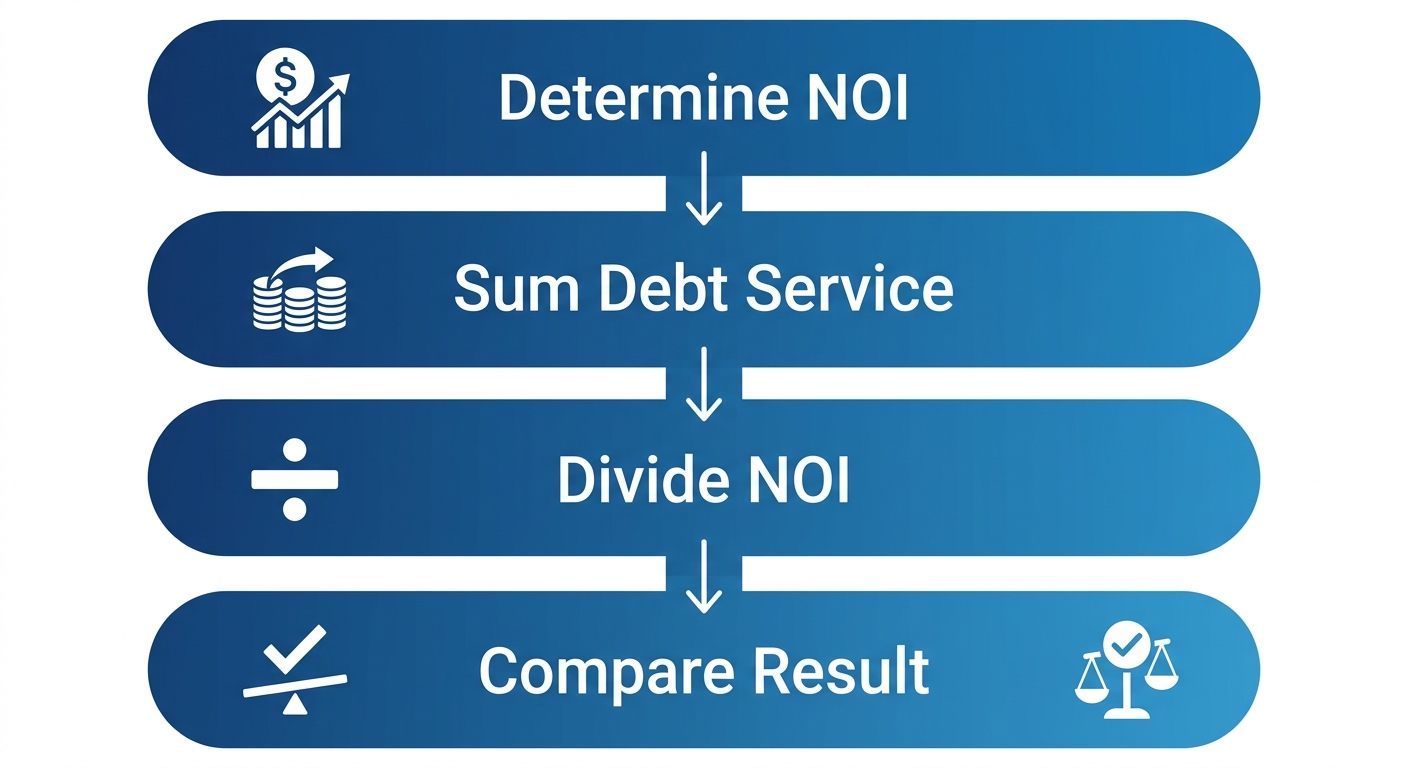
Steps to calculate Debt Service Coverage Ratio.
Why It Matters
Lenders require a minimum DSCR, typically 1.20-1.25 for business acquisition loans. A strong DSCR demonstrates sufficient cash flow to get a loan to buy a business and allows you to qualify for larger loan amounts.
Tips
Boost DSCR by increasing NOI–through price increases or cost reductions–or by lowering debt service. Negotiate longer amortization or lower rates. Seller financing business acquisition often provides more flexible terms, reducing total debt service.
Engaging an M&A Advisory Firm
Instructions
Once you have identified a target business, the critical next step is engaging a trusted M&A advisory firm to secure the capital you need to get a loan to buy a business. We begin with an initial consultation to assess your financial readiness and acquisition goals. Next, we develop a tailored strategy that aligns valuation with financing — leveraging our investment banking services to connect buyers with optimal capital sources. Our team coordinates deal documentation and due diligence, then provides negotiation support to secure favorable terms with sellers and lenders.
Why It Matters
Expert advisors significantly improve deal success rates by managing multi-party negotiations and surfacing deal-breakers early. Advisors also help buyers secure favorable financing, such as through an SBA 7(a) business acquisition loan in the US, and structure terms that protect the buyer’s interests. Their involvement often leads to more favorable valuation multiples.
Tips
Vet firms for industry-specific M&A experience, a broad investor network, and a transparent, collaborative approach. Use advisors to negotiate seller financing business acquisition terms that reduce upfront capital. Avoid firms promising guaranteed outcomes — risk is inherent in any acquisition. With the right advisory partner in place, you are now well-positioned to explore financing structures that match your acquisition goals.
Addressing Common Financing Challenges
When you set out to get a loan to buy a business, the variety of financing options can seem promising, but common obstacles frequently derail even well-prepared buyers. At Zaidwood Capital, we work with clients to anticipate and navigate these hurdles, turning potential roadblocks into manageable steps.
Credit history and debt-to-income ratios are often immediate stumbling blocks, particularly for first-time buyers pursuing an SBA 7(a) business acquisition loan. Lenders typically require minimum credit scores and seasoning that many acquirers haven’t yet built. Even when credit is acceptable, buyers frequently face a down payment gap — most SBA 7(a) deals demand 10-20% down, a sum that can strain personal liquidity. Seller financing business acquisition can bridge this gap by structuring a seller carryback note, effectively reducing the buyer’s upfront cash outlay while reassuring the seller of future payments.
Valuation disagreements between buyer and seller represent another persistent pain point. A professional business valuation supported by earn-out provisions helps align expectations by tying part of the purchase price to future performance, making both parties comfortable with the deal. For asset-light companies — think service firms or technology startups — collateral demands can feel out of proportion. Here, alternative structures such as SBA 504 loans or asset-based lending can substitute for traditional hard-asset collateral, focusing instead on cash flow or specific receivables.
Many of these challenges are solvable with the right advisory support. By helping you structure a get a loan to buy a business strategy that layers seller-assisted financing, appropriate SBA programs, and creative collateral solutions, we help clients build a realistic, risk-mitigated path to acquisition. In the next section, we outline the practical steps to engage our advisory team and move forward with confidence.
Your Path to Business Ownership
Now that you understand our advisory capabilities, let us walk you through your path to business ownership. If you aim to get a loan to buy a business, Zaidwood Capital’s boutique M&A advisory guides you from initial capital assessment to closing. We facilitate a range of financing pathways–including SBA 7(a) business acquisition loans and seller financing business acquisition–to match your unique needs. Once we understand your acquisition goals and financial profile, we tailor strategies that align with the perfect financing mix. From initial assessment through financing and execution, our Velocity Matrix framework leverages AI-driven matchmaking to connect you with the right investors and capital structure. Whether you are exploring tech mergers and acquisitions or seeking capital for a traditional business, our full-cycle M&A team provides the execution velocity you need. To experience a seamless, technology-driven path to business ownership, contact Zaidwood Capital today. Our full-cycle M&A team, supported by Sovereign Data Nexus and Precision Catalyst, delivers the speed and clarity you need. The next stage involves matching you with the right capital structure.
Resources


