
Table of Contents
Raising Capital to Grow Your Business: Your Top Questions Answered
Raising capital to grow your business depends on choosing the right funding structure and accessing a curated network of investors, a process where a boutique M&A and capital advisory firm provides strategic guidance. Many founders face this challenge, and one of the questions we hear most often is, “How do I raise capital for my business?”
We cover how to raise capital for a business, starting with an overview of growth capital–equity, debt, and convertible structures–so you can identify the best fit for your stage. We then walk through how to find investors for a business, from tapping institutional networks to preparing the materials that matter. The full how to raise capital process, including timelines and due diligence, is laid out step by step. We also address the real costs and trade-offs inherent in any fundraising effort. Once you know your options, the next question is what it will cost, and we break that down next.
Securities offered through Finalis Securities LLC, Member FINRA / SIPC.
Understanding the Costs of Raising Capital
How much does raising capital cost? There are direct expenses including advisory fees, legal, accounting and marketing costs, as well as indirect costs of dilution. At Zaidwood Capital, we try to help founders prepare for these costs and plan for them.
What are the typical costs associated with raising capital for business growth?
The costs to raise capital include the advisory fees charged by firms like ours for capital raising, the costs of attorneys and accountants to help prepare offering documents, as well as costs to create professional pitch decks and financial models. Indirect costs mainly consist of dilution: new equity issuances reduce the percentage of the equity ownership of the founders. While each engagement is unique, founders should budget for these standard categories. Planning for both direct and indirect costs early enables more informed fundraising decisions.
How do advisory fees work, and what other expenses should I budget for?
Advisory fees are generally charged as “success fees” payable at the closing of a transaction, “retainers,” or “milestone fees.” At Zaidwood Capital, we customize fee structures to achieve the right incentive alignment, often by blending these models. Beyond advisory fees, other costs include legal and compliance expenses, travel costs for investor meetings, third-party due diligence, and regulatory filing fees. Including these and other costs in your capital raising financial models provides management with a more complete view of total raise costs.
How does the complexity of my deal affect the overall cost of a capital raise?
The complexity of a transaction is another important driver of costs. Larger and more complicated transactions generally increase costs. Regulatory and other complex requirements can also increase costs. Our Precision Catalyst platform helps streamline investor matching, which can reduce time-to-close and associated expenses. Understanding these variables lets founders anticipate costs and work with advisors to manage them efficiently. Having a large and complex investor base, particularly on an international basis, can increase costs. In general, a smaller, domestic raise is likely to be less costly than a large, international raise. It is important to have a complete understanding of costs to effectively manage these costs when working with advisors.
Understanding the costs involved prepares you to navigate the funding process.
The Capital Raising Process: Steps to Secure Funding
There’s a structured way to go about raising capital to expand a business. We assist growth stage companies in evaluating funding options and instruments, preparing documentation, and accessing qualified investors.
What are the most effective methods to raise capital for a growth-stage company?
Growth-stage companies commonly choose among equity, debt, mezzanine, and revenue-based financing. Equity sells ownership stakes, preserving cash flow but diluting control. Debt instruments require scheduled repayments that can pressure liquidity, yet they keep equity intact. Mezzanine structures blend both worlds, often attaching warrants to loans. Revenue-based financing ties repayment to a share of ongoing revenue, avoiding dilution while aligning costs with revenues. We recommend consulting a capital advisory firm to evaluate these tradeoffs and structure a solution that matches your growth model and cash flow profile.
What steps should I take to prepare my business for a successful capital raise?
Businesses should have a fundamental readiness assessment in place prior to contacting funders. The U.S. Securities and Exchange Commission’s CAPITAL framework provides a roadmap for preparation in the form of cap table accuracy, comprehensive financial statements (cash flow statements to corroborate financial health) and projections, identifying strategic investors that offer industry value, team and advisory strength, and legal structure.
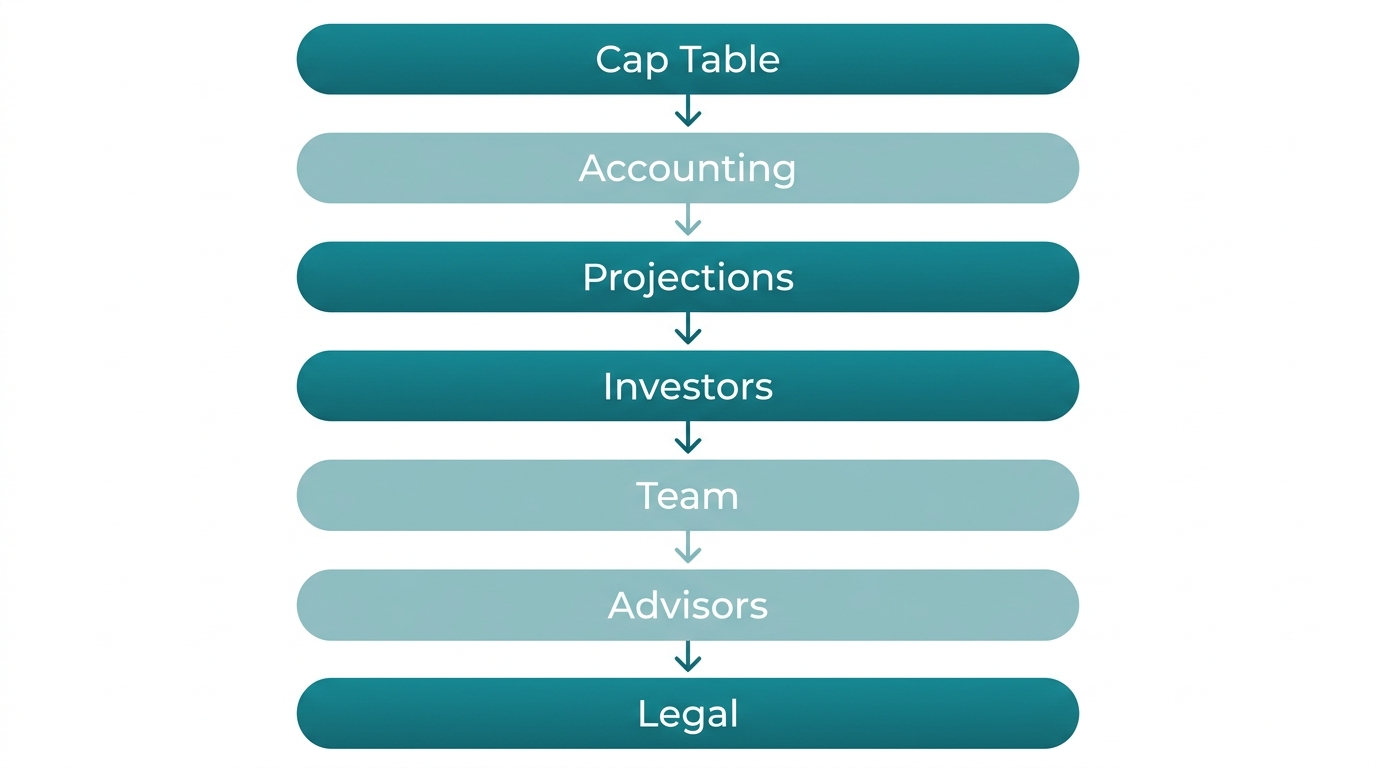
Founders should calculate their runway, how long operations can continue at current spend without new capital, and retain experienced attorneys and CPAs who can prepare compliant documents. Investors favor management teams that demonstrate a clear use-of-proceeds plan and a dedicated advisory network.
How do I access a network of qualified investors and approach them effectively?
Creating a focused list of the right investors, aligned to your industry and stage of growth is essential to raising capital. We leverage our network of over 4,000 institutional investors–family offices, venture capitalists, and strategic acquirers–and help craft a concise pitch deck highlighting your business model, market opportunity, and use of funds. Warm intros through a capital advisory firm outperform cold outreach. We coordinate meetings with decision-makers. Addressing the securities laws and regulations will allow the company to maintain an offering of securities that is lawful and fundable.
Navigating Regulatory Requirements and Compliance
What regulatory registrations or exemptions apply when raising capital?
According to the SEC, selling securities generally requires registration, so securities compliance begins with selecting an appropriate exemption. Under Section 4(a)(2), private placements avoid registration when offerings are not publicly solicited. Regulation D’s Rule 506(b) allows unlimited accredited-investor fundraising without general advertising, while Rule 506(c) permits broad solicitation if accredited status is verified. Regulation Crowdfunding enables raising up to $5 million through SEC-registered platforms, subject to investor limits tied to income or net worth. Regulation A provides a quasi-public offering with two tiers: Tier 1 up to $20 million and Tier 2 up to $75 million, each with reduced disclosure obligations.
What documentation do investors require during due diligence, and how do I ensure compliance?
A comprehensive investor due diligence checklist typically includes a pitch deck, a detailed business plan, financial projections, a cap table, and a term sheet. These materials must be factually accurate and consistent across all investor communications. The SEC warns that misleading statements or omissions can trigger fraud liability. Legal counsel will help align a company’s disclosures with the exemption relied upon.
What role does a capital advisory firm play in managing investor due diligence?
We manage the due diligence process by creating a secure virtual data room, controlling the flow of documentation related to a capital raise, and liaising with legal counsel to review due diligence materials to ensure we meet all regulatory requirements. This allows us to keep all materials consistent, whether it be the pitch deck, the financials, and/or the legal documents. While we give advice on documentation readiness, securities transactions are executed through Finalis Securities, LLC, a registered broker-dealer and a member of FINRA/SIPC, so that broker-dealer functions are handled by a licensed entity. Through centralized document management, clients are able to demonstrate a clear record and satisfy the requirements of the selected regulatory pathway. The focus of our due diligence process and the regulatory pathway directly affect the speed of closing. Because those factors directly influence the speed of closing, investing time in the preparation of these materials early on supports a more predictable capital-raising timeline.
Capital Raising Timelines: From Preparation to Closing
Once the regulatory and compliance aspects are clear, the next step is to examine the capital raising process in detail to gain an understanding of how long it takes and what the different steps are.
How long does the typical capital raising process take from start to finish?
From our experience, the capital raising process spans from four to twelve months, but this can change based on the current market and how complex the deals being raised are. Well-prepared companies with polished financials and clear growth metrics often move faster, while incomplete documentation can add weeks. The better prepared the company, the faster the process can be. The opposite is also true and dealing with an unprepared company can take longer. Hiring a capital advisor early can mitigate delays, letting founders focus on operations while advisors drive the process.

The visual timeline shows that each phase of the capital raising process requires distinct resources and concentrations of management’s time and attention. Shortfalls early in the process can quickly cascade, so proactive readiness measures can compress the overall schedule and reduce the risk of deal fatigue.
At what stage is my company ready for growth capital, and how do I know?
Assessing growth capital readiness involves looking at revenue traction, market validation, management team strength, and financial health. We look for companies that are past proof-of-concept and have strong, defensible market positions, and experienced leadership. For financial health, we look for clean audits, prudent cash management, and accurate forecasts, as these signal operational maturity and demonstrate the business can absorb capital efficiently and generate expected returns.
How do I manage investor relations and reporting after closing a capital round?
Effective post-close investor relations center on transparency and disciplined communication. We advise establishing regular reporting cadences–monthly financial summaries and quarterly board packages–to keep stakeholders informed. Performance dashboards that track metrics against the investment thesis demonstrate momentum and surface issues early. Consistently hitting milestones builds investor confidence and creates a track record for future rounds.
Knowing the window in which a company is ready for capital raising, combined with the transparency provided to founders on responsibilities during the post-close period, allows founders to start the process with a better understanding of what to expect.
Get Personalized Guidance for Your Capital Raise
We offer capital advisory, capital raising timeline and process, capital raising costs, investment readiness, support raising capital for business growth. Call 800-962-0418.
This site is informational and not an offer, solicitation, recommendation, or commitment to buy or sell security or financial product. Securities are offered through Finalis Securities LLC; Zaidwood Capital is not a registered broker-dealer. Investments involve risk and investors may lose all or part of their investment; past performance does not guarantee future results. Consult legal, tax, and financial advisors and, where appropriate, a registered representative.