
Table of Contents
Selling Your Business to Private Equity or a Strategic Buyer: A Clear Comparison
Selling your business to a private equity group or strategic buyer is a pivotal decision that determines how the transaction is structured, the continuity of the management team, and the long-term legacy of the business. As a Boutique M&A and Capital Advisory Firm, we assist business owners in navigating sell side M&A trade-offs. We inform owners how and when selling to private equity fits into the greater scheme of things.
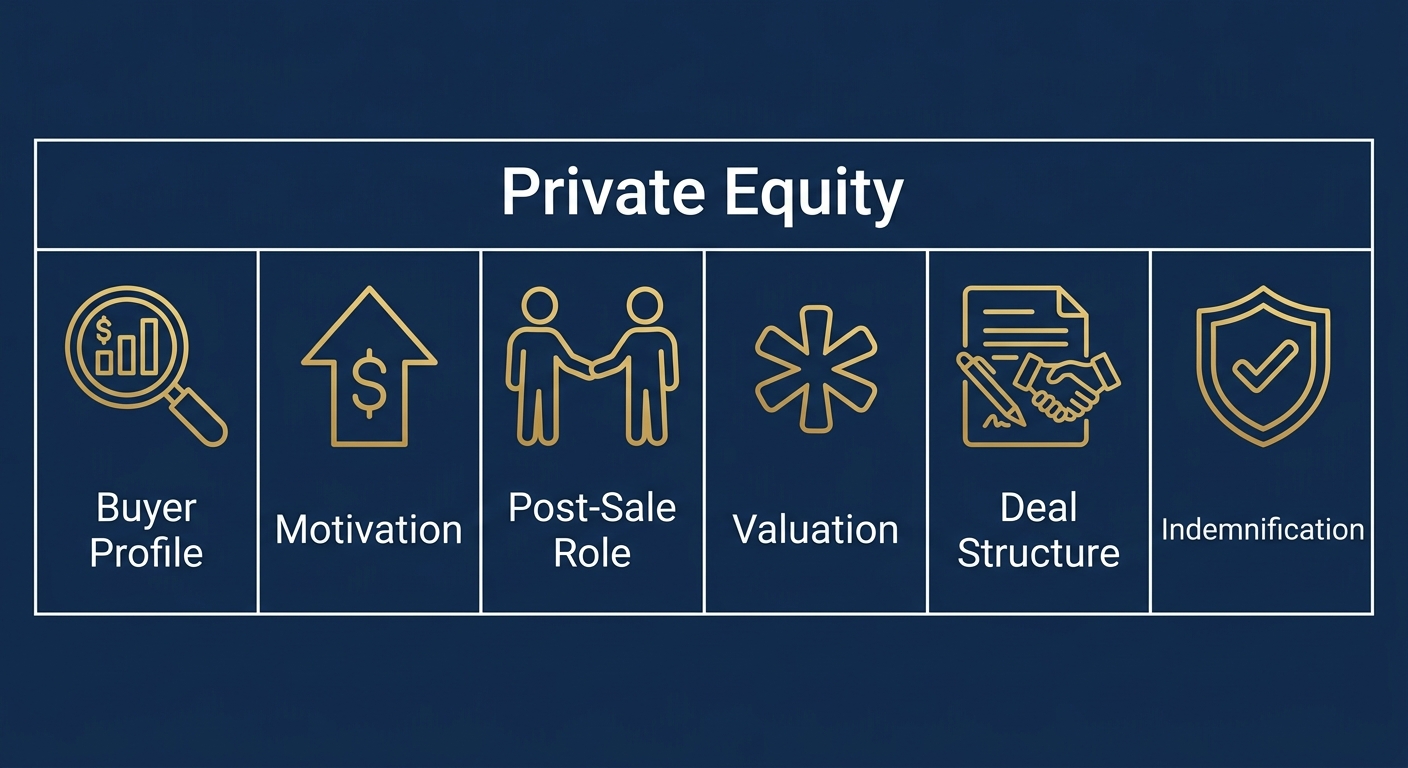
Side-by-Side Comparison: Private Equity vs Strategic Buyer
| Dimension | Private Equity | Strategic Buyer |
|---|---|---|
| Buyer Profile | Investor | Industry operator |
| Motivation | ROI | Strategic synergies |
| Post-Sale Involvement | Retains management | Integrates operations |
| Valuation Approach | EBITDA multiple-driven | Synergy-based premium |
| Deal Structure | Stock purchase; liability | Asset purchase; selective liability |
| Indemnification | Uses RWI | Traditional indemnity |
| Timeline | 3-6 months | 4-9 months |
| Confidentiality | High | Medium |
| Exit Horizon | 3-7 years | Indefinite hold |
Understanding Private Equity Buyers
The first passage outlines how different types of buyers affect a deal in a particular way, and here we focus on selling to a private equity firm (PE) and how documentation and structural issues drive the transaction. Private equity buyers, as institutional investors, purchase firms for growth.
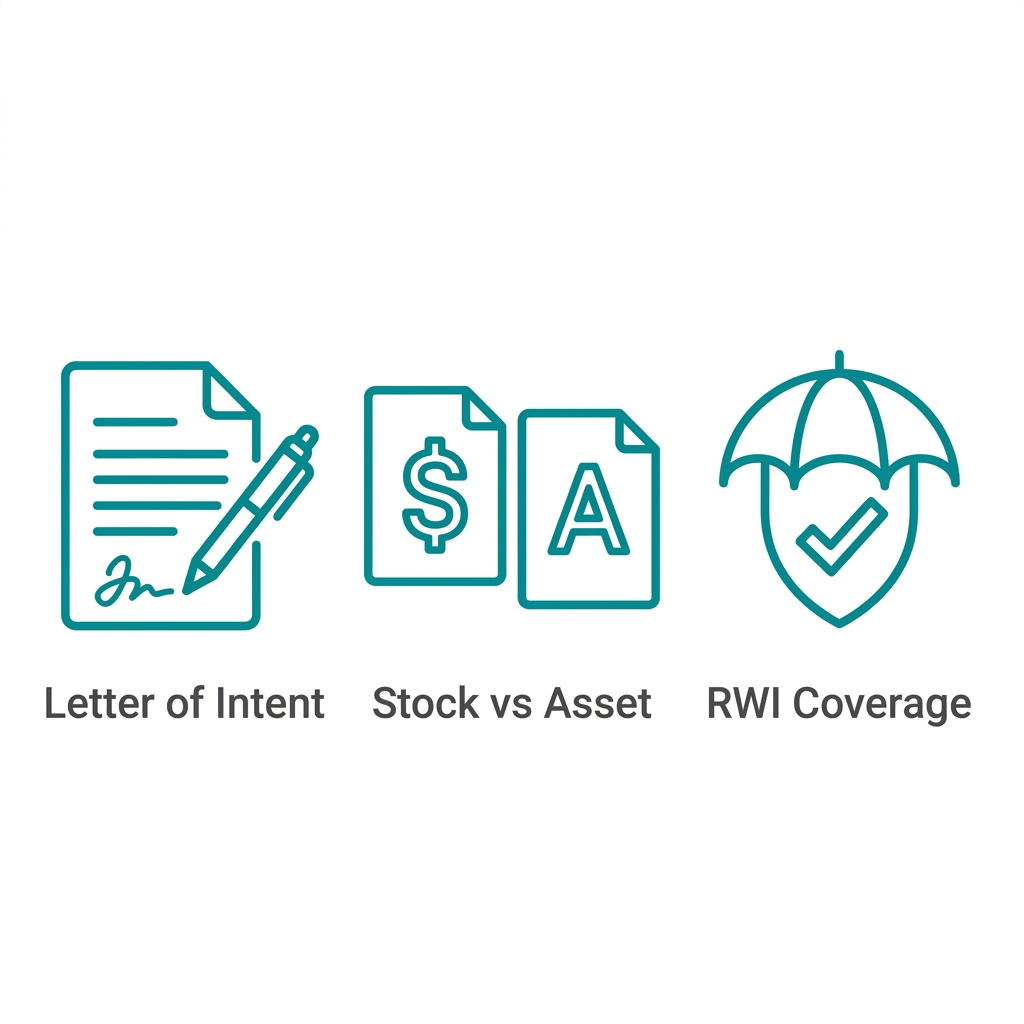
The Letter of Intent (LOI) in a PE deal, which we negotiate, is typically non-binding, but the confidentiality provision carries legal weight. As noted in LegalClarity’s M&A practice guidance, this document is prepared to include the major deal points and gives flexibility to conduct due diligence.
A purchase of a firm’s stock transfers all historical liabilities to the buyer, while an asset purchase permits selective assumption. In the case of a management buyout (MBO) where a PE firm partners with the existing leadership team, an asset structure can be particularly appealing because it isolates legacy risks.
Representation and Warranty Insurance (RWI) is now a common feature of private M&A deals, covering 10% to 20% of the deal value, with the premiums ranging from 2% to 4% of the policy value.
Strategic buyers, in contrast, often emphasize post-merger integration and synergy capture more than the contractual safeguards that define a PE acquisition.
Understanding Strategic Buyers
Operating companies (competitors, customers, suppliers, etc.) that acquire other businesses for operational synergies or to expand their reach in the market are known as strategic buyers. Unlike financial buyers (private equity, for example), whose primary objective is a financial return through a future sale, strategic buyers look to enhance their operations and competitive position by acquiring businesses.
In our experience, the process for a strategic buyer generally starts with the signing of a non-binding Letter of Intent (LOI). As noted in Legal Clarity’s M&A Practice Guidance, from there, deals are generally structured as asset purchases so that the buyer can cherry pick the desired assets and contracts, and leave the historical liabilities behind. Representation and Warranty Insurance (RWI) has become standard in these transactions and shifts the risk to the insurer in the case the seller’s representation proves to be inaccurate.
While a strategic buyer may offer synergy value, a seller’s broader priorities will often dictate that selling to a financial buyer is optimal, a case we see often and explore next.
When Selling to Private Equity Wins
While strategic buyers tend to realize value from acquisition through integration, private equity buyers tend to provide a growth-partner approach aligned with operational independence. In our advisory role, we have found that private equity acquirers tend to be better aligned for businesses that require capital and/or operational reinforcement for growth as opposed to a complete exit.
Maintaining brand and cultural identity, as well as independence, is a key concern for many founders. Private equity ownership, in many cases, enables continued engagement of the founder while realizing capital liquidity.
Unlike strategic buyers that often eliminate duplicate functions and integrate operations, private equity firms frequently retain existing management and empower leadership, preserving the seller’s operational influence. Yet for owners seeking to maximize sale price through a competitive bid, a strategic buyer may be the better fit.
When Selling to a Strategic Buyer Wins
Generally, an operating company in the same or adjacent line of business acquires a company in order to gain market share, fill a product gap, or vertically integrate its business. These premium payers often acquire capabilities to close a gap they are unable to create internally.
In consolidation plays, an industry buyer can unlock synergies that a private equity firm cannot, and therefore serve as a valuation floor. Cultural alignment and long-term operational integration often tip the scale in favor of the corporate buyer. We believe founders that place a premium on a specific culture or mission in their business would likely find a better partner in a strategic corporate buyer.
While a corporate buyer offers certain benefits, generally speaking, the choice between a corporate buyer and a private equity sponsor is not an “either-or.” Owners consider both paths. We will discuss the nuances owners consider in the next section.
When You Might Consider Both Paths — or Neither
Strategic acquirers can deliver synergy premiums, yet sellers benefit from exploring private equity and strategic offers simultaneously to identify the right fit. A dual-track process lets you compare offers that involve different transaction structures, such as stock versus asset purchases, which carry distinct liability implications as outlined above. Running both processes side by side creates competitive tension, potentially improving deal terms and revealing which buyer type aligns with your long-term vision.
In some situations, selling is not the right course. Owners who find joy in growing their business or who face unfavorable market conditions may decide to hold and reinvest.
At Zaidwood Capital, we help you evaluate both options. With us, you can understand the cost implications of each type of buyer, which will sharpen your decision.
Cost Comparison: Private Equity vs Strategic Buyer
The way a purchase is structured makes a difference in cost for a variety of reasons. For example, the acquisition of assets leaves behind certain liabilities, while the acquisition of stock typically takes on the company’s liabilities. This plays a key role in the way risk and costs are allocated.
There are other factors as well. Representation and warranty insurance (RWI) is customary in private M&A and enables the buyer to recover post-closing losses through an insurance claim, easing the seller’s exposure.
There are several structures and costs related to the insurance elements of an M&A transaction and we tend to get similar questions about the M&A process based on these.
Frequently Asked Questions About Selling a Business
What documents do I need to sell my business?
The sale process begins with a confidentiality agreement and typically progresses to a letter of intent, definitive purchase agreement, disclosure schedules, regulatory filings, and closing documents.
What is a Letter of Intent and is it binding?
Letters of intent (LOI) include proposed deal terms, which are generally non-binding. Exclusivity and confidentiality provisions in LOIs often carry legal weight.
Should I sell stock or assets — what’s the difference?
From a liability standpoint, a stock purchase, generally, results in the buyer inheriting the seller’s historical liabilities, while an asset purchase does not, and the buyer has the ability to select which, if any, of the Seller’s liabilities it wishes to assume. Protection for Sellers from indemnity claims is available in the form of Representation and Warranty Insurance (RWI).
How does the due-diligence documentation process work?
Due diligence extends from confidentiality agreements and LOIs through definitive agreements, closing procedures, and post-closing filings. Accurate disclosure schedules and regulatory filings are critical to avoid unexpected liability and delays.
Take the Next Step Toward a Successful Sale
The FAQs show the right buyer depends on long-term goals. Whether you are selling your business to private equity or a strategic buyer, our team is ready. Contact Zaidwood Capital at 800-962-0418.