
Table of Contents
Top Criteria for Choosing a Lower Middle Market Investment Bank
Choosing the right firm for lower middle market investment banking services requires careful consideration of a firm’s disciplined M&A process, beginning with well-defined confidentiality protocols, thorough pre-market due diligence and post-merger integration skills. Sponsors that exercise these procedures position the deal for success and retain sensitive information.
As M&A process experts at MasScience observe, the first step in ensuring confidentiality is the execution of non-disclosure agreements. Ideally, the bank should be sponsoring thorough pre-market due diligence to identify and mitigate risks and have demonstrated post-merger integration skills in order to provide value and retain key employees. A boutique investment bank usually provides a hands-on experience while a middle market investment bank deals with larger, more complex transactions. However, a lower middle market investment bank usually provides a better fit, especially for lower middle market m&a activities that involve dealing with mid-market dynamics.
Among all criteria, advisory expertise and a proven track record stand out as paramount. We examine these fundamentals in depth, beginning with what truly defines advisory excellence and how a firm’s past deals reveal its ability to guide owners to a successful close.
Advisory Expertise and Proven Track Record
When choosing an investment bank, advisory expertise and a proven track record are often the most telling indicators.
What to Evaluate
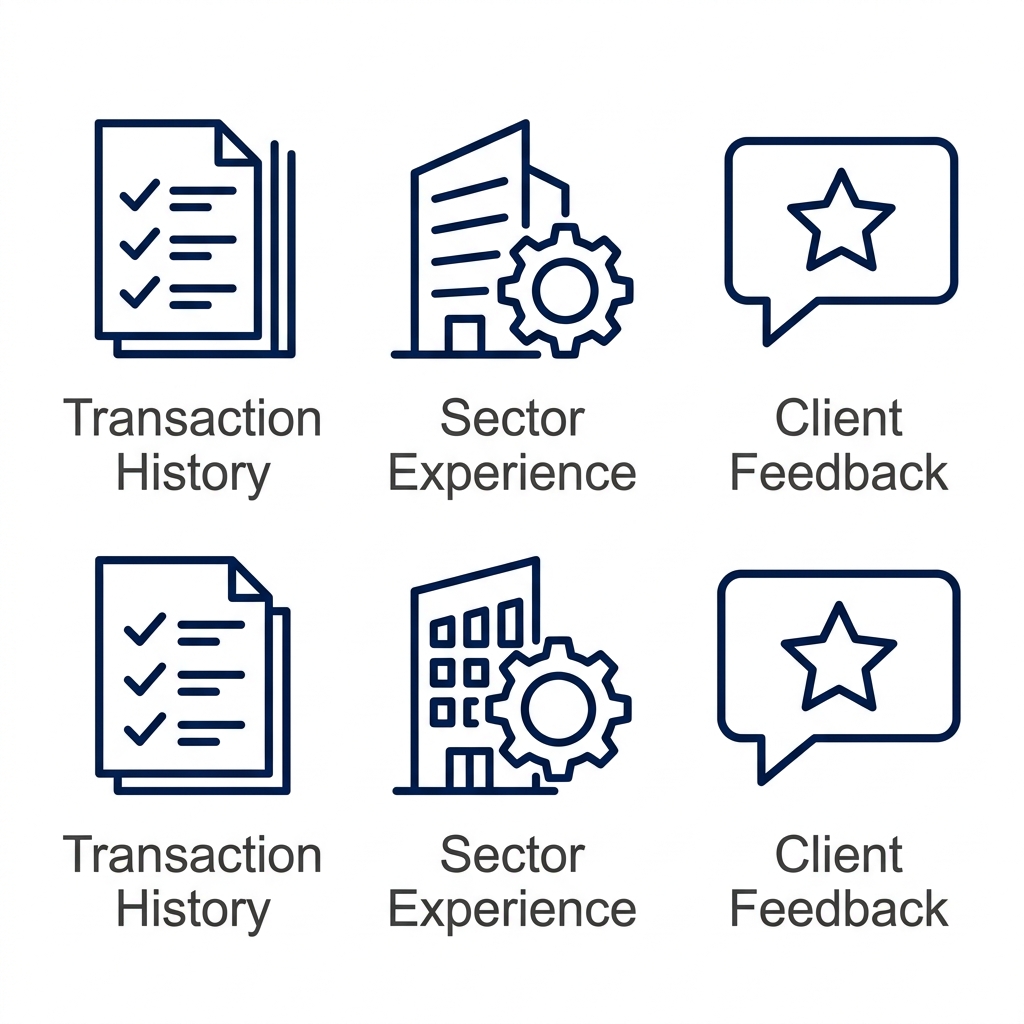
Look for an advisor’s completed lower-middle-market transactions across a relevant value range. Client testimonials should highlight strategic insight, not just transaction mechanics, and demonstrate a consistent record of delivering outcomes that align with owner objectives.
How to Evaluate
We advise taking the following steps:
- Request a detailed deal sheet listing transaction values, timelines, and client references.
- Review case studies that illustrate the advisor’s full-cycle M&A approach.
- Conduct direct interviews with past clients to gauge satisfaction and post-deal performance.
What the Answer Means
A deep track record signals disciplined negotiation, rigorous due diligence, and effective post-merger integration, the stage that MAScience identifies as critical for value realization. This reduces execution risk and confirms that the advisor understands the unique dynamics of lower middle market deals, where owner involvement and niche positioning matter.
Investor Network and Capital Access
Beyond individual expertise, an advisor’s investor network shapes capital access and can determine whether a transaction closes and how quickly.
What to Evaluate
Think broadly about the direct relationships of the advisor across Family Offices, Private Equity, Venture Capital, Strategic Acquirers, and Sovereign Wealth Funds. Analyze the depth of the advisor’s relationships. This includes repeat engagements with the same capital providers and completed introductions to those capital providers.
How to Evaluate
Ask for a recent sample of introductions and assess the quality of the firm’s outreach. Request a recent map of introductions showing capital providers, mandate size, and outcomes, and ask for the conversion rate from outreach to term sheet. Consider if the firm uses a data-driven matching system that categorizes investors by sector, check size, geography, and historical behavior, and whether it uses transaction feedback to refine targeting. Capital raising should be a disciplined, systematic process for the firm.
What the Answer Means
Access to a trusted decision maker shortens the time from introductory meeting to letter of intent. A well-curated, proprietary network tends to yield a more competitive process, compressed timelines, and stronger valuations, though results depend on market and company fundamentals, and the test is whether the advisor converts relationships into a structured, transparent deal process.
Full-Cycle Deal Execution and Process Transparency
What to Evaluate
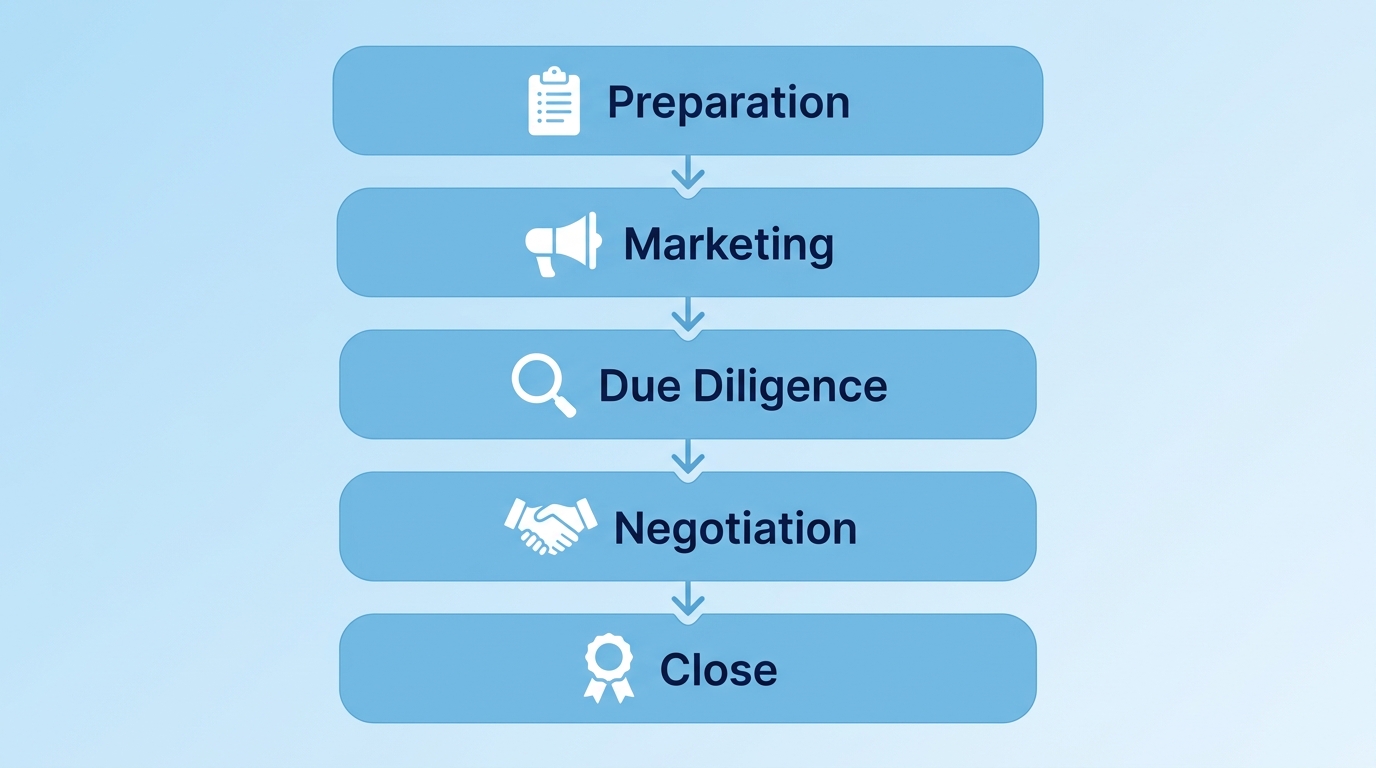
The process of executing a deal for a lower middle market company includes various steps such as preparation, marketing, due diligence, negotiation and closing. It is prudent to assess the advisor’s methodology to determine if it includes seller due diligence, comprehensive CIMs and work plans. A disciplined process begins with a clear strategic mandate, and according to M&A Science, more and more sellers are conducting self-due diligence to manage the business risk. While negotiating the deal, non-disclosure agreements are used to protect buyer intent. Post-merger integration (PMI) is the most critical phase for retaining key employee talent and realizing the rationale for the deal.
This lifecycle can be visualized in five stages:
How to Evaluate
Ask to see a sample project timeline and a description of the team that will manage your transaction. Verify that senior bankers lead every phase. See the tools and technology they use for managing data rooms and tracking buyers.
What the Answer Means
When a documented methodology is followed by an experienced team, you can have confidence that the intricacies of the lower middle market (i.e owner dependence, integration complexity, etc.) are addressed.
Red Flags to Avoid in Lower Middle Market Advisory
Although a full-cycle deal execution process ensures transparency, common pitfalls can undermine an advisory engagement. Some of the red flags in M&A Science’s Disciplined M&A Framework are as follows:
- A missing strategic mandate that treats the acquisition as purely financial.
- Skipping non-disclosure agreements, which can expose buyer intent and trigger information leaks.
- Failing to perform the seller’s own due diligence before going to market, leaving risks unaddressed.
- Underestimating post-merger integration, the most critical phase for value realization and employee retention.
Recognizing these red flags allows you to identify pitfalls in an investment bank’s process when vetting banks.
Key Questions to Ask When Interviewing Investment Banks
When executing a transaction, a disciplined process, inclusive of a strategic mandate, maintaining confidentiality, seller-led due diligence, and integration planning, is critical to success. According to M&A Science, these pillars determine deal success.
- How do you define the strategic mandate for a transaction and evaluate alternatives to a sale? This reveals whether the bank considers organic growth or partnerships before pursuing M&A.
- What measures do you take to protect confidentiality through NDAs and controlled buyer outreach? Strong confidentiality prevents leaks that can derail a deal.
- How do you conduct seller-led pre-market due diligence to surface issues early? Proactive self-diligence reduces surprises and accelerates the buyer’s timeline.
- What is your process for managing buyer inquiries and validating claims during confirmatory due diligence? Thorough vetting uncovers hidden liabilities and strengthens negotiation positions.
- How do you structure post-merger integration planning to retain value and key talent? Integration failures are the most common cause of deal underperformance, so a clear plan is essential.
West Palm Beach and Beyond: Local Considerations for Lower Middle Market Advisory
In addition to interviewing investment banks, assessing local market dynamics in West Palm Beach and other surrounding areas is an important element of successful lower middle market advisory. At Zaidwood Capital, with our headquarters located in West Palm Beach, we are able to utilize our deep local knowledge and combine it with our access to the national marketplace to tailor M&A advisory for lower middle market companies to the specific conditions in South Florida.
Today, many lower middle market companies are doing pre-market due diligence to identify potential financial or operational risks (reinforced by this discipline). We have incorporated this discipline for all of our engagements in order to uncover and deal with these issues prior to initiating a transaction.
Additionally, from a regulatory and local consideration, all securities are offered through Finalis Securities LLC (Member FINRA/SIPC). These regulatory and local considerations shape the rigorous due diligence framework we apply to every engagement, helping business owners in West Palm Beach and beyond execute deals with confidence.
Pre-Engagement Due Diligence Checklist
Building on those local factors, a disciplined pre-engagement due diligence checklist helps sellers in the lower middle market prepare confidently. M&A Science confirms that proactive self-diligence reduces surprises. We recommend:
- Define a strategic mandate and clear post-close success metrics.
- Complete an internal risk review covering financial, operational, and legal liabilities.
- Execute a non-disclosure agreement before sharing sensitive information.
- Manage confidentiality to prevent premature leakage and protect buyer intent.
This checklist establishes a solid groundwork for answering common seller questions.
Frequently Asked Questions About Lower Middle Market Investment Banking
Our pre-engagement due diligence checklist shows our commitment to thorough preparation. Here are answers to some frequently asked questions to give you a better understanding of lower middle market investment banking services.
Q: What are the key stages of a disciplined M&A process?
According to Mascience’s disciplined M&A framework, the process begins with a clear strategic mandate that justifies the acquisition and sets four pillars: justify the acquisition over other capital uses, define synergy targets, create an integration roadmap, and establish post-close success metrics. From that mandate, teams move through sourcing, negotiation, signing, and closing, with integration last.
Q: Why are non-disclosure agreements essential in an M&A transaction?
NDAs protect sensitive information shared during diligence and prevent premature leakage that could harm the seller or buyer’s competitive position. A well-drafted NDA binds participants to confidentiality and preserves trust; we recommend putting one in place at the outset of substantive discussions.
Q: What drives sellers to perform their own due diligence before marketing the business?
Sellers conduct self-diligence to surface and address operational, financial, or legal issues proactively, which can accelerate buyer confirmatory diligence and reduce surprises. We counsel clients to complete a seller-led quality of earnings review so potential weaknesses are mitigated before marketing.
Q: Why is post-merger integration the most critical phase of a deal?
Integration is where agreed synergies are converted into results — or lost. Cultural misalignment, poor communication, and uncoordinated systems can erode value and prompt key departures. We stress beginning integration planning during due diligence to align leadership, processes, and day-one priorities before closing.
For more information, or to begin your capital advisory journey, reach out to us at Zaidwood Capital.
Start Your Capital Advisory Journey with Zaidwood Capital
We combine a proprietary data platform, AI-driven matchmaking, and a network of 4,000+ investors to deliver a disciplined, technology-driven advisory experience that aligns capital partners with your strategic objectives and accelerates deal execution. Begin your lower middle market investment banking services journey with us, contact us.