Zaidwood Capital

Category: Business Finance

  • Software Solutions: Complete Guide for Small Businesses

    Software Solutions: Complete Guide for Small Businesses

    Table of Contents

    Essential HR Software Solutions for Business Growth

    In today’s competitive landscape, HR tech adoption has surged, with over 70% of small and mid-sized businesses implementing software solutions to manage their workforce effectively. These platforms address the growing need for streamlined operations as companies scale more broadly.

    At Zaidwood Capital, we see how boutique M&A advisory intersects with human capital management, where accurate workforce data becomes crucial during due diligence. For instance, robust hr software for small businesses enhances scalability for startups seeking capital formation or navigating mergers, improving data accuracy that supports our full-cycle due diligence processes, including human capital assessments. This alignment not only bolsters operational efficiency but also strengthens valuation in growth strategies, as highlighted in our services overview on comprehensive transaction support.

    This article explores essential HR management platforms, previewing three standout options: BambooHR for intuitive employee management, Gusto for seamless payroll and benefits, and Rippling for integrated workforce optimization tools. These hrms for small business exemplify practical tools that complement strategic financial consulting.

    By leveraging such solutions, businesses achieve cost savings through automation and ensure regulatory adherence, mitigating risks in compliance-heavy environments like M&A preparations.

    BambooHR: Streamlined HR for Small Teams

    BambooHR stands out among human capital management tools as a user-friendly software solutions platform designed for small businesses seeking efficient employee management systems. It simplifies core HR functions like onboarding and performance tracking, enabling teams to scale operations without overwhelming administrative tasks. This approach supports strategic decisions in equity advisory, where accurate human capital data proves invaluable during capital raising or M&A preparations.

    Key Features

    BambooHR offers an intuitive interface that streamlines hr software for small businesses through automated workflows. Key capabilities include:

    • Employee self-service portals for updating personal information and viewing pay stubs, reducing HR inquiries by up to 80% as noted in NYU studies on human capital tools.
    • Onboarding automation that digitizes paperwork and training schedules, accelerating new hire integration.
    • Performance management tools with goal setting and feedback modules to track progress.
    • Benefits administration for easy enrollment in health plans and handling time-off requests.
    • Compliance modules supporting EEO reporting and ACA filings to ensure regulatory adherence.
    • Integrations with payroll providers like Gusto for seamless data transfer.
    • Custom reporting dashboards for insights into workforce metrics.

    These features position BambooHR as a robust compliance automation platform, particularly useful in due diligence processes. For instance, its reporting aids M&A evaluations by providing verifiable employee data, a detail we at Zaidwood Capital often highlight in advisory engagements.

    Pricing

    BambooHR structures pricing into Essentials at $6 per user per month and Full Service at $8.25 per user per month, both requiring annual billing. According to SHRM’s 2025 trends, these tiers align with average small business costs, offering value without hidden fees.

    Pros and Cons

    Pros:

    • Ease of use with an intuitive dashboard accessible to non-HR staff.
    • Mobile app for on-the-go employee management.
    • Customizable workflows tailored to specific business needs.
    • Strong customer support with responsive assistance.

    Cons:

    • Limited international support for global teams.
    • Basic reporting lacks advanced analytics for larger scales.
    • Integration costs can add up for multiple third-party tools.

    In our experience at Zaidwood, these pros enhance operational efficiency during growth phases, while the cons suggest evaluating scalability early.

    Best For

    BambooHR excels as an hrms for small business with 1-50 employees focused on core HR needs without complex analytics. It reduces administrative burdens, freeing resources for strategic initiatives like those in our capital advisory services, where streamlined human capital data supports informed transaction decisions.

    Gusto: Comprehensive Payroll for Growing Businesses

    Gusto stands out as a leading platform for small to mid-sized businesses, offering an all-in-one solution for payroll processing, benefits administration, and compliance management. Building on the HR foundations discussed with BambooHR, Gusto excels in automating financial workflows that ensure accurate reporting and employee satisfaction. In our experience at Zaidwood Capital, precise payroll data plays a crucial role in financial due diligence during capital advisory engagements, helping clients prepare robust documentation for investors.

    Key Features

    Gusto’s features streamline operations for growing teams. Direct deposit ensures timely payments to employees and contractors, while the benefits marketplace simplifies health insurance enrollment and other perks. Compliance alerts automate tax filings and W-2 handling, adhering to labor laws for teams up to 100 members. Integrations with time tracking tools enhance accuracy, and built-in HR tools provide essential automation benefits for hrms for small business. These elements reduce manual errors, delivering strong ROI by minimizing penalties and improving efficiency in payroll management systems.

    Pricing

    Gusto offers tiered plans: Simple at $40 base monthly plus $6 per user, Plus at $80 base plus $12 per user, and Premium with custom pricing. Aligning with HR software pricing trends, where averages range from $20 to $50 per user monthly, Gusto positions hr software for small businesses as a premium yet scalable option, especially for those integrating benefits administration software.

    Pros and Cons

    Pros: Seamless payroll and tax handling saves time and ensures accuracy; excellent customer support guides users through setup; easy onboarding facilitates quick adoption for growing firms.

    Cons: Higher costs for basic needs may strain tight budgets; limited advanced HR functionalities compared to full suites; availability restricted to US operations only, lacking global reach.

    These aspects highlight Gusto’s strengths in core financial tasks while noting areas for expansion, such as deeper integrations needed for mid-sized operations leading into tools like Rippling.

    Best For

    Gusto is ideal for small businesses prioritizing payroll accuracy and compliance during capital-seeking scenarios. As robust software solutions, it supports strategic documentation in equity advisory, enabling firms to present clean financials to investors. Our advisory work at Zaidwood underscores how such platforms bolster due diligence, fostering trust in growth equity pursuits.

    Rippling: Integrated HR and IT for Mid-Sized Firms

    At Zaidwood Capital, we recognize Rippling as a powerful all-in-one platform that unifies HR, payroll, and IT management for mid-sized firms navigating growth. This software solution streamlines employee lifecycle processes, from onboarding to compliance, providing actionable insights that support our full-cycle due diligence in M&A transactions.

    Rippling’s features position it as a leader among software solutions for integrated benefits. Key capabilities include:

    • Global payroll and benefits administration, handling multi-country regulations with automated tax filings.
    • Device management and app provisioning, enabling secure IT distribution to new hires.
    • AI-driven analytics for workforce trends and performance metrics.
    • Comprehensive compliance suite ensuring adherence to international labor laws.

    These tools reduce onboarding time by 50%, as noted in human capital management studies, fostering efficient IT-HR sync.

    Pricing starts at $8 per user per month for the Core plan, scales to $11.50 for Pro, and offers custom Enterprise options tailored to complex needs.

    Pros of Rippling include seamless IT-HR integration tools that automate workflows and provide global support, enhancing scalability for expanding operations. Its automation depth delivers operational insights vital for fairness opinions in M&A. However, cons involve a steep learning curve, higher pricing compared to basic options, and added complexity that may overwhelm smaller teams transitioning from hr software for small businesses.

    Rippling excels as a unified workforce platform best for mid-sized companies with 50-500 employees seeking hrms for small business evolution into robust systems. We leverage such integrations in our advisory services to prepare clients for M&A readiness, ensuring compliance and data unification drive strategic value.

    Comparing Top HR Software Solutions

    When evaluating software solutions for human resources management, businesses often seek tools that align with their growth stages and operational demands. At Zaidwood Capital, we recognize that robust HR platforms can enhance due diligence processes in mergers and acquisitions by streamlining human capital oversight. This comparison focuses on three popular options—BambooHR, Gusto, and Rippling—to highlight key differences in features and suitability for small and mid-sized enterprises.

    Selecting the right HR tool requires considering scalability, especially for firms navigating expansion or advisory needs. For instance, hr software for small businesses must offer intuitive interfaces without overwhelming complexity. Factors like integration capabilities and cost efficiency play crucial roles in ensuring long-term value, as hrms for small business environments prioritize ease of adoption alongside compliance support.

    The following table provides a side-by-side view of these solutions across essential criteria:

    FeatureBambooHRGustoRippling
    Basic automation and integrationsFull payroll processing with tax complianceGlobal payroll and IT-integrated benefits
    $6-8.25$6-12 + base fee$8+
    US-focused EEO/ACALabor law and tax filingsInternational and IT compliance
    Small teams (1-50)Payroll-focused small/midMid-sized integrated ops (50+)

    Gusto stands out for its payroll simplicity, ideal for teams emphasizing tax compliance without global needs, while Rippling provides deeper integrations for scaling operations. BambooHR suits straightforward small-team administration. According to SHRM’s 2025 trends, rising modular pricing reflects the demand for flexible HR platform comparisons, allowing businesses to customize without excess costs.

    These tool evaluation matrices underscore how integrated HR systems support strategic human capital management, a vital aspect in our M&A advisory work. From our capital advisory lens, choosing scalable options like these can mitigate risks during transactions, ensuring seamless talent retention and compliance in post-deal environments.

    Such comparisons reveal trade-offs in functionality versus affordability, guiding informed selections that align with broader business objectives. For growing firms, prioritizing tools with strong integration—such as Rippling’s IT features—can facilitate smoother transitions in advisory scenarios, ultimately bolstering operational resilience.

    In our experience at Zaidwood Capital, these insights into HR technology directly inform capital strategies, helping clients optimize human resources as part of full-cycle due diligence for successful mergers and acquisitions.

    Selecting HR Software for Strategic Success

    In summary, effective software solutions like BambooHR, Gusto, and Rippling offer substantial benefits for businesses navigating growth. BambooHR excels in user-friendly hr software for small businesses, providing essential tools for employee management at a cost-effective rate. Gusto streamlines payroll and compliance, while Rippling delivers comprehensive features for scalable operations. These platforms enhance efficiency, ensure regulatory adherence, and optimize human capital, drawing from the comparisons outlined earlier.

    Implementing these systems starts with a thorough needs assessment to align features with organizational goals. For hrms for small business, prioritize intuitive interfaces and integration capabilities to minimize disruption. Train teams adequately and monitor performance metrics post-launch to refine usage. Best practices emphasize phased rollouts, ensuring seamless adoption without overwhelming resources.

    At Zaidwood Capital, we integrate HR strategies with broader financial planning through our zaidwood capital advisory services. Robust HR data supports due diligence in M&A capital advisory, where human capital assessments mitigate risks and inform valuations. Our network provides access to institutional investors, tying HR efficiency to capital formation success.

    We encourage consulting our advisors for tailored strategic HR platforms. As growth-oriented tools evolve, they remain vital for sustainable expansion in dynamic markets.

    Resources

  • Bookeeping: Complete Guide for Small Business Owners

    Bookeeping: Complete Guide for Small Business Owners

    Table of Contents

    Essential Bookkeeping Basics for Small Businesses

    We at Zaidwood Capital recognize that effective bookkeeping forms the backbone of small business financial management. Bookkeeping involves the systematic recording of financial transactions, ensuring every dollar in and out is tracked accurately. For small business owners juggling multiple roles, this process prevents chaos and supports informed decision-making from day one.

    At its core, small business bookkeeping is essential for tax preparation, cash flow monitoring, and regulatory compliance. The IRS requires retaining receipts and records for at least three years to substantiate income and expenses, avoiding penalties that can derail a growing venture. Consider a retail shop in Sheridan, Wyoming, where tracking inventory costs through financial record-keeping reveals profitable product lines and seasonal trends, enabling better purchasing decisions.

    Startups often handle basic tasks in-house, but scaling businesses benefit from outsourced bookkeeping to manage complexity. Professional services mitigate common pitfalls, such as overlooked deductions or audit triggers. While bookkeepers focus on daily transactions, accountants provide deeper analysis—a key distinction in bookkeeping vs accounting. Accounting support for SMBs ensures compliance while laying groundwork for advanced strategies like debt advisory and equity raising, areas where Zaidwood Capital excels in integrating robust documentation with corporate finance consulting.

    Do small businesses need these services? Absolutely, to navigate risks and fuel growth. In the following sections, we explore fundamental roles, costs, and strategies to build a solid financial foundation.

    Core Principles of Small Business Bookkeeping

    Effective bookkeeping forms the foundation of financial management for small and medium-sized businesses, ensuring accurate tracking that supports informed decision-making and future growth. Our experience at Zaidwood Capital shows how these fundamentals prepare companies for capital raising and mergers and acquisitions by maintaining transparent records that facilitate due diligence. By mastering daily financial tracking and generating key reports, SMBs can avoid common pitfalls and align with compliance standards.

    Understanding Daily Transaction Recording

    Daily transaction recording is a cornerstone of small business bookkeeping, involving the systematic logging of all income, expenses, and reconciliations to preserve financial integrity. For instance, a freelance consultant might enter client invoices as income upon issuance, categorize supply purchases as expenses, and reconcile bank statements weekly to catch discrepancies early. This process, often called daily financial tracking, prevents errors that could escalate during audits or expansion phases.

    Tools like accounting software streamline these tasks, automating categorization and integration with bank feeds for efficiency. According to IRS guidelines, businesses must retain supporting documents such as receipts and invoices for 3 to 7 years, emphasizing the need for organized irs record keeping for small businesses. Our advisory work reveals that consistent practices reduce compliance risks and build a reliable data trail essential for strategic planning.

    Selecting the right bookkeeping method depends on factors like business type, size, and growth aspirations. Service-based operations with straightforward cash flows often benefit from simpler approaches, while product-heavy firms may require more nuanced tracking to reflect ongoing obligations accurately.

    AspectCash BasisAccrual Basis
    Recognition of RevenueWhen cash is receivedWhen earned (invoice date)
    SuitabilityIdeal for small, service-based businessesRequired for complex/inventory businesses

    Cash basis offers simplicity for startups focused on immediate cash management, but accrual basis provides a fuller picture of financial health, which is crucial as businesses scale toward opportunities like M&A. This method better captures future obligations and revenues, aiding in valuation and investor presentations. Transitioning to accrual can enhance readiness for capital formation by demonstrating sustainable growth trajectories.

    Key Financial Statements for SMBs

    Key financial statements serve as the primary outputs of robust small business bookkeeping, offering insights into profitability, position, and liquidity. The income statement, or profit and loss report, summarizes revenues minus expenses over a period, revealing net income or loss. For a retail shop, this might highlight seasonal sales peaks against fixed costs like rent, guiding pricing adjustments.

    The balance sheet provides a snapshot of assets, liabilities, and equity at a specific point, ensuring assets equal liabilities plus equity. It helps assess solvency, such as verifying that inventory investments align with available capital. Meanwhile, the cash flow statement tracks actual cash inflows and outflows across operating, investing, and financing activities, crucial for managing working capital in volatile markets.

    • Income Statement: Tracks performance; essential for tax prep as per SCORE resources, integrating expense logs with seasonal obligations.
    • Balance Sheet: Shows financial position; supports due diligence by verifying asset values.
    • Cash Flow Statement: Monitors liquidity; prevents cash crunches during growth.

    Do small businesses need professional bookkeeping services? Absolutely, especially as complexity grows—errors in these statements can lead to overstated profits or undetected shortfalls, complicating payroll and HR compliance. Outsourced bookkeeping mitigates these risks, providing expert oversight that aligns with IRS standards and frees owners for core operations. In our capital advisory role, we see how precise statements bolster credibility with investors, tying foundational practices to successful equity raises and M&A executions.

    Exploring Bookkeeping Processes in Depth

    At Zaidwood Capital, we emphasize the importance of robust financial foundations in supporting mergers and acquisitions and capital advisory services. Understanding bookkeeping processes in depth enables small businesses to maintain accurate records that facilitate due diligence and strategic planning. This section examines the nuanced roles within financial management and explores outsourcing as a scalable solution for growing enterprises.

    Role Differentiation: Bookkeeper vs. Accountant

    We recommend distinguishing between bookkeepers and accountants to ensure optimal financial oversight, particularly as businesses prepare for capital transactions. Bookkeepers focus on the day-to-day aspects of bookkeeping, such as entering financial transactions, reconciling bank statements, and generating basic reports like income statements. These tasks maintain the integrity of financial data, providing a clear snapshot of cash flow and expenses. In contrast, accountants delve into analysis, interpreting that data to offer insights on profitability, tax strategies, and compliance with regulations.

    Qualifications further highlight these differences. Bookkeepers typically hold an associate degree and proficiency in software like QuickBooks, while accountants often possess a bachelor’s degree and certifications such as CPA, enabling them to handle complex audits and financial forecasting. For small businesses, involve a bookkeeper for routine transaction management to keep operations smooth, and engage an accountant during tax season or when scaling for equity raises. This division ensures efficiency without overburdening internal resources.

    Consider a tech startup we advised: initial bookkeeping handled in-house for basic entries, but as funding discussions arose, an accountant’s analytical expertise proved essential for projecting valuations. Such role clarity aids in due diligence, linking everyday records to broader strategic goals.

    The following table outlines key duties to illustrate these distinctions:

    FactorIn-HouseOutsourced
    Cost StructureFixed salary plus benefitsVariable monthly fee
    ScalabilityLimited by staff capacityFlexible with business growth

    This comparison underscores how bookkeepers lay the groundwork, while accountants provide the strategic elevation needed for informed decisions in capital advisory contexts. By addressing the question of differences for small businesses, we help clients allocate resources effectively, enhancing overall financial health.

    Outsourcing Options and Cost Factors

    For growing small businesses, outsourced bookkeeping offers flexibility and expertise that in-house efforts may lack, aligning with our full-cycle due diligence services at Zaidwood Capital. Benefits include cost savings through variable pricing, access to specialized knowledge in areas like payroll and HR integration, and reduced compliance risks. Outsourcing allows focus on core operations, such as preparing for debt or equity financing, while professionals manage transaction management and reporting. A retail client we supported transitioned to external financial services during expansion, freeing time for market analysis and investor outreach.

    Pricing structures vary based on business size and complexity. Hourly rates range from $20 to $50, suitable for occasional needs, while monthly packages for comprehensive small business bookkeeping fall between $500 and $2,000. For trades businesses, as noted in regional benchmarks, costs average $500 to $1,200 monthly, covering invoicing, job costing, and tax preparation setup. These models are deductible business expenses, providing additional value.

    When selecting providers, consider these criteria:

    1. Experience with your industry and integration with tools like payroll systems.
    2. Certifications and references to ensure reliability.
    3. Scalability for growth phases, such as during M&A preparations.
    4. Transparent pricing without hidden fees.

    To address how much outsourcing costs, tiered examples include basic plans at $300-700 for freelancers and premium at $1,000+ for firms offering strategic insights. This approach not only saves time—owners spend 120 hours annually on DIY tasks—but also mitigates errors like overpaid taxes, supporting precise financials for capital transactions.

    As small and medium-sized businesses (SMBs) scale, evaluating scalability becomes critical; in-house limitations can hinder growth, while outsourcing adapts seamlessly to increasing transaction volumes. The following table contrasts these approaches:

    SoftwareKey FeaturesPricingBest For
    QuickBooksInvoicing, payroll integration$25+/monthMost US-based SMBs
    XeroBank feeds, multi-currency$13+/monthCloud-focused ops

    In-house suits stable operations with steady volumes, yet outsourced bookkeeping excels for dynamic SMBs navigating capital raises, offering expertise that pays for itself through better cash flow management and decision-making. For complex finances, we advise integrating these services with strategic advisory, such as linking to a small business tax preparation guide to streamline compliance ahead of transactions. This positions businesses for efficient due diligence and sustained growth.

    Implementing Bookkeeping in Daily Operations

    We recognize that integrating bookkeeping into daily operations is essential for small businesses seeking financial clarity and growth opportunities. At Zaidwood Capital, we advise starting with robust systems that not only track transactions but also align with broader financial strategies, such as preparing for debt advisory services. This section outlines practical tools and processes to streamline these efforts, ensuring compliance and efficiency while highlighting how accurate records can support access to tailored financing solutions.

    Tools and Software for Efficient Tracking

    Effective small business bookkeeping begins with selecting the right operational financial tools that automate routine tasks and provide real-time insights. We recommend platforms like QuickBooks for its comprehensive features tailored to growing enterprises, including automated invoicing and expense categorization. These integrated record systems simplify daily tracking, allowing owners to focus on core activities rather than manual data entry.

    To set up such software, follow these steps: 1) Create a chart of accounts to organize income, expenses, assets, and liabilities based on your business structure. 2) Establish categorization rules for transactions, such as tagging vendor payments or client receipts automatically. 3) Connect bank feeds for seamless import of statements, reducing errors and saving time. This initial configuration, which takes about 2-4 hours, forms the foundation for scalable bookkeeping.

    When evaluating options, consider integration needs like compatibility with payroll modules and ease of generating reports for lenders. The following table compares popular bookkeeping software options, focusing on features relevant to small businesses:

    PracticeStandard BookkeepingAdvanced for Growth
    ForecastingBasic monthly reviewsScenario modeling
    ComplianceAnnual tax prepFull-cycle audits

    Selection criteria such as cost, user interface, and scalability should guide your choice. For instance, QuickBooks excels in domestic operations with strong add-on support, while Xero suits businesses with global transactions. Following this evaluation, we suggest weighing pros and cons: QuickBooks offers robust compliance tools but may require training, whereas Xero promotes collaboration yet demands reliable internet. These factors tie directly to maintaining accurate records that facilitate compliance and future capital pursuits.

    What questions should small business owners ask a bookkeeping provider? We recommend inquiring about:

    • Their experience with industries similar to yours and proficiency in your chosen software.
    • How they ensure data security, including adherence to policies like the zaidwood capital privacy policy.
    • Timelines for setup and ongoing support to integrate with your workflows.
    • Methods for customizing reports to align with lending applications.

    Incorporating bookkeeping here enhances operational efficiency, but for complex scaling, professional oversight may be necessary.

    Integrating Payroll and Compliance Checks

    Aligning bookkeeping with payroll and HR tasks is crucial for regulatory adherence and operational smoothness. We guide clients to link these functions through software that handles withholding calculations, tax filings, and employee deductions automatically. This integration not only minimizes errors but also ensures records support strategic needs, such as demonstrating financial health for debt advisory engagements at Zaidwood Capital.

    Begin by syncing payroll modules within your bookkeeping system: 1) Input employee details, including tax IDs and deduction preferences. 2) Set up automated withholding for federal, state, and local taxes per IRS guidelines. 3) Generate payslips and W-2 forms, retaining copies for at least four years as required by IRS record-keeping rules for employee forms. This process aligns daily operations with HR compliance, covering aspects like overtime tracking and benefits administration.

    For outsourced bookkeeping scenarios, providers can manage these integrations, ensuring seamless reporting for audits. However, always verify their familiarity with regulatory updates to avoid penalties. Accurate payroll records, bolstered by consistent categorization, directly aid in preparing documentation for financing, where lenders review cash flow and compliance history.

    To illustrate workflow differences, consider the following comparison of payroll methods:

    MethodAccuracyCost
    Manual CalculationHigh risk of errorLow initial cost
    Automated SoftwareHigh (audit-ready)Subscription-based

    Manual methods suit very small teams but risk inconsistencies that could complicate growth strategies. Automated systems, conversely, streamline processes and provide audit-ready trails, ideal for businesses eyeing expansion through capital formation. We advise transitioning to automation for scalability, linking it to broader financial planning.

    In compliance checks, focus on daily, quarterly filings and annual reconciliations. Use checklists: Verify deduction accuracy monthly, reconcile payroll with general ledger quarterly, and conduct annual reviews for discrepancies. Caution on data security is paramount; implement multi-factor authentication and regular backups to protect sensitive information. These practices not only meet HR requirements but also position your business favorably for advisory services, where precise records unlock competitive financing terms via our extensive lender network.

    While basic implementation handles daily needs, advanced scenarios may require specialized support to navigate complexities beyond standard operations.

    Advanced Bookkeeping Strategies for Growth

    In our advisory work at Zaidwood Capital, we frequently guide expanding small businesses through the transition from foundational record-keeping to more nuanced practices that align with ambitious growth objectives. As companies scale, especially when preparing for capital events like mergers or equity raises, advanced bookkeeping becomes essential. This involves not just accurate tracking but strategic integration that supports decision-making and investor confidence. For instance, a manufacturing firm eyeing an acquisition might leverage sophisticated techniques to ensure its financials reflect potential synergies, positioning it favorably in due diligence processes.

    One key strategy centers on pro forma financials and scenario planning, elevating basic bookkeeping to strategic financial modeling. Here, businesses create forward-looking statements that model various growth paths, incorporating variables like market expansions or revenue streams from new products. We incorporate the keyword bookkeeping in this context, as robust forecasting distinguishes viable opportunities from risks. Small business bookkeeping tools, such as integrated software suites, enable this by automating projections and linking them to real-time data, while outsourced bookkeeping specialists handle the complexities of multi-scenario analysis.

    Advanced compliance practices further enhance readiness, moving beyond annual tax preparation to proactive measures like SOX preparation. This ensures financial reporting withstands scrutiny during capital raises, mitigating regulatory hurdles. Ties to M&A due diligence are critical; full-cycle audits reveal operational efficiencies and valuation drivers that standard approaches overlook. Strategic documentation, including pitch decks, transforms raw data into compelling narratives for stakeholders, highlighting growth potential through growth-oriented record-keeping.

    Preparing financials for such events requires a clear distinction between routine and elevated practices. The following table outlines this comparison in the context of M&A readiness:

    MetricRoutine PracticeGrowth-Oriented
    Data DepthBasic Income/ExpenseSegmented profitability
    ComplianceIRS GuidelinesSOX/Due Diligence Ready

    This framework illustrates how advanced methods build investor trust by providing deeper insights. For example, scenario modeling can quantify the impact of an acquisition, while due diligence prep uncovers hidden value, directly supporting liquidity solutions.

    In our experience, these strategies unlock access to extensive investor networks, much like those we maintain with over 500 private equity firms and family offices. Our aggregate transaction volume exceeds $24.4 billion across more than 300 deals, demonstrating the real-world impact of precise financial preparation. For businesses exploring alternative investments 2026, integrating such bookkeeping enhances appeal in equity and debt advisory contexts.

    To implement effectively, consider these advanced tips:

    • Engage outsourced bookkeeping early for SOX-aligned processes.
    • Develop pitch decks with pro forma integrations to showcase scalability.
    • Conduct regular scenario reviews tied to M&A timelines.
    • Leverage advisory partnerships for network introductions during capital events.

    These approaches not only fortify financial health but also pave the way for sustainable expansion, addressing common queries on scaling professional services in dynamic growth phases.

    Common Bookkeeping Questions Answered

    In this financial Q&A on bookkeeping, we address key concerns for small businesses, drawing from our strategic advisory insights to clarify essential practices.

    What is the difference between a bookkeeper and an accountant?

    Bookkeepers handle day-to-day transaction recording and basic financial organization, while accountants provide analysis, tax preparation, and strategic advice. We recommend combining both for comprehensive SMB record queries.

    What are the typical costs for outsourced bookkeeping?

    Costs range from $500 to $2,500 monthly, depending on transaction volume and complexity. Outsourced bookkeeping offers scalable solutions without in-house overhead, as discussed in our service overviews.

    Do small businesses need dedicated bookkeeping services?

    Yes, small business bookkeeping ensures accurate records for compliance and growth planning. It prepares firms for capital raising by maintaining reliable financial data, tying into our full-cycle advisory.

    How does bookkeeping integrate with payroll management?

    Bookkeeping tracks payroll expenses and deductions, ensuring seamless integration with accounting software. This prevents errors and supports timely reporting, enhancing overall financial health.

    What compliance tips should businesses follow for bookkeeping?

    Maintain detailed records and use secure software for IRS adherence. We suggest consulting professionals, noting our Terms & Conditions disclaim specific guarantees on outcomes. Always verify with legal advisors.

    How to vet a bookkeeping provider?

    Evaluate experience, references, and software proficiency. Firms like harris and partners exemplify thorough vetting; we advise aligning with your strategic finance needs.

    Building Strong Financial Foundations Through Bookkeeping

    In summary, mastering bookkeeping forms the cornerstone of financial stability for small businesses, from grasping fundamentals and streamlining processes to linking them with advanced capital strategies. Proactive management ensures compliance while unlocking growth opportunities, serving as essential SMB growth tools. At Zaidwood Capital, we emphasize consulting professionals for tailored guidance, including options like small business bookkeeping or outsourced bookkeeping to integrate these financial strategy essentials seamlessly. Explore our broader advisory services to elevate your operations—review our Terms & Conditions for details on engaging responsibly.

    Resources

  • What Is PEO? Complete Guide for Small Businesses

    What Is PEO? Complete Guide for Small Businesses

    Table of Contents

    In today’s competitive landscape, small businesses often grapple with complex HR demands that divert focus from core operations. A Professional Employer Organization (PEO) emerges as a vital HR outsourcing partner, adopting a co-employment model where the provider manages essential functions like payroll, benefits, and compliance. This arrangement allows business owners to access enterprise-level resources without the overhead of an in-house HR department.

    For small businesses, including those in sectors like restaurants facing seasonal staffing fluctuations, a PEO for small businesses or a PEO for restaurants can alleviate administrative burdens significantly. Restaurant owners, for instance, benefit from streamlined payroll during peak seasons, ensuring compliance with labor laws while maintaining cash flow. At Zaidwood Capital, we integrate PEO evaluation into our strategic consulting services, helping clients align HR outsourcing with broader capital strategies for sustainable growth. Industry trends, as detailed in the HR outsourcing guide from SHRM, show that a substantial portion of small businesses—approximately 40%—adopt PEOs to enhance compliance and efficiency.

    This introduction sets the foundation for exploring PEO fundamentals, benefits, operational mechanics, and selection criteria in the sections ahead, empowering business owners to make informed decisions.

    Fundamentals of Professional Employer Organizations

    We recommend that businesses exploring HR solutions begin with a solid understanding of Professional Employer Organizations (PEOs) and how they integrate into operational strategies. This foundational knowledge enables leaders to evaluate options effectively, particularly when aligning with comprehensive advisory services like those offered by Zaidwood Capital for due diligence and financial planning.

    Defining PEO and Co-Employment Models

    A Professional Employer Organization (PEO) represents a form of professional employment outsourcing where the PEO enters into a co-employment arrangement with client businesses. In this model, the PEO assumes responsibility as the employer of record for administrative HR functions, such as payroll processing, benefits administration, and tax compliance, while the client retains control over day-to-day employee management and operations. This differs from traditional HR outsourcing, which typically involves third-party providers handling specific tasks without altering employment status.

    Co-employment distinguishes itself from joint employment by focusing on shared administrative duties rather than operational control. Under IRS and Department of Labor (DOL) guidelines, co-employment ensures that the PEO and client company have clearly delineated roles, reducing the risk of misclassification issues. For instance, the PEO manages workers’ compensation filings and ensures adherence to federal regulations, allowing small businesses to mitigate compliance burdens.

    Client responsibilities include hiring, firing, and directing work, while the PEO handles:

    • Payroll and tax withholdings
    • Employee benefits enrollment
    • Regulatory reporting

    The PEO assumes:

    • HR administration and compliance oversight
    • Risk management for employment practices
    • Benefits negotiation with carriers

    Addressing common misconceptions, liability in co-employment is shared based on control, but the PEO’s expertise often shields clients from direct exposure, as supported by PEO advantages disadvantages analyses showing up to 30% risk reduction in compliance violations. Zaidwood FAQ resources highlight real-world structures where this model enhances stability without eroding client autonomy.

    PEO Applicability for Small Businesses and Specific Industries

    PEO for small businesses proves invaluable for those lacking internal HR infrastructure, enabling access to Fortune 500-level benefits like comprehensive health plans and retirement options at scaled rates. This HR co-employment solutions approach streamlines operations, allowing owners to focus on growth rather than administrative hurdles. For companies with fewer than 50 employees, PEOs address challenges like fluctuating payroll and regulatory navigation, fostering scalability.

    In industries with unique HR needs, such as hospitality, PEO for restaurants offers tailored support for variable staffing patterns common in seasonal or shift-based environments. Restaurants often face high turnover and compliance demands around overtime and safety standards; a PEO can centralize these functions, reducing administrative costs by 20-40% according to industry benchmarks. For example, a mid-sized diner chain might use a PEO to manage seasonal hires’ benefits without disrupting cash flow, ensuring DOL compliance during peak periods.

    Other sectors, like construction or retail, benefit similarly from PEOs handling workers’ compensation in high-risk settings. We at Zaidwood Capital integrate PEO due diligence into our full-cycle advisory, evaluating providers to align with strategic financial planning and optimize outcomes for mid-market clients navigating these transitions.

    Initial Cost Considerations in PEO Adoption

    Adopting a PEO involves pricing structures typically based on a percentage of gross payroll, ranging from 2-10% depending on services selected and company size. This model covers comprehensive HR outsourcing, including payroll, benefits, and compliance, with administrative service-only options at the lower end for basic needs. Factors influencing costs include employee count, industry risk profile, and benefit complexity; for instance, high-deductible health plans may lower premiums through PEO bargaining power.

    Small businesses often see the highest value in bundled packages, where economies of scale yield savings on individual components like 401(k) administration, potentially offsetting fees entirely via reduced internal overhead. Zaidwood FAQ insights note that initial setup fees, averaging $500-$2,000, cover contract customization, but ongoing costs correlate with payroll volume—e.g., a $1 million annual payroll at 4-6% equates to $40,000-$60,000 yearly.

    To address ‘How much does a PEO typically cost for HR outsourcing?’, consider variables like geographic location and customization; we recommend thorough vendor evaluation during due diligence to ensure alignment with financial goals, avoiding hidden fees in termination clauses or add-on services.

    Key Advantages of Implementing a PEO Solution

    Small businesses often face challenges in managing HR functions effectively, but partnering with a Professional Employer Organization (PEO) can transform these operations. Our clients at Zaidwood Capital frequently see how a PEO delivers substantial value by streamlining administrative burdens and enhancing employee satisfaction. From cost reductions to regulatory peace of mind, the advantages are clear and measurable, particularly for sectors like restaurants where seasonal demands add complexity.

    Enhanced Benefits and Payroll Efficiency

    Statistics show that businesses using outsourced HR benefits save up to 27% on employee packages through group purchasing power. PEOs handle payroll processing with automated systems, ensuring accurate tax filings and direct deposits while minimizing errors that plague manual methods. This efficiency extends to benefits administration, where employer of record services provide access to comprehensive health, dental, and retirement plans at rates unattainable for small firms individually.

    For instance, a restaurant chain might leverage these services to offer competitive perks during peak hiring seasons, boosting retention without inflating overhead. We have observed clients reduce administrative time by 50%, allowing teams to prioritize customer service over paperwork. This streamlined approach not only cuts costs but also elevates overall workforce morale through reliable, high-quality benefits.

    Compliance and Risk Mitigation Benefits

    Regulatory compliance represents a major hurdle for small businesses, with non-adherence potentially leading to fines exceeding $10,000 per violation according to SHRM data. PEOs mitigate these risks by assuming co-employment responsibilities, including workers’ compensation claims and adherence to DOL and IRS guidelines. Through regular updates and expert audits, they shield clients from evolving labor laws, transferring much of the liability away from the business owner.

    In practice, this means fewer sleepless nights worrying about audits or lawsuits. For a growing restaurant operation, a PEO ensures seasonal staff onboarding complies with wage and hour rules, avoiding costly penalties. Our advisory work at Zaidwood integrates these protections, helping firms navigate complexities with confidence and focus on sustainable expansion rather than legal pitfalls.

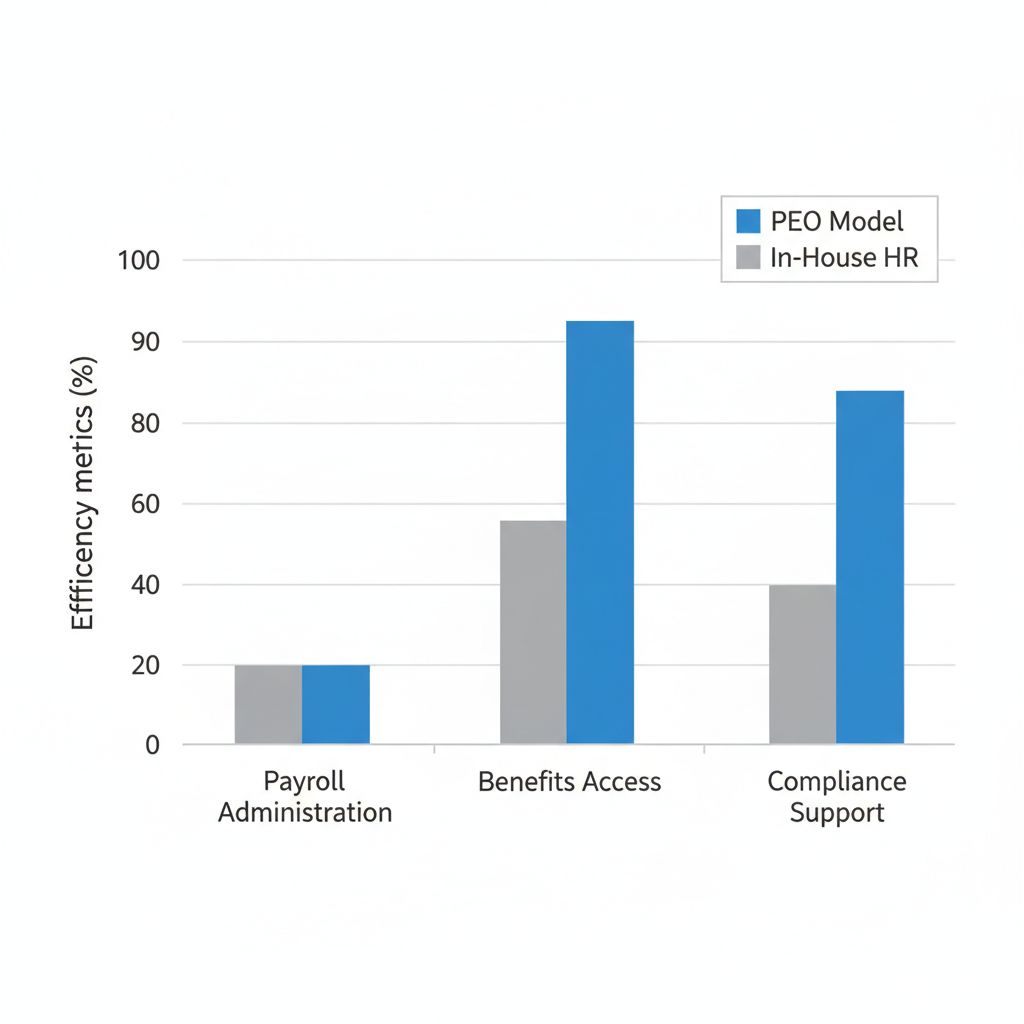
    Comparing PEO models to traditional in-house HR highlights why many small businesses opt for outsourcing. This evaluation underscores efficiencies in time, cost, and risk, enabling informed decisions tailored to operational needs.

    Benefit CategoryPEO ModelIn-House HRImpact on Small Businesses
    Payroll AdministrationAutomated processing with expert oversightManual handling prone to errorsReduces errors by 80%; saves 20-30 hours/month
    Benefits AccessGroup rates for comprehensive plansLimited individual negotiationsLowers costs by 10-20%; attracts top talent
    Compliance SupportShared liability and updatesFull client responsibilityMitigates fines; ensures DOL/IRS alignment

    The table illustrates PEOs’ clear edges in automation and shared expertise, particularly in cost savings and risk reduction. For small businesses, these wins translate to financial stability and operational agility, as supported by SHRM insights on reduced error rates and compliance burdens.

    Such comparisons reveal how PEOs empower firms to allocate resources strategically, fostering long-term resilience without the pitfalls of internal management.

    Bar chart comparing PEO and in-house HR efficiency in payroll, benefits access, and compliance support for small businesses, highlighting PEO superior performance.


    PEO model benefits versus in-house HR efficiency comparison chart

    This visual reinforces the tangible gains, showing PEO superiority across key metrics and aiding stakeholders in assessing fit for their unique challenges.

    Strategic Growth Support Through HR Outsourcing

    By offloading HR tasks, PEO for small businesses unlocks time for core activities, with studies indicating up to 50% faster employee onboarding. This outsourcing allows leaders to concentrate on revenue-generating strategies, such as menu innovation or market expansion in competitive sectors. Zaidwood Capital’s advisory services complement this by aligning PEO selections with financial due diligence, ensuring seamless integration for optimal growth trajectories.

    Consider a restaurant utilizing PEO for restaurants to manage variable staffing during holidays; compliance and payroll automation free up resources for targeted investments. We assist clients in evaluating PEO selection questions to match solutions with business goals, enhancing scalability. Ultimately, this partnership drives efficiency and positions firms for accelerated development without HR distractions.

    Co-Employment Mechanics in PEO Partnerships

    In the joint employer model, a professional employer organization (PEO) steps in as a co-employer for administrative purposes, allowing small businesses to leverage expert HR support while retaining operational control. This HR administration partnership streamlines compliance and efficiency, particularly for sectors like restaurants facing variable staffing needs. We guide clients through these mechanics to ensure seamless adoption.

    Daily Operations and Shared Responsibilities

    Under co-employment, clients maintain authority over core functions such as hiring, firing, and day-to-day management, while the PEO assumes responsibility for administrative HR tasks. This division fosters a collaborative framework where businesses focus on growth without the burden of routine compliance.

    Key shared responsibilities include:

    • Employee Relations: Clients handle performance evaluations and disciplinary actions, but PEOs provide policy templates and training resources to align with legal standards.
    • Recordkeeping and Reporting: PEOs manage employee files, benefits documentation, and regulatory filings, ensuring accuracy across federal and state requirements.
    • Risk Management: While clients oversee workplace safety, PEOs conduct audits and offer liability insurance coverage to mitigate shared exposures.

    For PEO for small businesses, this model reduces administrative overhead by up to 30%, according to industry benchmarks, allowing owners to prioritize strategic initiatives. In practice, a restaurant chain might delegate shift scheduling documentation to the PEO while directing daily operations, illustrating the balance in daily workflows.

    Payroll and Benefits Implementation Process

    The payroll and benefits process begins with contract signing, followed by a structured onboarding phase to integrate employee data securely. PEOs handle the complexities of remittance, W-2 issuance, and benefits negotiation, ensuring timely execution.

    Implementation unfolds in these steps:

    • Data Migration: Transfer employee records, including hours and deductions, within 2-4 weeks, addressing transition challenges like legacy system compatibility.
    • Payroll Cycles: PEOs process bi-weekly or shift-based runs, remitting taxes and direct deposits; for PEO for restaurants, this accommodates variable hours from tipped staff.
    • Benefits Enrollment and Compliance: Enroll in group plans negotiated at scale, monitor ACA and FLSA adherence, and generate quarterly reports.

    Drawing from compliance workflows, setup timelines average 45 days, as noted in Zaidwood’s resources, enabling quick stabilization. A restaurant example involves syncing point-of-sale data for accurate overtime calculations, demonstrating practical efficiency without disrupting service.

    Integration with Business Advisory Services

    Zaidwood Capital enhances PEO operations by aligning them with broader financial strategies, including debt advisory to support capital planning for HR expansions. Our expertise ensures PEO adoption complements funding needs, such as financing workforce growth during mergers.

    This integration involves:

    1. Strategic Assessment: Evaluate PEO fit against business goals, identifying synergies with cash flow projections.
    2. Customized Execution: Coordinate onboarding with financial modeling to optimize costs, leveraging our network for tailored solutions.
    3. Ongoing Monitoring: Track PEO performance metrics alongside advisory benchmarks for sustained alignment.

    By citing process efficiencies from our FAQ resources, we highlight how advisory integration reduces setup frictions, fostering long-term operational success. For instance, a small restaurant group might pair PEO implementation with debt structuring to fund seasonal hiring, showcasing our role in holistic guidance.

    Selecting and Implementing Your Ideal PEO Provider

    Choosing the right professional employer organization (PEO) can streamline HR functions for small businesses, allowing focus on core operations like growth in the restaurant sector. At Zaidwood Capital, we guide clients through this process, ensuring selections align with strategic objectives such as capital efficiency and compliance. This section outlines key evaluation steps, implementation tactics, and the value of expert advisory support to maximize PEO benefits.

    Essential Questions for PEO Evaluation

    When evaluating PEO options, asking targeted questions reveals alignment with your business needs. We recommend focusing on costs, services, customization, and support to make informed HR provider selection decisions.

    • What is your pricing model, including payroll percentages and setup fees? Understanding transparent structures prevents hidden expenses that affect cash flow.
    • How do you handle compliance with industry regulations, such as labor laws for restaurants? This ensures risk mitigation in dynamic sectors.
    • Can services be customized for small businesses, like benefits packages tailored to seasonal staffing?
    • What level of customer support is available, including dedicated account managers?
    • How does your technology platform integrate with existing systems for seamless payroll and benefits management?
    • What experience do you have with PEO for small businesses in similar industries?
    • How do you measure success, such as error rates in payroll processing?

    These questions, drawn from SHRM recommendations, help prioritize providers that offer robust, scalable solutions. For instance, a PEO with strong compliance expertise can reduce legal exposures, a critical factor for operations in regulated environments.

    The following table compares key selection criteria, emphasizing priorities for small enterprises:

    CriteriaKey ConsiderationsImportance for Small BusinessesZaidwood Advisory Input
    Cost StructurePayroll percentage, setup feesHigh – impacts cash flowDue diligence on transparent pricing
    Compliance ExpertiseExperience with industry regsCritical for risk avoidanceIntegration with financial planning
    Technology PlatformUser-friendly payroll/benefits portalsEssential for efficiencyCustom solutions via consulting

    Based on SHRM white papers and our FAQs, this framework highlights how cost and compliance weigh heavily for resource-constrained firms. Post-selection, applying these insights through customized vetting ensures the PEO supports long-term viability without straining budgets.

    Transitioning from evaluation, effective implementation solidifies these choices. By addressing potential challenges early, businesses can achieve smoother HR outsourcing implementation and measurable improvements in operational efficiency.

    Implementation Strategies for Success

    Successful PEO deployment requires structured phases to minimize disruptions. We assist clients in PEO for small businesses by outlining assessment, contract negotiation, transition, and ongoing review.

    Begin with an internal assessment: Map current HR processes and identify pain points, such as payroll delays in high-volume restaurant settings. Next, negotiate contracts that include clear service-level agreements on response times and error resolution.

    During transition, co-manage payroll for 1-2 cycles to verify accuracy, aiming for error rates below 1%. Train staff on the new platform to foster adoption. For ongoing management, schedule quarterly reviews to track metrics like cost savings and employee satisfaction.

    Tips for restaurant-specific customizations include flexible benefits for shift workers and integration with scheduling software. Annual renewals offer opportunities for optimization, ensuring the PEO evolves with business growth. Integrating these steps with broader financial strategies enhances overall resilience.

    Leveraging Advisory Expertise in PEO Choices

    Expert guidance elevates PEO decisions from transactional to strategic. At Zaidwood Capital, our consulting role encompasses full-cycle due diligence in provider vetting, from initial screening to contract analysis, drawing on insights from our post resources.

    We help align PEO selections with capital objectives, such as using debt advisory for funding expansions while outsourcing HR. For PEO for restaurants, this means compliance strategies that support scalable operations without diluting focus on revenue growth.

    Our approach includes risk assessments and performance benchmarking, ensuring providers meet benchmarks like those in SHRM frameworks. By partnering with us, small enterprises gain tailored recommendations that integrate HR efficiencies with financial planning, fostering sustainable success. This advisory layer not only addresses immediate needs but also positions businesses for future opportunities in competitive markets.

    Strategic Insights for PEO-Driven Business Success

    In summary, a PEO represents a powerful solution for businesses seeking streamlined HR management through co-employment models that handle payroll, benefits, and compliance responsibilities. Key benefits include significant cost savings—often 20-30% on administrative overhead—and enhanced regulatory adherence, allowing companies to focus on growth. By leveraging these services, organizations mitigate risks while accessing expert talent management without building internal teams.

    Co-employment operates seamlessly, with the PEO acting as the employer of record for administrative duties, while businesses retain control over day-to-day operations. Best practices for selection involve evaluating provider expertise, technology integration, and scalability to match specific needs. For PEO for small businesses and PEO for restaurants, these solutions prove particularly vital in navigating labor-intensive environments and seasonal fluctuations. At Zaidwood Capital, we integrate PEO strategies with our full-cycle advisory services, including emerging markets M&A, to support outsourcing for scalability and strategic HR partnerships that fuel expansion. As highlighted in our resources, such integrations can yield overall efficiency gains of up to 25%, underscoring our expertise in compliance and growth.

    We invite you to explore how these insights can transform your operations—reach out for a tailored consultation at your convenience. Looking ahead, evolving HR landscapes demand adaptive approaches; partnering with us ensures your business thrives amid change.

    This website is for informational purposes only and is not an offer, solicitation, recommendation, or commitment to transact. Not investment advice—consult your legal, tax, and financial advisors before making decisions.

    Resources

  • Top Emerging Markets M&A Opportunities in 2026

    Top Emerging Markets M&A Opportunities in 2026

    Table of Contents

    Emerging markets M&A represents a vibrant arena for growth-oriented investors, with global transaction volumes in developing economies projected to surge by 15% annually through 2026, driven by rapid urbanization and tech adoption in regions like Southeast Asia and Latin America. These cross-border deals in growth markets offer unique opportunities for expansion, yet they demand nuanced navigation amid regulatory and economic variances.

    At Zaidwood Capital, we specialize in mergers and acquisitions advisory, providing full-cycle support for buy-side and sell-side mandates. Our extensive network of over 4,000 institutional investors and access to more than $15 billion in deployable capital enable us to connect clients with strategic partners effectively. With $24.4 billion in aggregate transaction experience and over 300 completed deals, we handle complexities from due diligence to capital formation. For instance, we recently advised on a cross-border acquisition in Africa, facilitating a seamless integration for a mid-market tech firm seeking regional dominance.

    This guide explores key drivers such as economic expansion and regulatory reforms fueling M&A in developing economies. We delve into 2026 opportunities, persistent challenges, proven strategies, and the rising influence of sovereign wealth funds on these transactions.

    We encourage corporate clients and fund managers to evaluate these dynamics thoughtfully. Our professional approach equips you to assess risks and rewards, fostering informed decisions in this evolving landscape without any guarantees of outcomes.

    Key Drivers and Fundamentals of Emerging Markets M&A

    Emerging markets M&A represents a dynamic arena where rapid economic expansion intersects with strategic corporate maneuvers, offering substantial growth potential for investors and firms alike. These transactions often stem from unique macroeconomic and geopolitical forces that differentiate them from traditional deal-making in growth regions. As global capital flows shift toward high-potential areas, understanding these drivers becomes essential for navigating acquisition trends in developing areas effectively.

    At the core of emerging markets M&A are several key drivers propelling deal activity. Rapid urbanization transforms urban landscapes, creating demand for infrastructure and real estate investments that spur cross-border acquisitions. Digital transformation accelerates technology adoption, enabling startups and incumbents to merge for scalable innovations. Commodity booms, particularly in resources like metals and energy in Latin America and Africa, attract foreign buyers seeking supply chain security. Geopolitical shifts, such as new trade agreements in the Middle East and Southeast Asia, further facilitate market entry through joint ventures and strategic partnerships. These elements collectively fuel a robust pipeline of opportunities, where volatility in valuations requires tailored adjustments to account for currency fluctuations and political risks.

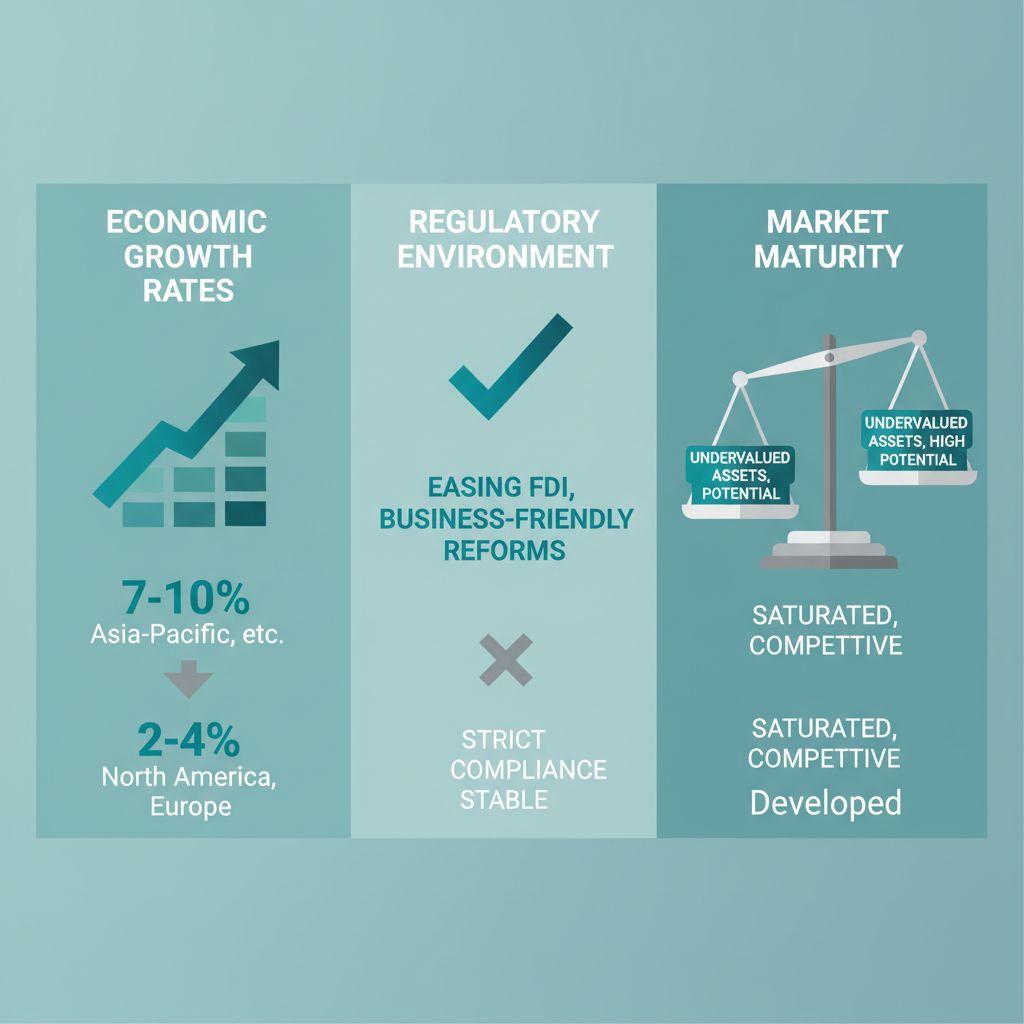
    Macroeconomic factors provide the foundational momentum for emerging markets M&A. High GDP growth rates, often reaching 7-10% annually in regions like Asia-Pacific, contrast sharply with the 2-4% in developed economies, drawing investors to undervalued assets amid expanding consumer bases. According to theoretical models from the NBER’s cross-border mergers research, productivity gains and knowledge transfers amplify these incentives, with emerging market premiums estimated at 20-30% higher returns potential compared to mature markets. Reforms in regulatory environments, including eased foreign direct investment caps in India and Brazil, reduce barriers and encourage inbound capital, while commodity price cycles sustain interest in resource-rich nations. These dynamics not only heighten deal volumes but also necessitate robust due diligence to mitigate exchange rate and inflation volatilities inherent in these economies.

    Sector-specific fundamentals further illuminate the vibrancy of emerging markets M&A. In technology, consolidation in Southeast Asia’s fintech sector exemplifies how digital platforms merge to capture burgeoning digital economies, with deals often structured as equity swaps to align interests. Healthcare in Africa sees acquisitions driven by population growth and urbanization, where international firms partner locally to access untapped markets. Energy transitions in the Middle East leverage commodity expertise for renewable integrations, fostering joint ventures that blend global technology with regional resources. These trends underscore the need for adaptive M&A processes, including scenario-based valuations that factor in local market volatilities and growth trajectories.

    The following table compares key drivers across emerging and developed markets, highlighting the distinct advantages that make growth regions particularly attractive for strategic investments.

    Driver CategoryEmerging MarketsDeveloped Markets
    Economic Growth Rate7-10% annual GDP growth in regions like Asia-Pacific2-4% stable but slower GDP growth
    Regulatory EnvironmentReforms encouraging foreign investment, e.g., eased FDI capsMature but restrictive antitrust scrutiny
    Market MaturityUndervalued assets with consolidation potentialSaturated markets with premium valuations
    Infographic comparing M&A drivers in emerging and developed markets: economic growth, regulations, and market maturity.

    Key drivers of emerging markets M&A versus developed markets

    Data sourced from Zaidwood transaction insights and NBER paper on cross-border theory. This comparison reveals how emerging markets’ higher growth and reform-driven openness create asymmetric opportunities, though they demand vigilant risk assessment. In contrast, developed markets offer stability but limited upside, influencing investor preferences toward diversification into developing areas for portfolio enhancement.

    We at Zaidwood Capital leverage our extensive network of over 4,000 institutional and private investors, accessing more than $15 billion in deployable capital, to guide clients through these complexities. Our capital advisory services encompass full-cycle due diligence and strategic documentation, ensuring seamless execution with our proven $24.4 billion in aggregate transaction volume across 300+ deals. This expertise positions us to structure joint ventures and mitigate risks effectively in volatile environments.

    These drivers not only propel emerging markets M&A but also present nuanced challenges that our tailored approaches address, setting the stage for deeper exploration of regional opportunities and strategic implementations in the subsequent sections.

    In-Depth Analysis of Opportunities and Challenges

    As we look toward 2026, emerging markets M&A presents a landscape rich with potential for strategic growth, yet tempered by complex capital formation dynamics. At Zaidwood Capital, we leverage our expertise as a leading financial advisory firm to guide clients through these intricacies, utilizing proprietary tools like our Velocity Matrix to streamline transactions in volatile regions.

    Investment Opportunities Shaping 2026

    Projections for 2026 highlight renewables and fintech as pivotal sectors driving high-potential deals in emerging markets. In renewables, solar and wind projects in emerging Asia, such as deals in India and Vietnam, offer substantial returns due to supportive government incentives and rising energy demands. Fintech innovations, particularly digital payment platforms, are surging in Latin America, with countries like Brazil and Mexico leading in adoption rates projected to exceed 20% annual growth, according to industry forecasts. These opportunities stem from undervalued assets and expanding consumer bases, enabling rapid market penetration.

    We facilitate these prospects through our capital introduction services, connecting clients to a network of over 4,000 institutional investors with access to more than $15 billion in deployable capital. For instance, our equity advisory helps secure growth equity for fintech startups, while capital formation strategies align with sovereign wealth fund interests in sustainable infrastructure. This approach not only accelerates deal execution but also maximizes ROI in high-growth environments.

    Evaluating these opportunities requires a structured comparison to weigh benefits against potential pitfalls. The following table outlines key aspects of emerging markets M&A:

    AspectOpportunitiesChallenges
    Market AccessRapid entry to high-growth consumer basesCurrency volatility and repatriation restrictions
    ValuationUndervalued targets yielding high ROI potentialOpaque financial reporting
    RegulatoryFavorable FDI policies in select regionsBureaucratic delays and political risks

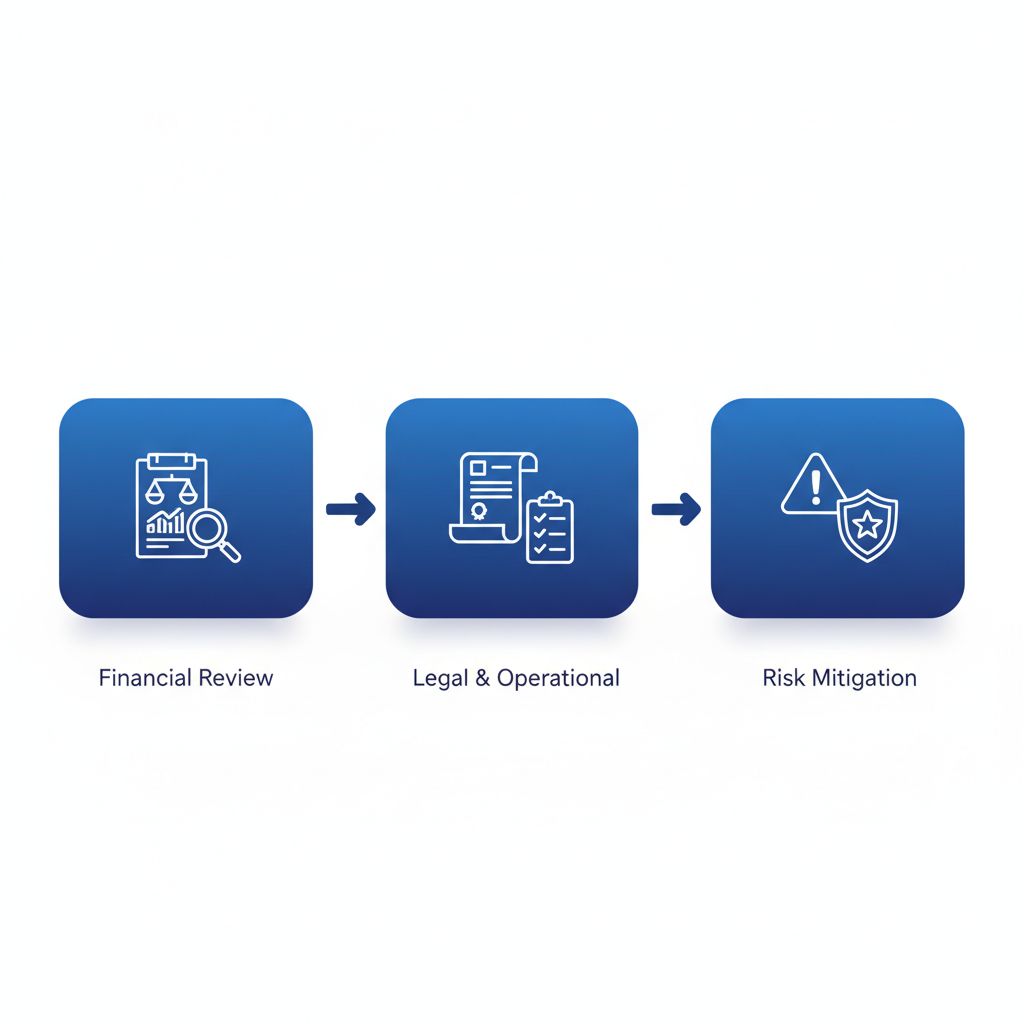
    This comparison underscores the allure of rapid market expansion, balanced by the need for robust risk assessment. Our full-cycle due diligence processes, encompassing financial, legal, and operational reviews, empower clients to capitalize on undervalued targets while navigating valuation complexities.

    Building on this, regional variations further inform strategic planning. Drawing from NBER research on cross-border mergers, we observe distinct patterns in productivity gains and market frictions. Asia often benefits from efficient knowledge transfers in tech sectors, whereas Latin America excels in resource-driven consolidations. The subsequent table highlights these differences:

    Strategy ElementBuy-SideSell-Side
    Target IdentificationScouting undervalued assets via networkPositioning company for maximum valuation
    Negotiation FocusDue diligence on synergies and risksHighlighting growth potential and IP
    Capital NeedsStructuring acquisition financingAttracting premium bids

    These insights reveal Asia’s edge in scalable tech integrations, while Latin America’s consumer focus drives fintech momentum. Clients leveraging our M&A advisory can tailor approaches to these nuances, enhancing deal success rates through targeted capital introductions.

    Capital formation in emerging markets faces significant barriers, including limited local liquidity and stringent repatriation rules that complicate funding flows. In regions like sub-Saharan Africa or parts of Southeast Asia, high interest rates and underdeveloped bond markets exacerbate these issues, often delaying transactions by months. Political uncertainties further deter investors, leading to fragmented equity pools and reliance on short-term debt.

    We address these hurdles through our comprehensive debt and equity advisory services. For instance, our mezzanine and venture debt solutions bridge funding gaps, providing flexible structures like asset-based lending to maintain cash flow during expansions. In a recent anonymized case drawn from common client scenarios, we mitigated liquidity constraints by arranging equipment financing, enabling a fintech firm in emerging Asia to scale operations without diluting equity.

    Our full-cycle due diligence plays a central role in risk mitigation, verifying financial statements and probing operational efficiencies to uncover hidden liabilities early. This proactive stance, supported by secure data rooms, ensures compliance and builds investor confidence. By integrating these strategies, we streamline capital raising, turning potential obstacles into opportunities for sustainable growth.

    Theoretical Insights from Cross-Border Deals

    Economic theories on multinational firms provide a robust lens for understanding cross-border deals in emerging markets. Drawing from NBER research, such as Kenneth Ahern’s framework on mergers, we see how productivity gains and knowledge transfers drive acquisition decisions over greenfield investments. In developing economy consolidations, market frictions like regulatory barriers amplify the value of mergers for swift market entry, as evidenced by empirical studies showing higher ROI in integrated operations.

    Applying these models to practical contexts, we observe that in growth market acquisitions, currency risks can be offset by hedging strategies within M&A structures. The theory posits that firms with superior financial integration, akin to our Velocity Matrix, achieve better outcomes amid volatility. For 2026, this translates to prioritizing deals in renewables where knowledge spillovers enhance long-term value.

    We apply these insights in our advisory, using theoretical models to inform due diligence and valuation, ensuring clients navigate cross-border complexities with precision. This theoretical grounding not only validates projections but also guides strategy applications, paving the way for practical implementations in subsequent deal executions.

    Strategies for Successful Emerging Markets Deals

    In the dynamic landscape of emerging markets M&A, achieving successful outcomes requires a blend of strategic foresight and execution precision. At Zaidwood Capital, we specialize in guiding clients through these complex transactions, leveraging our extensive network to facilitate strategic acquisitions in frontier markets. Our expertise in fairness opinions and institutional introductions ensures efficient deal execution in high-growth areas, whether pursuing buy-side opportunities or optimizing sell-side processes.

    Buy-Side and Sell-Side Approaches

    For buy-side mandates in emerging markets, we focus on precise target identification to scout undervalued assets that align with clients’ growth objectives. This involves setting criteria for market fit, financial stability, and synergy potential, utilizing our proprietary Deal Vault for vetted opportunities. We then conduct thorough due diligence to validate financials, legal status, and operational viability, mitigating risks inherent in these volatile regions. Strategic valuation follows, employing discounted cash flow models and comparable analyses to establish defensible pricing.

    On the sell-side, our approach emphasizes preparation to maximize valuation. We position companies through comprehensive audits and narrative development that highlight growth potential, intellectual property, and market positioning. Auctions are managed to attract premium bids from our network of over 4,000 institutional investors, including private equity firms and family offices. Negotiation support includes crafting letters of intent and earn-outs tailored to emerging market dynamics.

    The following table compares key elements of buy-side and sell-side strategies in emerging markets:

    Influence AreaSovereign Wealth FundsTraditional PE/VC
    Capital Scale$ trillions in assets for large dealsBillions focused on mid-market
    Strategic FocusGeopolitical and infrastructure prioritiesROI-driven sector bets
    Risk AppetiteLong-term tolerance for volatilityShorter horizons with exits

    This comparison underscores how buy-side efforts prioritize risk-adjusted value creation, while sell-side tactics aim to showcase untapped potential. Clients benefit from our full-cycle advisory, which streamlines these processes for faster closings and superior returns.

    Capital Structuring Techniques

    Effective capital structuring is crucial for emerging markets deals, where traditional financing may fall short. We offer mezzanine debt options that bridge senior loans and equity, providing flexible terms with equity conversion features to support expansion in high-growth areas. This hybrid instrument minimizes dilution while offering lenders upside participation, ideal for infrastructure-heavy transactions.

    Growth equity injections, on the other hand, fuel scaling without ceding control, drawing from our investor rolodex to secure commitments from venture capital and family offices. For debt-focused structures, we arrange venture debt and asset-based lending, leveraging cash flows for repayment in resource-constrained environments. Equity advisory includes liquidity solutions that align with long-term stakeholder goals.

    Drawing from our capital raising frameworks, the table below contrasts debt and equity structures, informed by Zaidwood’s transaction data:

    FeatureDebt FinancingEquity Financing
    Cost of CapitalLower (Tax deductible)Higher (Opportunity cost)
    ControlNo dilutionPartial loss of control
    FlexibilityFixed repayment schedulesNo repayment obligation

    These structures enable tailored financing; for instance, mezzanine debt has facilitated over $500 million in deals through our network, balancing leverage with growth potential. We customize these based on client needs, ensuring alignment with emerging market volatilities.

    Integration with Due Diligence

    Integrating due diligence throughout the deal cycle is essential for risk-managed execution in emerging markets. We oversee full-cycle processes, starting with initial screening and progressing to in-depth financial, legal, operational, and commercial reviews. This includes assessing cross-border mergers theory to navigate regulatory hurdles and cultural alignments.

    Post-merger integration planning follows closing, focusing on operational synergies and cultural harmonization to realize value. Our team provides fairness opinions and transaction advisory, drawing on institutional introductions for seamless execution. By embedding diligence at every phase, we minimize surprises and enhance long-term success.

    Advanced Insights and Market Outlook

    As we look ahead, the landscape for emerging markets M&A continues to evolve rapidly, driven by global economic shifts and increasing investor interest in high-growth regions. At Zaidwood Capital, we provide strategic consulting to navigate these dynamics, connecting our clients with influential players through our LP placement services. This forward-looking perspective highlights key trends and opportunities that sophisticated investors should consider for the period from 2026 to 2030.

    Over the next five years, we anticipate a pronounced shift toward sustainability-focused investments in emerging markets. Infrastructure projects, particularly in renewable energy and digital connectivity, will likely attract substantial capital as governments prioritize resilient economies. Advanced frontier market deals will emphasize ESG compliance to mitigate regulatory risks, while future-oriented consolidations in sectors like logistics and agribusiness promise robust returns. Drawing from our comprehensive M&A advisory framework, which underscores precise target identification and robust due diligence, these trends align with proactive risk management in volatile environments. We project that geopolitical stability in regions such as the Middle East and Asia will further accelerate infrastructure M&A, fostering cross-border partnerships that enhance long-term value creation. This outlook reflects our analysis of market forces, including diversification into private markets and real assets, as outlined in our educational resources on 2026 investment strategies.

    Sovereign wealth funds play a pivotal role in shaping emerging markets, often injecting stability amid uncertainty. These entities, managing vast resources from resource-rich nations, exert significant influence on infrastructure M&A by aligning investments with national development goals. Unlike traditional investors, sovereign funds prioritize geopolitical and infrastructural priorities, enabling large-scale projects that traditional private equity and venture capital firms might avoid due to scale constraints. Their long-term horizon allows for tolerance of volatility, supporting initiatives in energy transition and urban development in Asia and the Middle East. This strategic involvement not only bridges funding gaps but also catalyzes broader economic integration, as seen in recent deals leveraging sovereign backing for sustainable infrastructure.

    To illustrate these landscape shifts, the following table compares the influences of sovereign wealth funds against traditional PE/VC investors:

    AttributeSovereign Wealth FundsTraditional PE/VC
    Primary ObjectiveNational Strategic GrowthHigh Financial ROI
    Investment HorizonLong-term (10+ years)Short-to-Medium (3-7 years)
    Deal SensitivityHigh Geopolitical impactHigh Market volatility

    This comparison underscores how sovereign funds enable transformative deals in emerging markets, often complementing the agility of traditional investors. At Zaidwood Capital, our extensive network of over 4,000 institutional investors, including sovereign wealth funds, positions us to facilitate these connections effectively.

    Through our advanced services, we structure LP commitments with sophisticated terms, such as performance-linked incentives and co-investment options, tailored to client objectives. Clients gain exclusive access to our deal vault, a proprietary resource aggregating opportunities in frontier markets valued at billions. We also offer insights into volatility management, employing scenario-based planning to safeguard portfolios against currency fluctuations and policy changes. Our full-cycle due diligence ensures thorough evaluation, drawing on our aggregate transaction volume exceeding $24.4 billion.

    For deeper exploration, our FAQ on Capital Raising 3 addresses common queries about LP placements and emerging market strategies, providing actionable guidance to optimize your approach.

    Frequently Asked Questions on Emerging Markets

    Addressing key queries on emerging markets M&A, we provide clarity for strategic decision-making.

    How does Zaidwood Capital mitigate risks in emerging markets? We conduct full-cycle due diligence, covering financial, legal, and operational aspects to identify and address potential challenges early.

    What sectors show promise in emerging markets for 2026? Renewables and technology sectors lead growth opportunities, driven by innovation and sustainable development demands in these dynamic regions.

    How can we facilitate partnerships with sovereign wealth funds? Through our extensive network of over 4,000 investors, we make targeted introductions to align clients with institutional partners for capital formation.

    What strategies optimize deals in high-growth areas like Africa? We leverage our M&A advisory expertise and strategic documentation, including pitch decks, to streamline transactions and enhance investor appeal.

    How does Zaidwood support overall emerging markets engagement? Our Financial Services 3.0 methodology, including the Sovereign Data Nexus, ensures precise market access and rapid execution for transformative outcomes.

    Leveraging Expertise for Emerging Markets Success

    Emerging markets M&A presents unique drivers like rapid economic expansion and untapped opportunities, alongside strategies for risk mitigation and a promising outlook for informed participants. This guide has outlined pathways to navigate these dynamics effectively.

    At Zaidwood Capital, we deliver tailored advisory through our full-cycle M&A services, granting access to over $15 billion in deployable capital and a network exceeding 4,000 institutional investors. Our expertise ensures precise execution and confident decisions.

    We invite you to book a call for consultations on your M&A or capital needs. Explore our M&A advisory services further to pursue opportunities in growth markets together.

    Resources

  • Top Buy-Side M&A Strategies for 2026: Expert Insights

    Top Buy-Side M&A Strategies for 2026: Expert Insights

    Table of Contents

    In the dynamic world of buy-side M&A, acquirers face intense challenges in sourcing viable targets amid market volatility and competitive pressures. This acquirer-focused approach empowers strategic expansion through precise target acquisition planning, contrasting sell-side processes where sellers prioritize valuation maximization and buyer outreach. While sell-side deals often span 6-9 months with broad auctions, buy-side emphasizes targeted diligence to mitigate risks.

    At Zaidwood Capital, we provide expert mergers and acquisitions advisory tailored for buy-side acquisition strategy, guiding clients from opportunity identification through due diligence, valuation, negotiation, and integration. With over 300 completed deals and $24.4B in transaction volume, our team leverages a network of 4,000+ investors to access $15B+ in deployable capital, ensuring full-cycle support for informed decisions.

    Discover the six key benefits of partnering with our boutique firm, starting with superior target sourcing that lays the foundation for successful buy-side due diligence and execution.

    1. Precise Target Identification

    In buy-side M&A, identifying the right acquisition targets amid vast opportunities poses significant challenges for growth-focused firms. Without precise sourcing, companies risk prolonged searches and missed synergies, complicating expansion strategies.

    Our approach streamlines this through rigorous criteria including market fit, financial health, and synergy potential, ensuring targets align with your buy-side acquisition strategy. We leverage the proprietary Deal Vault for access to vetted opportunities and conduct sector mapping with preliminary screening to accelerate discovery. As highlighted in resources on selecting M&A advisor, effective advisors embody competence, compassion, and integrity to guide strategic target hunting. Our extensive network of over 4,000 investors and $15B in deployable capital further enhances acquisition opportunity scouting, drawing from more than 300 completed transactions for proven results.

    For instance, we recently matched a mid-market client with a complementary asset in under three months via network introductions, enabling swift evaluation and integration planning before advancing to due diligence.

    2. Thorough Due Diligence Execution

    In the realm of buy-side due diligence, thorough validation is essential to uncover hidden risks and maximize acquisition value. At Zaidwood Capital, we execute comprehensive reviews that integrate financial, legal, operational, commercial, IT, and human capital assessments, drawing on our 300+ completed deals to support clients in navigating complex transactions.

    Horizontal process flow diagram showing three stages of buy-side due diligence in mergers and acquisitions: financial review, legal and operational assessment, and risk mitigation.

    Key phases of thorough due diligence execution in M&A buy-side process

    Our process begins with secure data room access, allowing detailed examination of target financials and operations. We then conduct third-party verifications and multi-faceted risk assessments, incorporating antitrust considerations from established guidelines to ensure compliance. As a leading boutique M&A advisory firm, we streamline buy-side M&A by providing integrated diligence, including checklists for red flags like discrepancies in revenue reporting or unresolved litigation.

    • Verify financial statements against independent audits.
    • Assess legal contracts for potential liabilities.
    • Evaluate operational efficiencies and IT security.

    A key tip from our engagements: Always probe management representations early to detect inconsistencies that could derail deals, fostering informed buy-side acquisition strategies before advancing to valuation.

    This rigorous approach transitions seamlessly into precise target valuation, the next critical layer in our acquisition vetting protocols.

    3. Strategic Valuation Insights

    In buy-side M&A, overlooking valuation pitfalls can lead to overpaying for targets or missing synergy opportunities, undermining deal success. Our team at Zaidwood Capital leverages advanced techniques and capital advisory services to ensure precise deal pricing analysis, drawing from $24.4 billion in aggregate transaction volume for informed acquisition worth assessment.

    We apply discounted cash flow (DCF) modeling to project future cash flows, comparable company analysis for market benchmarks using our network of over 4,000 investors, and precedent transactions to gauge historical premiums. In buy-side acquisition strategy, we quantify synergies through detailed revenue and cost projections, integrating pro forma financials to model post-merger performance. This data-driven approach supports negotiations by establishing defensible value ranges that optimize capital deployment.

    A key tip for synergy modeling: Focus on realistic cost savings from operational overlaps, validated by our market intelligence, to avoid inflated expectations that erode value during integration.

    4. Effective Negotiation Support

    In buy-side M&A transactions, negotiation risks abound, including overpaying due to incomplete information or overlooking hidden liabilities that erode value post-closing. These challenges can derail even the most promising deals without expert intervention. At Zaidwood Capital, we mitigate these risks by leveraging insights from buy-side due diligence to inform strategic positioning.

    We provide seasoned guidance from our leadership team, drawing on industry-standard practices to navigate term sheets, letters of intent (LOIs), and closing conditions. Key negotiation levers include price adjustments tied to working capital contingencies and structured earn-outs that align seller incentives with performance milestones. We emphasize robust representations and warranties to protect against undisclosed issues, while our expertise in strategic documentation ensures precise deal term bargaining. This approach secures favorable outcomes and seamlessly transitions to post-merger integration planning. Our investment bank advisory experience highlights the importance of senior professionals in volatile transaction environments, where retaining expertise drives successful acquisition closing tactics.

    A practical tip for buy-side M&A: When drafting an LOI, insist on broad exclusivity periods with clear milestones to prevent seller distractions, allowing time to refine your acquisition strategy based on diligence findings.

    5. Seamless Integration Planning

    Following the successful negotiation of a buy-side M&A deal, the integration phase presents significant challenges, including aligning operations and capturing merger synergy realization. At Zaidwood Capital, we guide clients through this critical transition to ensure value creation without disruptions.

    Our integration roadmap begins with comprehensive target onboarding frameworks, focusing on team onboarding and seamless system mergers. We advise on operational alignment to streamline processes and enhance efficiency. For financing, our debt advisory expertise supports post-deal restructuring, optimizing capital structures to reduce costs and improve liquidity. Additionally, our equity advisory services facilitate liquidity solutions, enabling stakeholders to realize gains strategically. These steps form a structured buy-side acquisition strategy that maximizes post-acquisition value.

    A key best practice involves prioritizing cultural fit during integration. We recommend early engagement with leadership teams to foster collaboration, mitigating resistance and building a unified vision. This approach not only accelerates synergy realization but also lays the foundation for long-term success in the evolving M&A landscape.

    6. Robust Risk Management

    In buy-side M&A transactions, potential pitfalls like regulatory hurdles and financial discrepancies often threaten value creation. We at Zaidwood Capital, one of the buy-side M&A firms, recognize these challenges and integrate proactive risk management into every stage of the process, ensuring clients achieve sustainable outcomes through informed decision-making.

    Our approach begins with thorough buy-side due diligence to uncover hidden liabilities early, followed by strategic consulting that assesses and addresses acquisition hazard controls. We deliver fairness opinions for objective valuation insights, while our capital introductions connect clients to a diverse network of over 4,000 investors, mitigating funding dependencies. Leveraging the Zaidwood Deal Vault, we provide access to risk-vetted opportunities, strengthening overall deal risk frameworks and supporting resilient buy-side acquisition strategies. This ongoing advisory minimizes disruptions and maximizes transaction success.

    For effective contingency planning, develop multiple scenarios with backup financing and regulatory compliance checklists. This preparation allows quick pivots, safeguarding investments in dynamic markets.

    Partnering for Acquisition Excellence

    In summary, our buy-side M&A advisory services at Zaidwood Capital deliver six core benefits that drive process efficiency, value optimization, and strategic alignment. From expert target sourcing and comprehensive buy-side due diligence to robust risk management, we empower your buy-side acquisition strategy with proven acquirer success pathways. Our track record includes over 300 completed deals, aggregating $24.4 billion in transaction volume, and access to a network of more than 4,000 institutional investors.

    When selecting an M&A advisor, prioritize firms with deep industry expertise, extensive investor connections, and full-cycle capabilities like ours. Evaluate based on alignment with your commercial goals, demonstrated results, and tailored support for seamless execution.

    Ready to elevate your acquisitions? Contact us at Zaidwood Capital today for a confidential consultation and personalized guidance on your next strategic move.

    Resources