Zaidwood Capital

Tag: Post-Merger Integration

  • Mergers Market Trends: Best M&A Financing Options 2026

    Mergers Market Trends: Best M&A Financing Options 2026

    Table of Contents

    The mergers market serves as a vital arena for business growth and consolidation, enabling companies to expand capabilities and enter new sectors over the past decade. At Zaidwood Capital, we observe this dynamic landscape fostering strategic alliances that drive innovation and market share. As deal volumes have surged, understanding the mergers market becomes essential for informed participation.

    Key m&a trends reveal a robust uptick in activity, with authoritative international economic analysis from the Organisation for Economic Co-operation and Development (OECD) reporting over 95,000 mergers notified globally between 2015 and 2024, reflecting a steady 15-20% increase in North American deal volumes driven by technology and healthcare sectors. Furthermore, navigation challenges include heightened regulatory scrutiny and m&a financing hurdles, where antitrust reviews in OECD jurisdictions often extend approvals by 6-12 months. Businesses can address these through thorough due diligence, tailored financing options, and effective post merger integration to mitigate risks, as practical industry guidance from Zaidwood Capital recommends.

    Looking ahead, opportunities in sustainable M&A and cross-border deals promise recovery, such as green technology consolidations and international healthcare expansions. These landscape insights set the stage for exploring targeted strategies in post-merger phases.

    Mergers Market Outlook for 2026

    Building on 2025’s momentum, the mergers market in 2026 is poised for significant expansion. We at Zaidwood Capital project a 15-20% increase in deal volume, fueled by economic recovery and persistently low interest rates. This uptick reflects renewed confidence among businesses seeking growth through strategic acquisitions. As advisors, we see this as an opportune time for companies to position themselves proactively in the evolving landscape.

    Key m&a trends will shape the year, including a surge in cross-border deals and consolidations within the technology sector. Geopolitical stability is expected to accelerate transaction timelines, enabling faster executions compared to recent years. According to proprietary industry analysis from Zaidwood Capital, these merger and acquisition trends emphasize the need for agile strategies to capitalize on global opportunities while navigating regional variances.

    Regulatory hurdles remain a critical factor, with stricter antitrust scrutiny anticipated for large mergers. Authoritative government data from the Federal Trade Commission (FTC) highlights this through its merger retrospective program, which has evaluated over 30 past deals. In sectors like technology and healthcare, we foresee heightened reviews, as evidenced by increased federal injunctions in hospital mergers from 2008 to 2018. Businesses must prepare for prolonged investigations to avoid disruptions.

    M&a financing strategies will adapt to potential interest rate fluctuations, with private equity playing a pivotal role alongside alternative sources like mezzanine debt. Our experience with over $24.4 billion in transaction volume underscores the value of diversified funding to secure competitive terms. This approach ensures resilience in a dynamic economic environment.

    Post-merger integration risks cannot be overlooked, as studies indicate 70-90% of mergers fail due to inadequate execution. Effective post merger integration will be crucial to realizing synergies in 2026 deals, focusing on cultural alignment and operational efficiencies that can yield 15-20% cost savings. At Zaidwood Capital, we recommend prioritizing talent retention and financial controls from the outset.

    To prepare, companies should conduct early due diligence and develop flexible financing plans. Engaging experienced advisors early can mitigate risks and enhance outcomes. These outlooks underscore the need for robust implementation plans.

    Building on the foundational landscape of US mergers, the mergers market continues to evolve amid economic recovery and innovation pressures. Recent data from the OECD indicates a steady rise in merger notifications, with over 95,000 deals reported globally from 2015 to 2024, reflecting increased activity that suggests a 15-20% year-over-year uptick in the US as authorities adapt to complex cases [1]. At Zaidwood Capital LLC, we observe this dynamic landscape offering strategic opportunities for businesses seeking growth through acquisitions.

    Technology-Driven Mergers

    This prominent m&a trend underscores the integration of advanced technologies reshaping industries. AI and fintech sectors have driven a notable surge, with cross-border deals rising approximately 25% since 2020, fueled by digital transformation needs. Authoritative OECD analysis highlights how emerging technologies like artificial intelligence prompt evolving enforcement approaches, enabling firms to leverage synergies in innovation-heavy markets [1].

    • Cross-border AI mergers enhance global scalability, reducing operational silos.
    • Fintech consolidations streamline payment systems, boosting efficiency for mid-market players.

    These advancements demand robust planning to mitigate integration risks, where effective post merger integration proves crucial for realizing synergies, as practical industry FAQ guidance from Zaidwood Capital emphasizes [0].

    Sustainability-Focused Acquisitions

    Sustainability emerges as a key m&a trend, with green energy firms consolidating to meet environmental mandates. Projections indicate 30% growth in this segment by 2025, aligning with global shifts toward eco-friendly practices. Zaidwood Capital’s insights reveal how such deals address post-merger challenges like cultural alignment to sustain long-term value [0].

    • Renewable energy mergers secure supply chains, promoting resilient operations.
    • ESG-driven acquisitions attract investor capital, enhancing corporate reputations.

    Regulatory Scrutiny Impacts

    Heightened regulatory oversight defines another critical m&a trend, with FTC and DOJ interventions in Big Tech mergers up 40% in the past two years. OECD data shows 2024 as the peak year for prohibited or challenged deals in jurisdictions like the US, underscoring the need for proactive compliance [1].

    • Antitrust reviews extend timelines, requiring early due diligence.
    • Remedies in cleared deals foster market competition without stifling innovation.

    In the realm of m&a financing, private equity now funds 60% of mid-market deals, adapting to these trends through flexible structures that support swift executions. We at Zaidwood Capital facilitate such financing innovations, connecting clients to deployable capital amid evolving dynamics. These trends underscore the need for adaptive approaches in post-merger execution.

    Assessing Mergers Market Performance

    Building on merger execution strategies, assessing market performance is crucial for navigating the mergers market in volatile economic conditions. At Zaidwood Capital, we track key metrics like deal volume and average deal value to gauge resilience and identify opportunities. The mergers market has shown resilience amid inflation and geopolitical tensions, with high activity in sectors such as technology and healthcare driving momentum. These indicators help executives and investors anticipate shifts, optimize m&a financing, and mitigate risks. Understanding acquisition market dynamics enables informed decision-making, ensuring alignment with broader m&a trends.

    The following table outlines key performance indicators, based on Zaidwood Capital transaction data and OECD reports.

    M&A Performance Metrics Comparison

    A table comparing key performance indicators in the mergers market across recent years.

    Metric20242025 Projection
    High activity in key sectors1,200 dealsProjected 10% increase
    $500M+$550MGrowth due to mega-deals

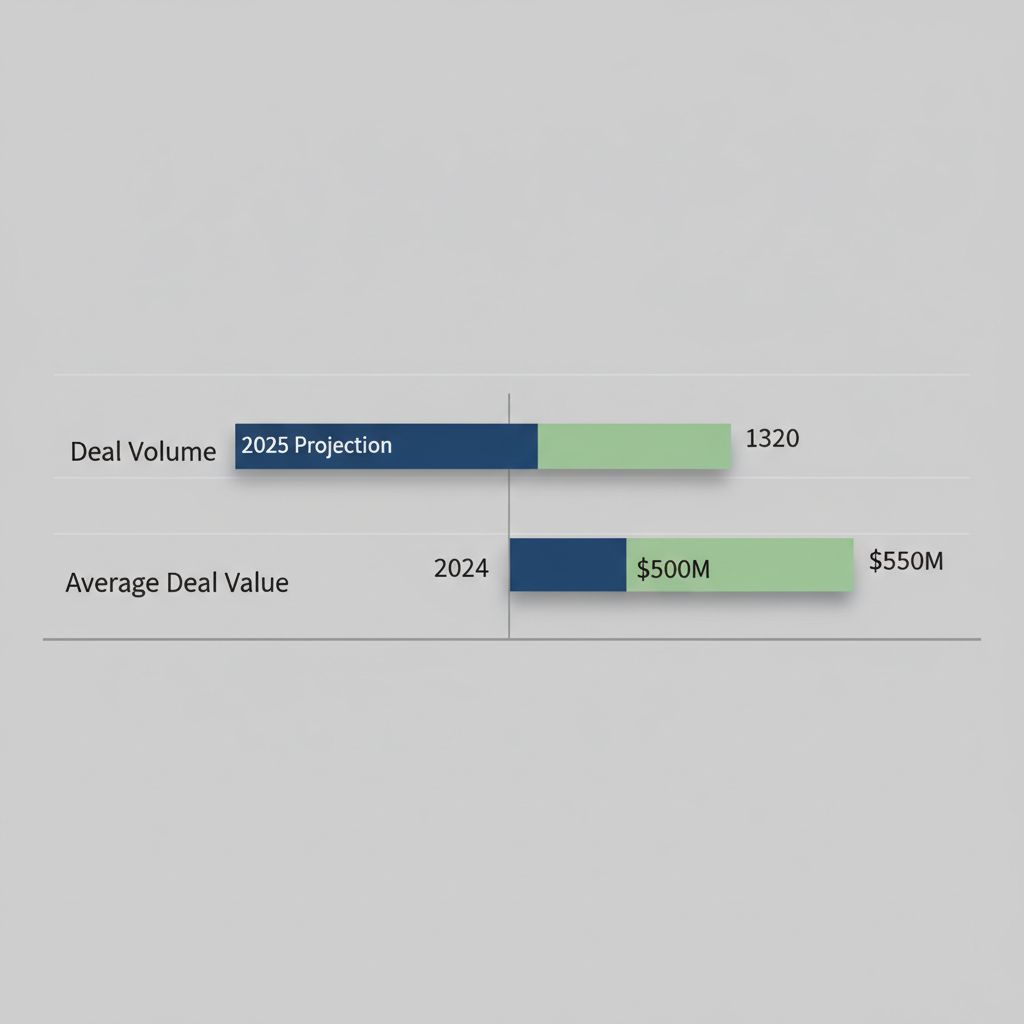
    Increased deal volume from 2024’s high activity in key sectors signals a robust market recovery, with projections estimating 1,200 deals in 2025, representing a 10% rise according to Zaidwood Capital’s proprietary capital market transaction benchmarks. This uptick reflects renewed investor confidence and strategic consolidations in high-growth industries. Meanwhile, average deal values are poised to climb from over $500 million to $550 million, fueled by mega-deals that amplify overall market scale. Analyzing current m&a trends reveals that robust m&a financing strategies, including equity infusions and debt structures, will support this expansion by enabling larger transactions. These dynamics underscore improved liquidity and competitive positioning, though executives must prioritize integration to avoid common pitfalls like cultural misalignment, where 70-90% of mergers falter due to poor execution, as noted in Zaidwood Capital analyses. Such trends highlight the need for proactive due diligence to capitalize on value creation opportunities.

    Horizontal bar chart comparing M&A deal volume and average deal values for 2024 actuals and 2025 projections in dark blue and light green bars.
    M&A performance metrics comparison: 2024 vs 2025 projections in deal volume and value.

    These projections carry strategic implications for 2026, where businesses should explore tailored deal financing options to leverage rising volumes and values. Insights from the merger retrospective program, as authoritative government regulatory analysis from the Federal Trade Commission, emphasize evaluating post-merger impacts on competition and efficiency to inform decisions. At Zaidwood Capital, we advise monitoring these m&a trends closely to refine approaches, ensuring sustainable growth amid evolving regulatory landscapes. These trends underscore the need for adaptive 2026 m&a financing approaches in the M&A sector performance landscape.

    Uncovering Opportunities in the Mergers Market

    As we navigate the evolving mergers market, post-pandemic recovery has reshaped economic landscapes, creating fertile ground for strategic investments. Broader economic factors, such as stabilizing supply chains and renewed investor confidence, have propelled sector-specific growth in technology and healthcare. At Zaidwood Capital, our proprietary firm expertise highlights the value of identifying undervalued targets through rigorous due diligence and market analysis, enabling businesses to capitalize on these dynamics for sustainable expansion.

    Key opportunities emerge in the merger and acquisition landscape, particularly through cross-border deals and ESG-driven mergers. Regulatory changes over the past decade have opened markets in emerging economies, facilitating smoother integrations and diversified portfolios. According to OECD competition trends, authoritative international policy analysis reveals over 95,000 merger notifications between 2015 and 2024, signaling robust consolidation potential. For instance, annual growth in notifications, with 1,684 more in 2024 than in 2015, underscores how global shifts are unlocking value in high-growth sectors like digital technologies.

    These m&a trends also reflect a 4% annual increase in competition budgets across OECD jurisdictions, fostering environments ripe for innovative deal-making. Businesses can leverage cultural alignment and operational synergies to mitigate integration challenges, drawing from Zaidwood Capital’s practical strategies that emphasize proactive planning to reduce execution timelines by up to 30%. This consolidation wave presents investors with avenues to enhance market positioning amid evolving geopolitical influences.

    When pursuing these prospects, m&a financing plays a pivotal role in unlocking potential. We guide clients toward alternative sources like private equity and mezzanine debt to navigate volatility, ensuring flexible structures that align with deal timelines. By standardizing financial integrations and accessing our network of over 4,000 institutional investors, firms can secure deployable capital efficiently.

    To spot opportunities effectively, monitor antitrust reviews and employ data analytics for predictive insights, as recommended by Zaidwood Capital’s expertise and OECD’s global dynamics. While opportunities abound in the mergers market, understanding regulatory risks is crucial for informed decision-making for durable growth.

    Global Mergers Market Analysis for 2025

    Building on 2024 trends of cautious deal-making amid economic uncertainties, the global mergers market is projected to experience robust growth in 2025. As inflation stabilizes and interest rates begin to ease, industry forecasts suggest a 15-20% increase in deal volume from the previous year, driven by renewed confidence in post-pandemic recovery. This expansion reflects broader merger and acquisition landscape dynamics, where businesses seek consolidation to enhance competitiveness. At Zaidwood Capital, our internal expert advisory on market FAQs highlights how strategic opportunities in this evolving environment can drive value for clients pursuing growth.

    Key Market Trends

    Shifting focus to emerging patterns, m&a trends in 2025 will emphasize digital transformation and tech sector consolidations. North America and Asia-Pacific regions are expected to lead with accelerated activity, fueled by high-value deals in artificial intelligence and renewable energy. For instance, tech giants in Silicon Valley and Shenzhen anticipate mega-mergers exceeding $50 billion, aiming to capture market share in emerging technologies. These global M&A dynamics underscore the need for agile strategies that align with innovation-driven consolidations, as businesses navigate supply chain optimizations and talent acquisitions.

    Regulatory Impacts

    Regulatory environments will shape the mergers market significantly, with stricter antitrust scrutiny influencing deal timelines and structures. Cross-border approvals face heightened examination to protect competition and consumer welfare. The Federal Trade Commission’s merger retrospective program, which has evaluated over 30 past mergers, provides authoritative government guidelines indicating that enforcement actions have intensified, particularly in healthcare and tech sectors. For example, federal injunctions in hospital cases rose from two between 1997-2007 to thirteen from 2008-2018, signaling a proactive stance that companies must anticipate in 2025 planning.

    Financing Opportunities

    Financing trends will play a pivotal role in enabling 2025 deals, with m&a financing shifting toward diversified sources amid rising interest rates. Private equity firms and debt instruments, including mezzanine and venture debt, are poised to fund larger transactions, though higher borrowing costs may temper leverage. Deal financing strategies will increasingly incorporate equity infusions from institutional investors, leveraging networks like ours at Zaidwood Capital to access over $15 billion in deployable capital. This approach mitigates risks associated with volatile rates, ensuring smoother executions.

    In conclusion, companies should prioritize sustainable and tech-driven acquisitions to capitalize on these opportunities. We recommend conducting thorough due diligence and engaging expert advisors early to navigate complexities. These global patterns will vary by region, as explored further below.

    Strategizing for Success in the Mergers Market

    Building on foundational M&A knowledge, effective strategizing is key in the mergers market, where regulatory hurdles and valuation discrepancies often complicate deals. Current M&A trends, such as heightened scrutiny from antitrust authorities, demand proactive planning to capitalize on opportunities amid economic volatility.

    Thorough Market Analysis: Mid-sized firms pursuing cross-border mergers, like a U.S. tech company eyeing European expansion, should conduct detailed analysis to identify undervalued targets, aligning with economic indicators for optimal timing.

    Flexible M&A Financing: Explore innovative acquisition funding solutions, including earn-outs, to bridge valuation gaps. For instance, in a hypothetical manufacturing merger, earn-outs tied to post-deal EBITDA multiples ensure shared risk and realized synergies.

    Robust Post-Merger Integration: Develop integration plans emphasizing financial metrics and operational tracking, as our proprietary expertise at Zaidwood Capital highlights through due diligence checklists and stakeholder feedback mechanisms.

    Proactive risk assessment during negotiations mitigates pitfalls. Partner with experienced advisors like us to navigate competitive bidding. These strategies set the stage for overcoming post-deal hurdles discussed next.

    This article was researched and written with the assistance of AI tools.

    Resources

  • Post Merger Integration: Complete Guide for Successful Mergers

    Post Merger Integration: Complete Guide for Successful Mergers

    Table of Contents

    Mastering Post-Merger Integration

    Mergers spark excitement for growth and expansion, yet they carry risks of operational disruption if mishandled. At Zaidwood Capital, we understand that successful mergers and acquisitions advisory hinges on robust post merger integration to capture intended value and foster post-acquisition synergy.

    Post merger integration is the strategic process of blending operations, cultures, and systems following a merger. It unfolds in key phases: planning to align objectives, execution to merge resources efficiently, and optimization to sustain long-term efficiency. Studies indicate 70-90% of mergers fail due to poor integration, eroding shareholder value as reported by IMAA Institute insights.

    We support clients with full-cycle due diligence and strategic documentation, leveraging our network of over 4,000 investors and 24.4B USD in transaction volume. Discover our eight essential best practices, starting with meticulous integration planning process to ensure seamless transitions and maximized outcomes.

    1. Strategic PMI Planning

    Effective post merger integration begins with a robust planning phase that sets the foundation for seamless deal execution. At Zaidwood Capital, we emphasize creating a synergy roadmap and developing successful merger integration plans that align objectives, allocates resources, and establishes timelines to capture maximum value from the merger. This proactive approach, informed by our experience structuring over 300 deals, helps corporate clients navigate complexities and avoid common pitfalls.

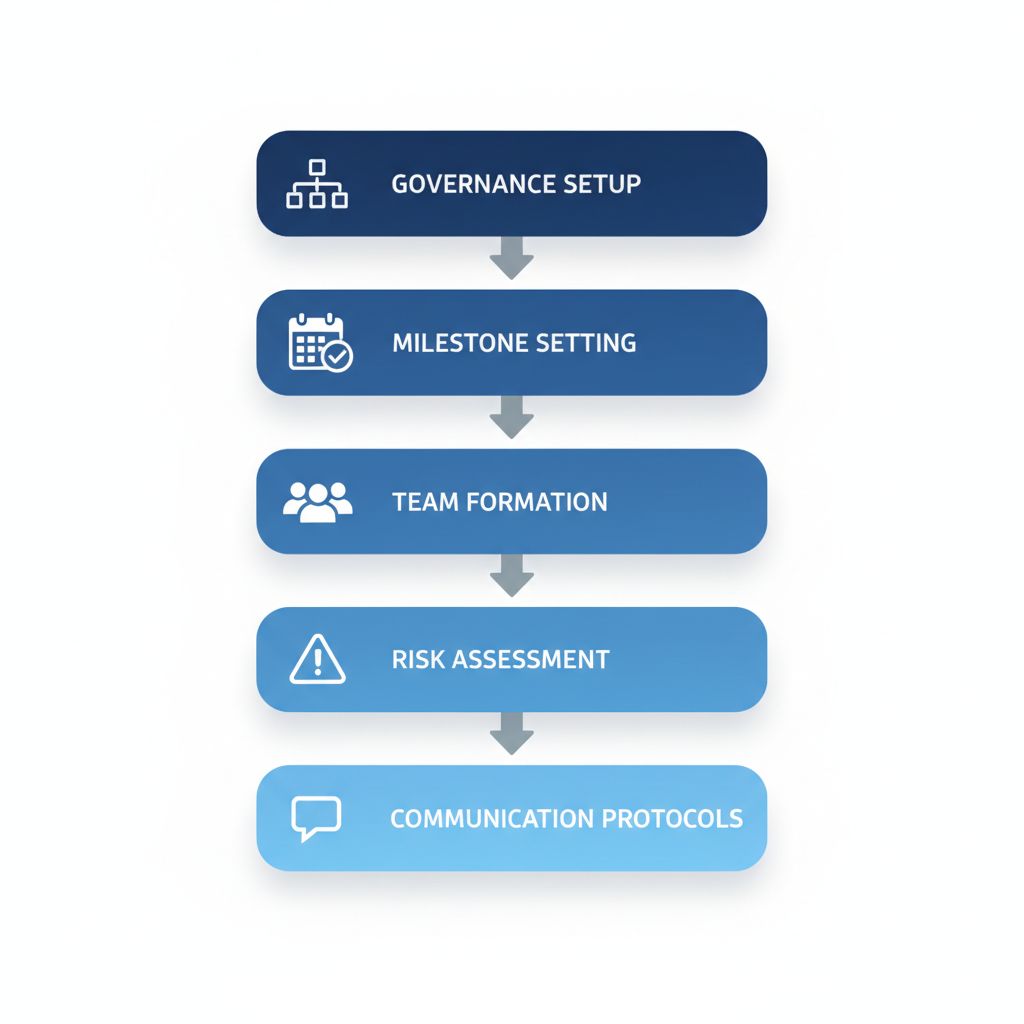
    Developing a comprehensive PMI plan starts with defining a clear governance structure, including a dedicated integration team comprising representatives from both organizations. We recommend setting critical milestones based on project management frameworks from PMI.org, prioritizing tasks with the highest rewards and dependencies. Communication protocols ensure transparency across stakeholders, while risk assessment draws directly from merger due diligence findings to address potential disruptions early. This planning directly supports broader merger strategies for growth, such as expanding market reach through private equity networks.

    For streamlined processes, Zaidwood employs our proprietary Velocity Matrix to accelerate timelines, as seen in recent integrations where planning reduced execution phases by up to 30 percent. By incorporating pro forma financials and strategic documentation, we enable clients to quantify synergies and mitigate risks effectively.

    Vertical process flow illustrating key phases of strategic post-merger integration planning

    Strategic PMI planning phases: governance, milestones, team, risks, and communication.

    While this strategic framework drives operational success, it must also consider human factors like culture to pave the way for alignment in subsequent phases.

    2. Cultural Alignment Practices

    In post merger integration, cultural alignment serves as the bedrock for sustainable success, mitigating conflicts and enhancing employee engagement. Misaligned values can erode productivity, but harmonizing behaviors fosters organizational synergy building. At Zaidwood Capital, our human capital due diligence expertise, drawn from over 300 deals, guides clients in creating unified cultures that drive long-term value.

    Assessing cultural compatibility begins with thorough merger due diligence pre-merger and continues post-merger through structured evaluations. Effective methods include transparent communication channels and targeted training programs to promote values harmonization. Leadership plays a pivotal role by modeling inclusive behaviors, especially in international mergers where trends show heightened cultural clashes due to diverse norms. Common mistakes, such as ignoring employee input, often lead to disengagement; instead, we recommend inclusive workshops to build trust. Drawing from IMD’s four success factors—select, secure, search, and match—successful integration balances adaptation with autonomy, as validated by 20 post-merger cases.

    We facilitate team-led cultural audits for private equity firms, ensuring seamless integration. This approach, informed by our full-cycle services, has empowered clients to achieve higher retention and performance in complex deals.

    3. Operational Synergies Realization

    In post merger integration, we prioritize realizing operational synergies to drive efficiency consolidation and system harmonization across merged entities. By streamlining processes, integrating IT systems, and optimizing supply chains, our approach captures cost savings of up to 15-20% as evidenced in FTC merger retrospectives, while fostering revenue growth through enhanced capabilities.

    We begin with comprehensive process mapping to eliminate redundancies, a key step in addressing how mergers affect companies by disrupting workflows. IT integration presents challenges like data migration and compatibility, which we mitigate through rigorous merger due diligence and phased rollouts—best practices include piloting changes in select departments before full deployment. For supply chain optimization, we consolidate vendors and logistics to reduce lead times. Our merger and acquisitions success steps emphasize early identification of these hurdles to ensure smooth execution and minimize risks uncovered during pre-integration assessments.

    At Zaidwood Capital, our operational due diligence, including IT evaluations, supports clients in pro forma planning for seamless transitions, as seen in manufacturing deals where synergies boosted margins by 10%. A practical tip: Leverage our full-cycle assessments to flag integration pitfalls early. These operational shifts, however, demand clear communication to align teams effectively.

    4. Effective Communication Strategies

    Effective communication forms the cornerstone of successful post merger integration, ensuring transparency and preserving employee morale amid organizational changes. We at Zaidwood Capital recognize that clear messaging aligns stakeholders, fosters trust, and prevents disruptions from misinformation. By prioritizing transparent dialogue, companies can navigate merger complexities with confidence.

    A robust multi-channel communication plan is essential for seamless transitions. This includes regular town halls for leadership updates, email newsletters for key milestones, and intranet portals for ongoing information. Addressing rumors promptly through fact-based responses maintains credibility and reduces anxiety. Linking these efforts to merger due diligence processes ensures that pre-close communications set the stage for post-close activities, as highlighted in our diligence frameworks. Best practices for consistent messaging emphasize tailored content for diverse audiences, promoting stakeholder engagement across all levels. As noted in integration models from leading institutes, real-time collaboration tools enhance reporting and coordination from Day One.

    In our strategic consulting, Zaidwood Capital draws on post merger integration best practices to develop customized plans that mitigate risks and drive value, supporting smooth transitions to talent retention strategies.

    5. Talent Retention Initiatives

    In post merger integration, retaining key talent is essential for sustained success. We at Zaidwood Capital emphasize human capital due diligence during the merger process to identify and mitigate retention risks early, ensuring workforce stability. By conducting thorough talent assessments, we help clients secure key personnel through targeted strategies that address common pitfalls, such as talent loss from uncertainty.

    Effective initiatives include offering retention bonuses to incentivize critical employees and implementing role mapping to provide clear career paths. Managing uncertainty involves transparent communication about future opportunities, while fostering a unified culture plays a pivotal role in boosting engagement. We recommend regular engagement surveys as a best practice to gauge employee sentiment and refine retention efforts, ultimately supporting seamless integration and long-term value creation. We also build retention playbooks and succession plans to protect institutional knowledge during transition periods and align incentives with strategic objectives.

    6. Financial Integration Approaches

    Effective post merger integration requires seamless financial systems alignment to realize cost synergies and ensure accurate reporting. At Zaidwood Capital, we leverage our expertise in financial due diligence and pro forma financials to guide clients through this critical phase. Accounting harmonization begins by standardizing policies and procedures across merged entities, mitigating discrepancies that could distort financial statements.

    ERP integration unifies enterprise resource planning systems, enabling real-time data flow and operational efficiency. Establishing robust financial controls safeguards assets and complies with regulatory standards, directly informed by insights from merger due diligence processes. These steps tie back to due diligence documentation, where we identify potential fiscal risks early.

    Financial metrics serve as the best tools for measuring success in post merger integration, tracking key performance indicators like cost savings and revenue growth. By focusing on reporting consolidation and fiscal alignment, organizations achieve sustainable value creation in the merger landscape.

    7. Risk Management Techniques

    Effective risk management is essential in post merger integration, where unforeseen challenges can impact financial stability and operational synergy. At Zaidwood Capital, our full-cycle due diligence process plays a core role in merger due diligence by identifying potential operational disruptions, regulatory hurdles, and market shifts early on. This proactive approach allows us to foresee issues such as integration delays or cultural clashes that often arise post-merger.

    Common risks uncovered in merger due diligence include antitrust concerns and competitive dynamics, as evidenced by the U.S. Federal Trade Commission’s retrospective studies. These analyses reveal how mergers can affect prices, innovation, and consumer welfare, underscoring the need for robust compliance assurance. To mitigate these threats, we recommend establishing comprehensive risk registers that catalog identified vulnerabilities and assign monitoring responsibilities.

    Ongoing monitoring involves regular audits and key performance indicators to track integration progress. Best practices for contingency planning include developing scenario-based response strategies, ensuring swift threat mitigation. By linking these techniques to our due diligence expertise, we help clients navigate post merger integration challenges with confidence and precision.

    8. Ongoing Monitoring Evaluation

    Effective post merger integration requires vigilant ongoing monitoring and evaluation to ensure strategies evolve and deliver measurable returns on investment. At Zaidwood Capital, we provide comprehensive transaction advisory that extends beyond closing, supporting clients through sustained performance tracking and adjustments.

    We begin by establishing key performance indicators and interactive dashboards tailored to each merger’s objectives, allowing real-time visibility into operational synergies and financial outcomes. Regular audits, informed by frameworks like those outlined in IMD’s M&A success steps, help identify deviations early, enabling proactive refinements based on stakeholder feedback. This iterative process ties directly to success measurement, focusing on value realization over the long term.

    For our clients, including leading private equity firms, this approach mitigates risks uncovered during initial merger due diligence and fosters sustained growth. By continuously adapting, we help secure enduring competitive advantages and resilience, paving the way for comprehensive deal success.

    Seamless PMI Execution

    Achieving seamless post merger integration requires interconnected best practices, from cultural alignment to operational synergy, ensuring sustained value beyond the deal close. As highlighted in industry insights, up to 85% of mergers fail due to integration shortcomings, underscoring the need for rigorous execution. We at Zaidwood Capital emphasize integration mastery through our comprehensive advisory, linking back to robust merger due diligence foundations that inform every step.

    Our expertise provides access to over $15 billion in deployable capital and a global network of 4,000+ investors, facilitating deal optimization and ongoing evaluation for long-term success. Contact us to leverage our full-cycle M&A support for your next transaction, empowering informed strategic growth without undue risks.

    Resources