Zaidwood Capital

Category: Business Finance

  • Commercial and Industrial Loans: Complete Guide for Businesses

    Table of Contents

    Understanding Commercial and Industrial Loans

    Commercial and industrial loans — commonly referred to as C&I loans — are short-to-medium-term financing solutions designed to fund a company’s daily operations, working capital needs, or capital expenditures. These instruments form a core part of corporate debt financing, and businesses can access them on either a secured or unsecured basis.

    In practice, companies qualify for C&I loans through one of two primary frameworks: asset-based lending or cash flow financing. Asset-based lending centers on the quality of a borrower’s collateral, such as inventory, equipment, or accounts receivable. Cash flow financing, by contrast, emphasizes the strength of historical and projected revenue streams.

    According to Zaidwood Capital’s own advisory resources, institutional investors evaluate applicants using additional metrics — including a detailed business plan, audited financial statements, and multi-year cash flow projections — before matching a company with an appropriate lender. While banks have long dominated this space, a growing pool of institutional investors now provides business loans for commercial purposes, offering a viable alternative for mid-market and growth-stage firms.

    Zaidwood Capital’s Debt Advisory practice helps businesses navigate these two qualification models, acting as a bridge to institutional capital sources. Through its platform, Zaidwood Capital provides global lending services that connect companies with the right C&I lending partners, ensuring a structured and transparent path to financing.

    Commercial and Industrial Loans vs. Other Financing Options

    While the previous section outlined what C&I loans are, this section helps you distinguish them from other common financing products. Understanding the distinctions between commercial and industrial loans, commercial real estate loans, and equipment financing is essential for any business owner evaluating the right capital structure. Each product is designed to meet fundamentally different business needs, from funding day-to-day operations to acquiring major assets. At Zaidwood Capital, we help clients navigate this landscape, leveraging our advisory expertise and access to over 4,000 institutional investors to secure the right financing for their unique situation.

    C&I Loans vs. CRE vs. Equipment Financing
    FeatureCommercial & Industrial LoansCommercial Real Estate LoansEquipment Financing
    Primary Use CaseWorking capital, inventory, operational expensesAcquiring, developing, or refinancing real propertyPurchasing machinery, vehicles, or technology
    Collateral TypeReceivables, inventory, equipmentReal estate asset being financedEquipment being acquired
    Repayment TermShort to medium term (1–5 years)Long term (10–30 years)Medium term (3–10 years)
    Interest Rate TypeFixed or floating, tied to working capital cyclesFixed or floating, typically lower spreadsFixed or floating, often with equipment retention clauses

    The primary use case immediately highlights the distinct purpose for each loan. Commercial and industrial loans are the go-to solution for fueling organic growth, covering payroll, and managing seasonal inventory swings. In contrast, commercial real estate loans are structured for the long-term acquisition or development of property, reflecting the extended lifespan and stable value of real estate assets.

    When we look at collateral, C&I loans typically rely on a company’s assets like accounts receivable, inventory, and existing equipment. This differs significantly from CRE loans, where the property itself serves as collateral, and equipment financing, where the newly purchased machinery, vehicles, or technology secures the debt. This collateral structure directly influences the repayment term, where C&I loans often operate with shorter 1-5 year horizons aligned with operational cycles, whereas CRE loans can amortize over much longer periods of 10 to 30 years.

    These differences underscore why there is no single “best” option—only the right instrument for a specific business objective. Our advisory process, highlighted on our Raise platform, involves a detailed review of a company’s financial standing, cash flow projections, and strategic goals to match you with appropriate lending structures.

    Comparison of C&I loans, commercial real estate loans, and equipment financing options.

    Understanding these differences is the first step. The next section will walk you through the qualification process for a C&I loan. We encourage you to review the details carefully, and when you’re ready to explore how a tailored debt solution can support your growth, you can Book A Call with our team.

    This website is for informational purposes only and is not an offer, solicitation, recommendation, or commitment to transact. This is not investment advice; please consult your legal, tax, and financial advisors before making decisions.

    Collateral, Eligibility, and Loan Structuring for C&I Lending

    Beyond the basic loan purpose, successful C&I financing depends on three pillars: collateral, borrower eligibility, and loan structure. For businesses seeking commercial and industrial loans, understanding how lenders assess each of these areas is essential to securing terms that align with operational needs and growth goals. Our advisory team at Zaidwood Capital helps companies navigate these criteria, drawing on institutional requirements to build a strong lending case.

    Types of Collateral in C&I Lending

    The collateral securing the facility is a primary driver of advance rates and overall credit appetite. Lenders evaluate asset quality, liquidity, and valuation risk to determine how much they are willing to advance against each class. The table below summarizes the most common collateral types accepted in C&I loans, alongside their typical advance ranges and how institutional lenders generally view each asset class.

    Accounts receivable financing consistently receives the most favorable treatment, with advance rates reaching 70 to 90 percent. Because these assets convert to cash relatively quickly, they represent the most liquid form of collateral in C&I lending. Inventory, by contrast, carries more uncertainty. Advance rates of 30 to 60 percent reflect obsolescence risk, shelf-life concerns, and the challenge of liquidation if a borrower defaults. Equipment and machinery can provide solid collateral support at 50 to 80 percent of appraised value, provided the assets are well-maintained and have a clear secondary market. Real estate, while strong, is often carved out for commercial real estate-specific products rather than traditional C&I lines.

    Lender Eligibility Criteria

    Institutional lenders apply a consistent set of financial metrics to gauge a borrower’s ability to service C&I obligations. Per Zaidwood Capital’s guidance on asset-based lending, a debt-service coverage ratio of 1.25x or higher is a typical baseline. This means the company’s operating cash flow should cover all scheduled debt payments with a comfortable margin. Lenders also examine liquidity through the current ratio, generally expecting it to remain above 1.0x, though stronger ratios improve negotiating power.

    Beyond ratios, the documentation package is critical. Institutional investors require audited financial statements covering at least the last three fiscal years, detailed accounts receivable aging reports, and third-party inventory or equipment appraisals. The U.S. Securities and Exchange Commission’s reporting standards underpin many of these requirements, ensuring that the financial information lenders rely on meets a recognized threshold of accuracy. Our role is to assemble and present this package in a format that aligns with how institutional credit committees evaluate risk.

    Loan Structuring: Rates and Terms

    Once collateral and eligibility are confirmed, the loan structure defines how the capital is priced and repaid. Interest rate choice is often the first decision point. Variable-rate loans are typically tied to the Secured Overnight Financing Rate, or SOFR, plus a spread that reflects the borrower’s credit profile and transaction size. While this structure can offer lower initial costs, payments fluctuate with market conditions. Fixed-rate loans carry a premium for the interest-rate certainty they provide, making them attractive for companies that prioritize predictable budgeting over potential savings in a declining rate environment.

    Repayment terms can be just as important as the rate itself. For businesses with uneven revenue cycles, seasonal or deferred payment structures are often built into the agreement. For capital-intensive purchases, equipment financing can be structured with seasonal or deferred payment plans, linking directly to our detailed FAQ. This flexibility allows borrowers to match debt service to cash generation, reducing strain during off-peak periods. With the collateral and structure defined, the next step is preparing a complete application package. To discuss how these terms can be tailored to your specific situation, we invite you to Book A Call for a custom quote.

    Strategic Uses of C&I Loans: Working Capital and Equipment Financing in Practice

    Now that we understand the broad benefits of C&I loans, let’s explore two of their most strategic applications in practice. Commercial and industrial loans provide the structured capital that businesses need for specific operational and growth objectives, from managing day-to-day cash flow to acquiring essential equipment. At Zaidwood Capital, our Debt Advisory team helps clients navigate these applications, structuring solutions that align with both immediate needs and long-term business plans.

    The following table matches common business needs to the appropriate loan structure, documentation requirements, and typical use cases.

    Common Collateral Types for C&I Loans
    Collateral TypeDescriptionTypical Advance RateLender Preference
    Accounts ReceivableInvoices from creditworthy customers70%–90%Highly preferred due to liquidity
    InventoryRaw materials, WIP, finished goods30%–60%Moderate; depends on obsolescence risk
    Equipment & MachineryFixed assets with appraised value50%–80%Good; stable collateral if well-maintained
    Real EstateCommercial or industrial property60%–75%Strong, but often used in CRE-specific products

    These three structures cover the most frequent strategic uses of C&I loans we encounter in our advisory work. Selecting the right one depends on your specific objective, the collateral available, and the documentation you can provide to support the request.

    Financing Working Capital with C&I Loans

    For businesses facing seasonal demand fluctuations or uneven cash flow cycles, working capital financing through an asset-based revolving line of credit offers a practical solution. This structure uses your company’s accounts receivable aging and inventory reports as collateral, creating a borrowing base that increases as your operational assets grow. Rather than waiting for customer payments to arrive, you draw against the value of outstanding invoices and on-hand inventory to cover immediate needs.

    Qualifying for this type of facility requires clear cash flow projections that demonstrate your ability to service the debt across different points in your business cycle. Lenders reviewing your application will want to see consistent patterns in your A/R aging, turnover rates on inventory, and realistic forward-looking projections that account for both peak and off-peak periods.

    A real-world example helps illustrate how this works in practice. Consider a wholesale distributor in Baltimore that experiences a predictable seasonal inventory buildup ahead of the summer months. To purchase stock and cover operating expenses during the slower winter period, the business establishes an asset-based line of credit secured by its receivables and inventory. This structure provides the liquidity needed to make supplier payments on time without depleting cash reserves, and the credit line contracts as receivables are collected, keeping the cost of capital aligned with actual usage.

    All documentation and loan structuring must comply with relevant securities regulation and investor protection standards where applicable. For the working capital example above, the key documents needed include:

    • Accounts receivable aging reports showing outstanding invoice balances and due dates
    • Inventory reports detailing stock levels, valuation, and turnover rates
    • Cash flow projections covering seasonal peaks and troughs

    Equipment Financing: A Practical Application

    Commercial and industrial loans also provide a structured path for acquiring machinery, vehicles, or IT infrastructure without depleting working capital. Equipment financing typically takes the form of a term loan secured by the purchased asset itself, meaning the equipment serves as collateral for the loan. This approach preserves liquidity while allowing the business to put the new asset to productive use immediately. According to internal resources from Zaidwood Capital, the process follows a clear, step-by-step sequence.

    Start by obtaining a professional equipment appraisal to establish the fair market value of the machinery you want to purchase. Next, secure a detailed invoice or purchase order from the vendor that specifies the equipment, pricing, and delivery terms. With these documents in hand, our Debt Advisory team can structure the term loan to match the useful life of the equipment, with repayment terms that align to your projected cash flow from using the asset.

    Businesses with seasonal revenue patterns can also benefit from structured flexibility in their equipment financing. In Baltimore, a company that generates the majority of its revenue during the summer tourism season can arrange a payment schedule with higher installments during peak months and reduced or skipped payments in the winter. This alignment ensures that debt service never outpaces available cash flow. Documentation best practices for equipment financing applications include:

    • Equipment appraisal establishing fair market value
    • Detailed invoice or purchase order from the vendor
    • Two to three years of business financial statements and tax returns
    • Business plan or statement outlining the intended use of the financed equipment

    With these structured applications in mind, we can now examine how businesses and advisors proceed through the full lifecycle of a C&I loan transaction.

    Optimizing Financial Health with Commercial and Industrial Loans

    A core component of debt advisory is helping companies optimize their financial health through commercial and industrial loans, a category of short-to-medium-term financing designed to fund day-to-day operations. C&I loans can be used for various purposes, from purchasing inventory and machinery to covering working capital needs. By strategically deploying these loans, businesses can maintain momentum without sacrificing equity. We work with our clients to structure C&I loans that enhance liquidity, building a stronger foundation for scalable growth.

    C&I loans are often structured as asset-based lending, secured by a company’s receivables or inventory. This approach unlocks capital tied up in current assets, improving cash flow without ownership dilution. For businesses with strong recurring revenue, cash flow financing serves as a complementary tool, allowing them to borrow based on their ability to generate predictable revenue streams. Institutional investors in our network, which comprises over 4,000 entities, can offer flexible terms that may not be available through traditional banks. According to our qualification framework, lenders evaluate collateral quality, EBITDA trends, and comprehensive business plans during the due diligence process.

    Our debt advisory team aligns each client’s C&I loan structure with its specific growth stage and operational cycles. By assessing financial statements, projected cash flows, and expansion plans, we match companies with institutional lenders whose investment criteria align with their sector and deal size. This tailored approach ensures that the resulting capital structure supports working capital efficiency and positions the business for future capital raises. Our team has successfully raised over $800 million in financing solutions, leveraging access to more than $5 billion in deployable debt.

    Proper structuring of C&I loans can strengthen a company’s balance sheet and credit profile, while adherence to financial industry regulation and investor education standards helps ensure transparency in C&I loan agreements. We encourage businesses to discuss their C&I loan structuring needs with our debt advisory team.

    Now let’s address some common questions businesses have about commercial and industrial loans. The regulatory landscape is shaped significantly by federal oversight, with the FTC consumer and business protection division playing a key role. Our team emphasizes that awareness of these protections is a fundamental step in responsible commercial and industrial financing.

    What is the FTC’s role in C&I lending?

    The Federal Trade Commission enforces truth-in-lending requirements and prohibits unfair or deceptive acts against businesses. This oversight creates a baseline of borrower protection for C&I loans, ensuring lenders provide transparent terms and cannot engage in predatory practices.

    How can businesses evaluate lender credibility?

    Business owners should verify lender registrations, review financing terms carefully, and consult the FTC’s business guidance on lending to identify red flags. We advise our clients to avoid any lender unwilling to disclose clear, written documentation.

    What should borrowers know about collateral and guarantees?

    Many commercial and industrial loans require collateral or personal guarantees. The FTC’s truth-in-lending standards mandate that these obligations be clearly disclosed upfront, helping borrowers make informed decisions without hidden risk.

    For more detailed guidance on securing C&I financing, our team can help.

    Partnering with a Capital Advisory Firm for C&I Financing

    Navigating the complexities of commercial and industrial loans demands more than a strong balance sheet—it requires a partner who understands institutional lending at scale. Zaidwood Capital’s debt advisory team evaluates a company’s financial position, cash flow profile, and collateral base to structure tailored C&I financing solutions. By leveraging a network of over 4,000 investors and more than $15 billion in deployable capital, we streamline the transaction process and connect businesses to the right capital partners. Through our Full-Cycle M&A and capital advisory approach, we guide clients from initial due diligence through closing, ensuring every phase moves with precision.

    Securities are offered through Finalis Securities LLC, a registered broker-dealer. Zaidwood Capital LLC is not a registered broker-dealer, and no content herein constitutes an offer or solicitation of securities. Investments involve risk, and past performance does not guarantee future outcomes.

    Resources

  • Commercial Lending: Complete Guide for 2026

    Commercial Lending: Complete Guide for 2026

    Table of Contents

    Understanding Commercial Lending Options for Business Growth

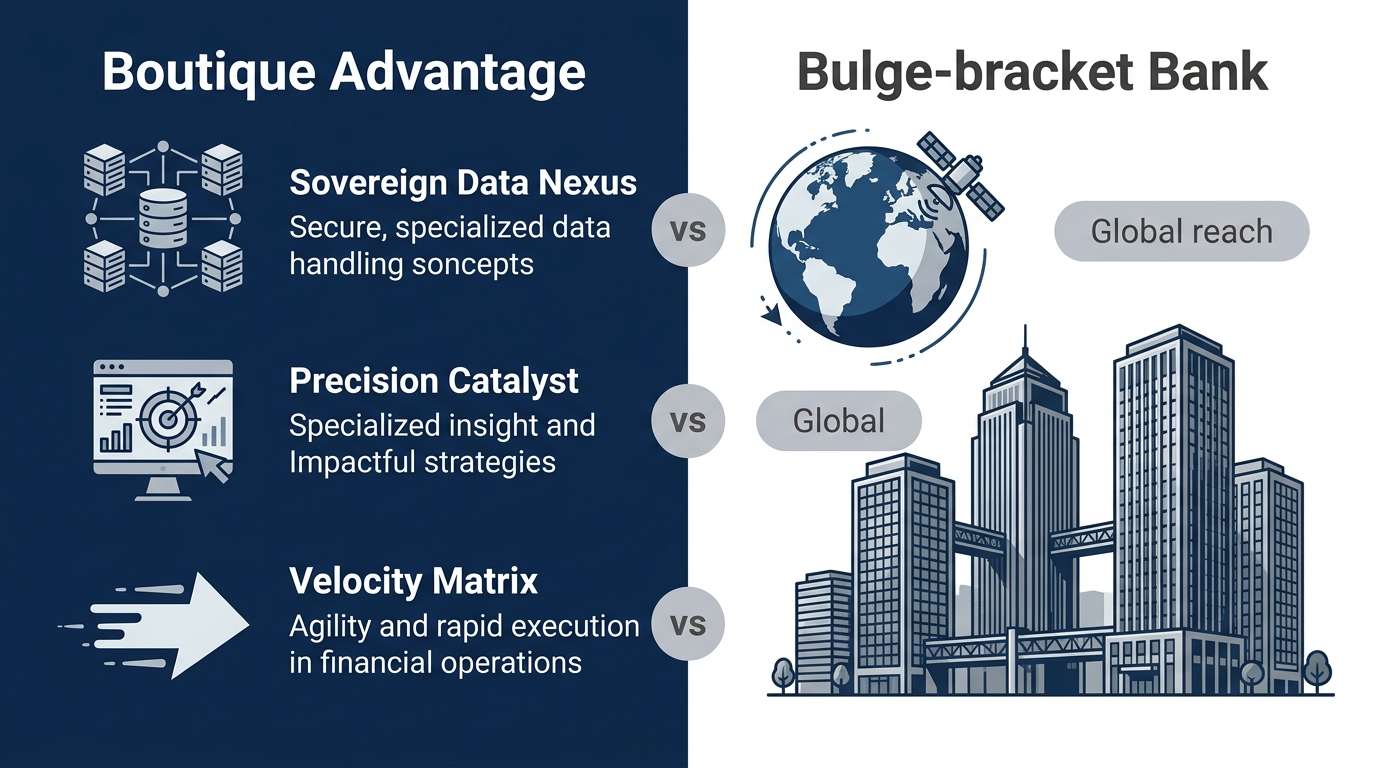
    Building on our full-cycle M&A and capital advisory capabilities, commercial lending through our debt advisory practice connects businesses with tailored financing solutions. We offer a comprehensive suite of debt financing options, including mezzanine debt, venture debt, equipment financing, and asset-based lending, each designed to support distinct growth objectives. As part of our global lending services, we leverage proprietary data access through our Sovereign Data Nexus and the Velocity Matrix to match clients with the right institutional capital from a network exceeding 4,000 investors with over $15 billion in deployable capital.

    Our debt advisory team structures each business lending solution to fit specific use cases: mezzanine debt for growth capital and acquisitions, venture debt for startups seeking non-dilutive runway, equipment financing for asset purchases without large upfront costs, and asset-based lending for working capital secured by receivables or inventory. We do not lend directly; rather, we serve as a debt advisor, facilitating access to customized capital access strategies through our Precision Catalyst approach. Beyond debt, our equity advisory services offer additional growth pathways for companies exploring minority or majority investment structures.

    Traditional Banks vs Private Commercial Lenders

    Businesses exploring financing quickly encounter two distinct paths: traditional banks and private commercial lenders. While both provide capital, their processes and priorities differ significantly. Banks rely heavily on personal credit scores, debt-service coverage ratios, and a multi-year operating history. Their underwriting is methodical, often taking months to close, and personal guarantees are typically required.

    In contrast, private commercial lenders prioritize the value of your assets and the strength of your cash flow over rigid credit metrics. This allows them to structure asset-based lending and cash-flow financing with greater speed—often delivering capital in weeks rather than months. Terms can be tailored with flexible features like interest-only periods or balloon payments, and covenants are aligned with business performance rather than static ratios. Through our institutional network, we connect companies to lenders offering global lending services that span multiple industries and jurisdictions, typically requiring fewer personal guarantees.

    For growing businesses, private lending offers a viable alternative when traditional bank criteria feel restrictive. Rather than a one-size-fits-all approach, we match firms with institutional investors who understand their unique story. In the next section, we’ll walk through the straightforward application process to access this network.

    Comparing Lending Features: Banks, Private Lenders, and Advisory Firms

    The world of commercial lending offers businesses more choices than many realize, extending well beyond the traditional bank loan. While banks remain a cornerstone for many, private lenders and boutique advisory firms have carved out distinct roles that accommodate diverse funding needs and timelines. Our internal research at Zaidwood Capital LLC provides a clear framework for understanding these differences.

    The following table offers a side-by-side comparison of key features that matter most when evaluating a lending partner.

    Commercial Lending Channel Comparison

    Commercial Lending Channel Comparison
    FeatureTraditional BanksPrivate LendersBoutique Advisory Firm (Zaidwood Capital)
    Eligibility CriteriaStrict credit history, collateral, cash flowMore flexible, emphasis on asset qualityAdvisory-based; connects to suitable institutional lenders
    Speed of FundingWeeks to monthsDays to weeksExpedited through network of 4,000+ investors
    Documentation RequiredExtensive financial statements, tax returns, business plansModerate documentation, focus on asset valuationAdvisor guides documentation preparation
    Collateral RequirementsTypically secured; unsecured options limitedOften asset-backed; flexible structuresHelps identify optimal collateral structure
    CustomizationStandardized loan productsCustomizable termsTailored advisory for each engagement
    Access to CapitalLimited to bank’s balance sheetFund size depends on investor poolAccess to $15B+ deployable capital network

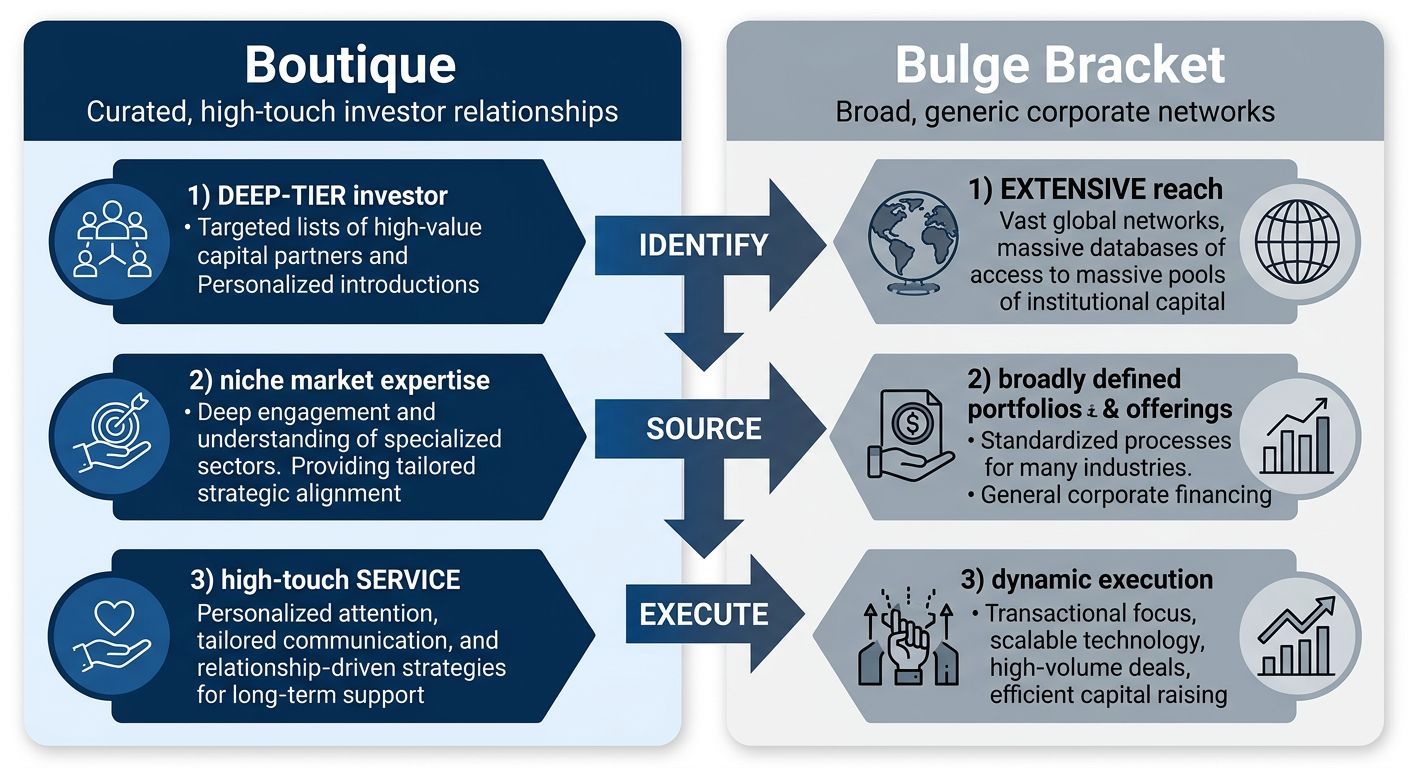
    Eligibility Criteria diverges sharply across these channels. Banks enforce rigid standards around credit scores, cash flow history, and asset coverage, which can often exclude even profitable companies in growth phases. Private lenders pivot the focus toward asset quality, creating a pathway for Asset-Based Lending that uses your company’s own holdings as the primary qualifier. As a boutique firm, Zaidwood Capital advisory bridges these worlds by connecting businesses with institutional lenders whose criteria align with the client’s specific profile, rather than forcing a square peg into a round hole.

    Speed of Funding is often the deciding factor in choosing a commercial loans provider. A traditional bank’s timeline, stretching from weeks to months, can cause companies to miss strategic windows. Private lenders compress this to a matter of days by streamlining their evaluation. We expedite this further by leveraging our network of over 4,000 investors, targeting a closing in under 60 days for mid-market transactions. This velocity can be a competitive advantage in time-sensitive scenarios.

    Three-column comparison infographic showing six lending features across Traditional Banks, Private Lenders, and Boutique Advisory Firms, using blue, green, and orange icon-cards.

    Comparison of lending features across bank, private, and advisory lending options.

    The Documentation Required scales dramatically depending on the source. Banks require a deep dive into comprehensive financial statements, tax returns, and detailed business plans. Private lenders reduce the burden, zeroing in primarily on asset valuation and condition. Our role in the advisory process shifts this burden from the borrower to us: we guide the preparation and assembly of all necessary documentation, ensuring it meets the exacting standards of institutional finance and facilitating a smoother due diligence cycle.

    Key differentiators in the business lending landscape can be summed up in three points: the speed of execution, the flexibility of the structure, and the depth of the capital pool. We provide advisory solutions that are fully tailored, helping to construct an optimal collateral package rather than presenting a one-size-fits-all mandate. With access to over $15 billion in deployable capital, our clients are not limited to a single balance sheet. In the next section, we’ll explore how to determine which of these channels best fits your company’s specific strategic and financial goals.

    This content is for informational purposes only and is not an offer, solicitation, or investment advice. Zaidwood Capital is not a registered broker-dealer; securities are offered through Finalis Securities LLC.

    Pricing Structures in Commercial Lending

    Pricing in commercial lending is highly structured and reflects a combination of market benchmarks, credit risk, and transaction complexity. We at Zaidwood Capital approach every engagement with a custom-quote philosophy, recognizing that no two capital structures are identical. The core components include an interest rate basis, which may be fixed-rate for the full term or floating-rate tied to a benchmark like SOFR, plus a margin spread that compensates the lender for the specific risk profile of the borrower.

    Beyond the interest component, business lending arrangements typically carry a schedule of fees. These can include upfront arrangement or commitment fees, legal and due diligence costs, and ongoing service or agency charges. The overall debt pricing structure is influenced by the quality of collateral, loan tenor, and prevailing market conditions. Senior secured facilities generally command the tightest margins, while mezzanine and venture debt tranches incorporate higher spreads to reflect their subordinated or cash-flow-dependent nature.

    Our process ensures that commercial loan pricing parameters are calibrated to your specific situation. According to the firm’s FAQ, we require audited financials, multi-year projections, and a detailed business plan to begin a pricing discussion. This thorough due diligence lets us model appropriate capital structures before delivering a tailored quote. All engagements start with a confidential consultation where we outline preliminary pricing frameworks and the path forward.

    This is for informational purposes only and does not constitute an offer or commitment to lend. Consult your advisors.

    Choosing the Right Commercial Lending Path for Your Business

    Choosing the right commercial lending path can determine the success of your growth plans. The main structures — term loans, lines of credit, equipment financing, and asset-based lending — each serve distinct purposes.

    A term loan provides a fixed amount with scheduled repayments, while a line of credit offers flexible working capital. Equipment financing ties repayment to the asset’s life, and asset-based lending uses receivables or inventory as security. Each option balances liquidity, predictability, and asset utilization.

    Your decision should hinge on your business stage, cash flow stability, available collateral, and growth outlook. Early-stage firms may explore venture debt; mature companies often use term loans or credit lines.

    We help you navigate these choices through debt advisory services, including mezzanine, venture debt, equipment financing, and asset-based lending. With access to 4,000+ investors and $15B+ in capital, we provide objective guidance — but we never guarantee specific outcomes or rates. Our team evaluates your capital needs, repayment capacity, and collateral profile to recommend structures that suit operational realities.

    Book a call to discuss your commercial lending strategy with our team.

    Taking the Next Step in Your Commercial Lending Journey

    In commercial lending, the right advisory partner makes all the difference. Zaidwood Capital’s full‑cycle M&A and capital advisory services provide a clear path through complex financing landscapes. Our team leverages a network of 4,000+ institutional investors and an aggregate transaction volume of $24.4B+ to connect businesses with optimal lending solutions.

    We work closely with clients to navigate debt and equity options, backed by comprehensive due diligence and strategic documentation. Whether you’re exploring commercial financing or need to raise capital, we provide the clarity and execution speed you need. With over 80 years of collective experience, our team brings deep market insight to every engagement.

    Ready to move forward? Book A Call today to discuss your unique goals and discover how our advisory services can support your business growth.

    Resources

  • Venture Debt Comparison: Top Providers and Term Sheets

    Table of Contents

    Evaluating Venture Debt for Your Startup

    Once you understand the types of venture debt, the next step is evaluating which option fits your startup. We guide founders through a structured assessment of venture debt providers, focusing on their track record with companies at your stage and in your sector.

    A detailed review of the venture debt term sheet is essential. We help you compare interest rate structures, repayment schedules, and any equity components like warrants. Our team also evaluates loan covenants, prepayment flexibility, and the added value a lender brings, such as investor introductions or the ability to support future equity rounds. We also help tailor terms to your business model.

    Engaging experienced venture capital consultants provides the analytical rigor needed to navigate these complex decisions. After evaluating your options, preparing a strong application is critical to securing the right partner.

    Essential Preparations Before Raising Venture Debt

    Before engaging with lenders, we recommend ensuring your company is fully prepared to raise venture debt. This form of financing requires careful financial and legal groundwork to instill confidence in potential partners.

    We advise our clients to assemble the following key items before initiating discussions:

    • Audited Financial Statements: Prepare audited P&L, balance sheet, and cash flow statements for the past 2–3 years, plus the current interim period.
    • Debt Service Capacity: Calculate a clear Debt Service Coverage Ratio (DSCR) to demonstrate your ability to comfortably cover interest payments.
    • Internal Data Room: Compile a secure repository of legal documents, including your charter, bylaws, cap table, and IP assignments.
    • Governance Review: Examine potential personal guarantees and confirm the board approval process required for new debt.
    • Term Education: Understand that a venture debt term sheet will differ from equity; it avoids dilution but often includes warrants and financial covenants.
    • Strategic Plan: Finalize your existing debt schedule, a detailed use-of-funds plan, and growth projections with sensitivity analysis.

    Rushing into the process with incomplete records or an unclear plan for the capital significantly reduces lender confidence. Engaging experienced venture capital consultants can help streamline this preparation, ensuring your narrative and numbers are aligned before you approach venture debt providers.

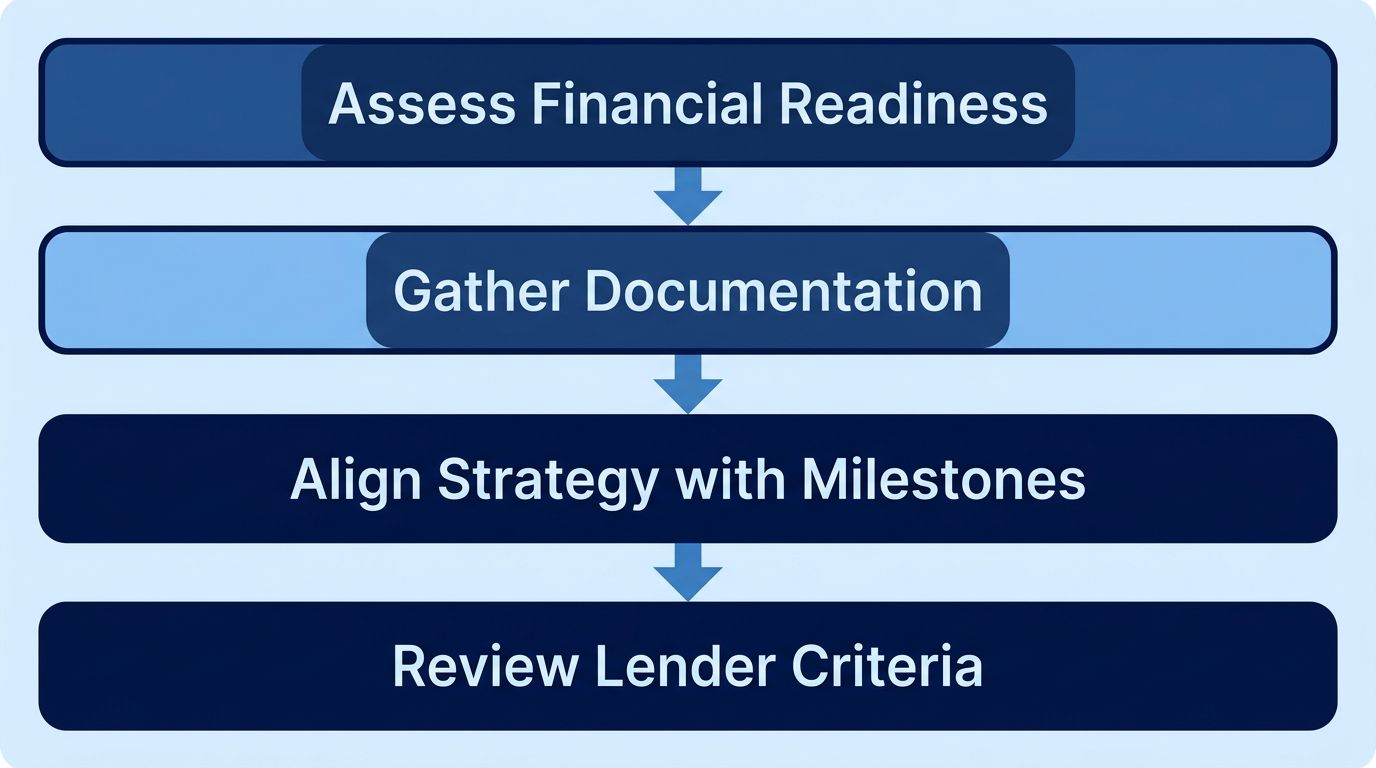
    Step 1: Assess Your Startup’s Readiness for Venture Debt

    Determining whether your company qualifies for venture debt is a critical first step. As a capital solution, venture debt can extend your runway without further dilution, but lenders apply rigorous qualification standards. We focus on actionable, objective criteria to ensure you approach the process from a position of strength.

    Primary readiness factors include reaching a minimum annual recurring revenue, typically $1M+ ARR, supported by positive gross margins and a clear use of proceeds. Strong year-over-year growth, often 30% or higher, and backing from an established institutional investor base are key indicators lenders evaluate. You should also review existing debt obligations to confirm there are no restrictive covenants that could conflict with new financing, and develop a detailed cash flow forecast demonstrating your ability to service the debt.

    Once you have assessed your fundamental readiness, the next step is to evaluate potential venture debt providers and their term sheets. For a thorough, data-driven readiness analysis, consider engaging Zaidwood Capital’s debt advisory services.

    Step 2: Understand Venture Debt Fundamentals

    Once you have assessed your capital needs, the next step is to understand the fundamentals of venture debt. Venture debt is a form of debt financing provided to venture-backed companies by specialized lenders, often structured with warrants or interest-only periods. We advise clients that it is most suitable for high-growth startups needing non-dilutive capital for working capital, equipment, or bridging to an equity round without significantly diluting shareholders.

    Unlike traditional bank loans, venture debt providers underwrite based on investor quality and growth trajectory rather than current cash flow or collateral. A typical venture debt term sheet we see includes a 3–4 year maturity, 5–20% warrant coverage, and covenants like minimum cash balances. Providers include banks and specialty finance companies. For regulatory guidance, refer to the SEC small business capital raising resources. Understanding these fundamentals prepares you to evaluate specific venture debt offers and proceed with structuring your debt package.

    Step 3: Compare Venture Debt and Equity Financing

    With a clear understanding of venture debt, the next step is to compare it against equity financing. In venture debt financing, founders retain full ownership but take on fixed repayment obligations, whereas equity financing dilutes founder stakes in exchange for permanent growth capital without mandatory repayment. For many growth-stage companies, the decision hinges on a trade-off between long-term cost and near-term flexibility.

    Equity investors typically require board seats and governance rights that can reshape strategic decisions. Venture debt providers, in contrast, rarely seek board representation, leaving founders with greater operational autonomy. The cost of equity can become substantial over time through carried interest and dilution, while venture debt carries interest and fees but preserves equity upside for existing shareholders.

    The chief risk of venture debt lies in fixed payment schedules that may strain cash flow if revenue projections miss their targets. Equity financing avoids repayment pressure but permanently reduces founders’ share of future returns. Companies often use venture debt to extend runway between equity rounds or to finance specific assets, while equity is sought for foundational, long-term growth. We advise clients to review the venture debt term sheet carefully for repayment terms and covenants before committing.

    For additional resources on comparing financing options, consult the SEC small business capital formation advocate. Once you determine the right fit, proceed to evaluate the venture debt term sheet and negotiate terms that align with your capital strategy.

    This content is for informational purposes and does not constitute investment advice.

    Step 4: Research Venture Debt Providers in the US

    With your venture debt strategy in place, the next critical step is identifying the right provider. When evaluating venture debt providers in the US, we recommend using a focused checklist to narrow your search:

    • Track record: Does the lender have experience with startups at your stage, particularly if you are pre-revenue?
    • Industry focus: Is there a specialization in your sector or business model?
    • Loan size and flexibility: Do their typical facilities match your capital needs, and what is their reputation for supporting portfolio companies during downturns?
    • Terms review: Always request a sample venture debt term sheet from each shortlisted firm and scrutinize the key economic and legal provisions.

    For a deeper look into how financial firms are regulated, explore the FINRA investor resources and insights page. This helps you independently verify the background of any registered entity you are considering, though Zaidwood Capital is not a registered broker-dealer.

    At Zaidwood Capital, we can assist with introductions to our network of venture debt providers and support the review of term sheets, but we do not lend directly or act as a broker-dealer. Once you have shortlisted and received term sheets from two to three aligned providers, you are ready to negotiate key terms.

    Step 5: Structure the Venture Debt Term Sheet

    Once you have identified potential venture debt providers, the next step is to structure the venture debt term sheet with precision. A well-organized term sheet signals sophistication to lenders and accelerates the path to closing. At Zaidwood Capital, we focus on clarity around every core component to ensure your company enters negotiations from a position of strength. The key elements we always emphasize in a venture debt term sheet include:

    • Interest rate (floating or fixed), typically based on a margin over a reference benchmark
    • Maturity period of 3 to 4 years, aligned with your cash flow projections
    • Amortization schedule that may include an interest-only period for early-stage flexibility
    • Prepayment flexibility, with penalties structured only for very early exits
    • Warrant coverage capped as a percentage of the loan amount to minimize equity dilution
    • Financial covenants such as liquidity tests rather than restrictive EBITDA minimums
    • Change-of-control provisions that protect both parties in a future sale or merger

    We advise clients to tailor these terms to their growth stage. Early-stage startups benefit most when we push for lower warrants and longer interest-only periods, preserving runway. Growth-stage companies, on the other hand, often prioritize generous covenant headroom and prepayment options that support refinancing flexibility. For all borrowers, we negotiate dilution-minimizing features like milestone-based tranches that match capital deployment to actual needs, and we frequently include a most-favored-nation clause to adjust terms if your risk profile improves. Using a clean, LSTA-style format reduces ambiguity and speeds up legal drafting. With a well-structured term sheet in hand, you are ready to engage in final negotiations.

    Step 6: Negotiate Covenants and Key Terms

    Once the optimal lender and structure are identified, the final step is negotiating the covenants and key terms. For companies exploring venture debt, this phase determines whether a term sheet becomes a strategic asset or a constraint that limits financial maneuverability.

    We work to secure terms that align with the client’s long-term financial strategy and operational flexibility. The negotiation focuses on financial covenants such as debt service coverage and loan-to-value ratios, along with reporting requirements that are common in venture debt term sheets. Lenders routinely request affirmative, negative, and financial covenants, but overly restrictive clauses can impede growth initiatives or future M&A activity.

    As the client’s advisor, Zaidwood Capital drafts markups, models the impact of each covenant under various operating scenarios, and negotiates directly with venture debt providers on the client’s behalf. Our role is to protect the business from conditions that could constrain liquidity or investment capacity while preserving a competitive cost of capital.

    Step 7: Close the Venture Debt Transaction

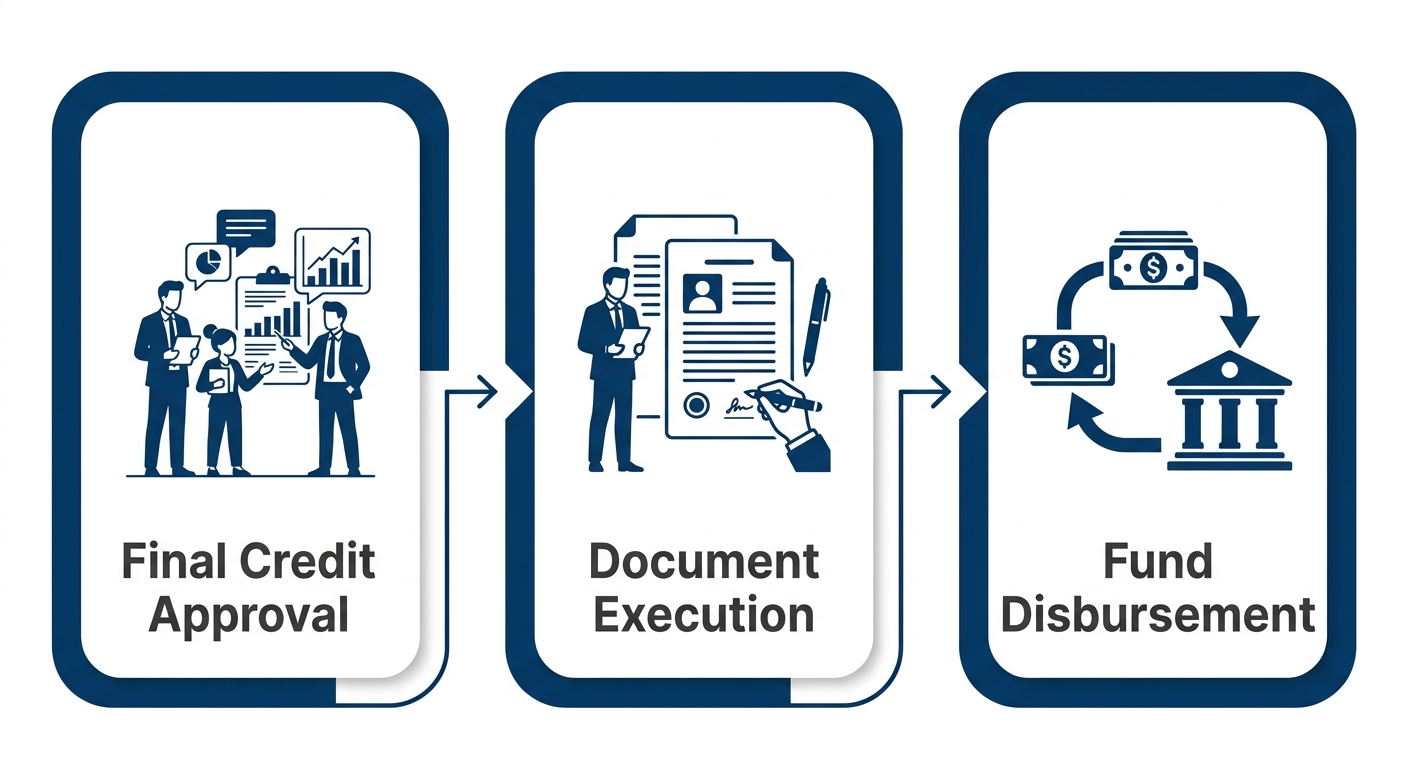
    Closing a venture debt transaction marks the culmination of our structured advisory process. Once all conditions are met, the transaction moves to closing where we coordinate venture debt providers, legal counsel, and your team to execute final documents and disburse funds efficiently.

    Final credit approval from the lender committee triggers the closing sequence. The venture debt term sheet becomes the binding commitment document at signing, followed by satisfaction of conditions precedent—including board resolutions, a legal opinion letter, collateral perfection filings, and insurance certificates. Borrower’s legal counsel reviews all documentation prepared by the lender’s outside counsel. At closing, origination fees, legal fees, and third-party costs are settled as negotiated in the engagement letter, and funds transfer via wire to your account according to the agreed draw schedule.

    Securities transactions are executed through Finalis Securities LLC, a registered broker-dealer. Post-closing, we ensure delivery of executed promissory notes, security agreements, and closing certificates.

    Three-stage horizontal process flow diagram for venture debt closing: Final Credit Approval to Document Execution to Fund Disbursement, with professional icons and blue color scheme.
    Horizontal flow visualizing the venture debt closing process.

    To explore how our debt advisory team can streamline your financing, Book A Call with Zaidwood Capital today.

    Troubleshooting Common Venture Debt Challenges

    While venture debt can be a strategic tool for growth-stage companies, it introduces operational complexities that demand disciplined oversight and proactive management. Drawing on our advisory work at Zaidwood Capital, we outline common pitfalls and practical solutions to help companies maintain covenant compliance and lender alignment.

    Covenant monitoring is essential. Typical venture debt agreements may include minimum cash balances, financial reporting requirements, or EBITDA targets. We recommend establishing a monthly review cycle to track these metrics against your loan covenants, using dashboards that pull real-time data from your accounting system. Early detection of a potential breach allows time to renegotiate terms or secure a waiver before default occurs.

    Cash-flow timing remains a persistent challenge—debt service often begins before new revenue materializes. Solutions such as interest-only periods, payment deferrals, or sculpted repayment schedules can bridge this gap if negotiated upfront. Review your venture debt term sheet carefully for prepayment penalties and amortization triggers, as these can limit your flexibility. The U.S. Securities and Exchange Commission provides guidance on structuring debt instruments that we find useful for understanding regulatory boundaries.

    Lender alignment is often overlooked. Not all venture debt providers offer the same degree of sector expertise or willingness to accommodate covenant adjustments. FINRA emphasizes illiquidity and leverage risks in its investor insights, reinforcing the importance of vetting lenders for experience with your industry and growth trajectory.

    A final caution: guard against over-leveraging and dilution-creep. Warrants embedded in venture debt can subtly erode founder equity, especially if multiple rounds of debt are layered. We help companies model the long-term capital-structure impact of warrants and principal obligations.

    This content is for informational purposes only and does not constitute financial or legal advice. Consult your advisors for your specific situation.

    Making Strategic Capital Decisions with Venture Debt

    Venture debt can serve as a powerful complement to equity financing for growth-stage companies that already have venture capital backing or strong revenue trajectories. Unlike traditional bank loans, venture debt financing offers a non-dilutive way to extend cash runway and bridge to critical milestones—allowing founders to preserve ownership while accelerating growth.

    When evaluating a venture debt term sheet, our team helps clients assess core variables such as interest rate, warrant coverage, maturity period, prepayment penalties, and financial covenants. We also bring access to a curated network of venture debt providers—including more than 4,000 institutional and private investors—to help structure, negotiate, and place the right venture debt solution for each client’s unique situation. However, venture debt is typically used alongside equity, not as a replacement, and all investments involve risk.

    Securities are offered through Finalis Securities LLC; Zaidwood Capital is not a registered broker-dealer. Past performance does not guarantee future results.

    Resources