Table of Contents
- The Landscape of Tech Mergers and Acquisitions
- Key Milestones in the Tech M&A Process
- Navigating Regulatory Hurdles in Tech Deals
- Preparing Your Company for Due Diligence
- Evaluating the Cost and Value of M&A Advisory
- AI-Driven M&A and Cybersecurity Acquisitions: Emerging Trends
- Achieving Success in Tech Mergers and Acquisitions
The Landscape of Tech Mergers and Acquisitions
Tech mergers and acquisitions are accelerating at a historic pace, propelled by the convergence of artificial intelligence and cybersecurity disruption. We observe that ai-driven m&a dominates mid-market dealmaking as companies race to integrate generative AI, while cybersecurity acquisitions surge in response to intensifying threat landscapes and new regulatory frameworks. This velocity creates immense opportunity but also unparalleled complexity for investors and business owners alike.
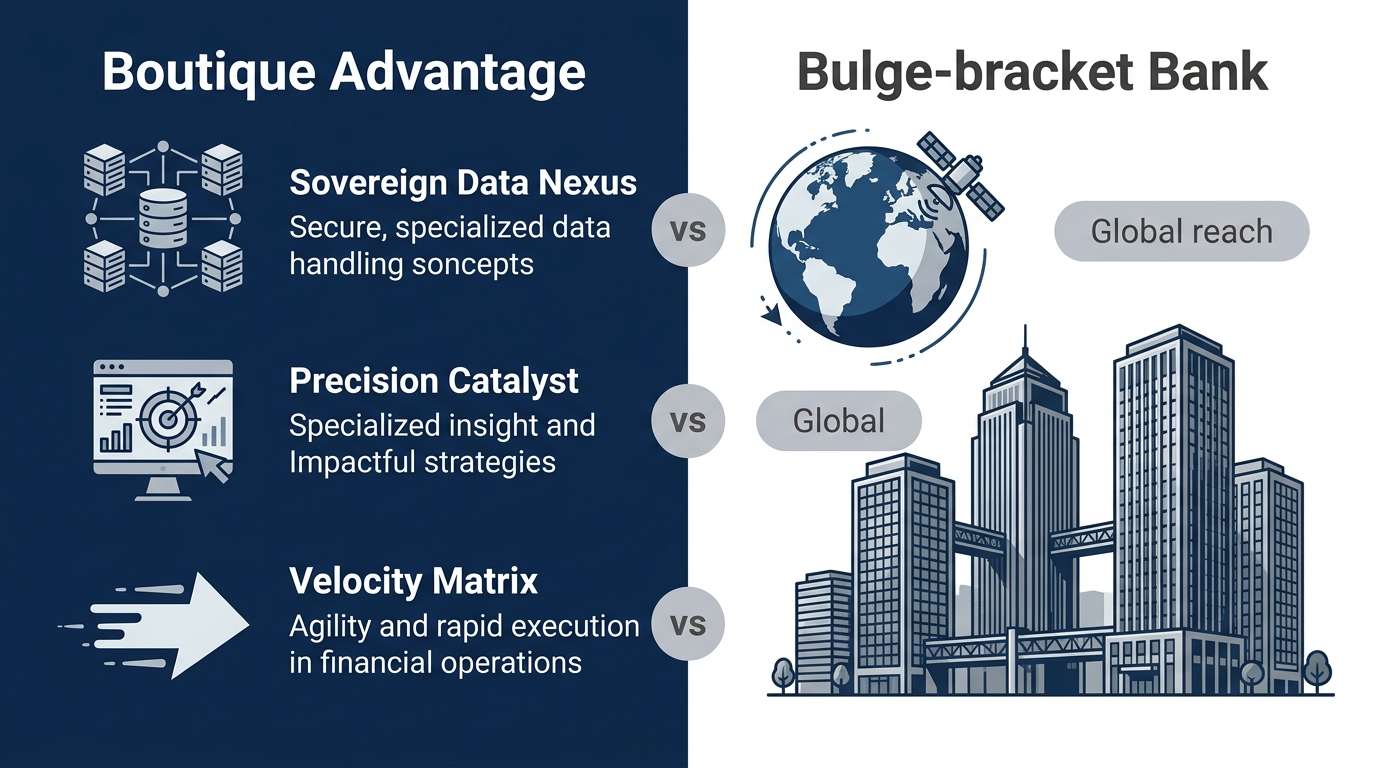
In this fast-moving environment, traditional advisory models often struggle to keep up. As a boutique investment banking firm, we combine decades of collective investment banking experience with proprietary data and a global network of over 4,000 investors. Our Sovereign Data Nexus and Precision Catalyst platforms accelerate due diligence and investor matching, delivering the speed and precision that today’s tech transactions demand. This evolving landscape requires a strategic advisor with both agility and institutional knowledge—qualities we bring to every engagement, from initial strategy through final close.
Key Milestones in the Tech M&A Process
Navigating the tech mergers and acquisitions landscape requires a structured, milestone-driven framework to manage complexity and unlock value. At Zaidwood Capital, we believe that before you can appreciate the nuances of each stage, you should understand what is an investment bank and how a dedicated advisory team serves as a strategic partner throughout the process. The following milestones outline our systematic approach.
- Strategic Assessment & Target Identification
We start by clarifying your growth objectives and screening potential targets that align with your strategic vision. Our team leverages proprietary data networks to identify opportunities that might otherwise go unnoticed. - Valuation & Financial Modeling
Using advanced financial modeling, we triangulate a company’s intrinsic value and quantify potential synergies. This phase ensures you have a realistic pricing framework before entering negotiations. - Due Diligence (Including Cybersecurity & IP Audits)
A rigorous evaluation of financial statements, operational metrics, and legal risks is conducted, with special attention to technology assets, cybersecurity posture, and data privacy compliance. In AI-driven M&A and cybersecurity acquisitions, our proprietary data access via the Sovereign Data Nexus allows for deeper analysis of intellectual property portfolios and cyber risk exposure. - Negotiation & Letter of Intent
Investment bankers facilitate valuation discussions, presenting industry benchmarks and helping bridge gaps through creative deal structuring—such as earn-outs or seller financing. A non-binding letter of intent is then drafted to formalize key terms. - Regulatory Approvals & Compliance
Navigating antitrust, data sovereignty, and sector-specific regulations is critical. We coordinate with legal counsel to ensure all filings are complete and timelines are managed proactively. - Closing & Deal Documentation
Our Full-Cycle M&A approach encompasses deal vault management and the preparation of definitive agreements. We oversee the final exchange of consideration and transfer of ownership, ensuring every detail is documented and compliant. - Post-Merger Integration
Success doesn’t end at closing; we help clients execute integration plans that capture synergies, align cultures, and safeguard critical technology architectures. Continuous monitoring of cybersecurity risks remains a priority.
With a clear understanding of these milestones, it becomes evident why experienced advisory guidance is critical. Our role as a Boutique M&A and Capital Advisory Firm is to streamline each step, mitigating risk and positioning clients for long-term value creation. In the following sections, we’ll explore each milestone in greater depth to help you prepare for a successful transaction.
Navigating Regulatory Hurdles in Tech Deals
In tech mergers and acquisitions, regulatory complexity often determines whether a transaction reaches completion or stalls indefinitely. Beyond financial and technical due diligence, regulatory compliance emerges as a critical hurdle. Our firm combines deep advisory experience with proprietary intelligence tools to help clients anticipate and address these challenges.
For transactions involving telecommunications infrastructure, the review process demands particularly careful navigation. The FCC telecommunications agency must approve any transfer of spectrum licenses or communications assets, a process our team streamlines through early engagement and thorough preparation. According to the Federal Communications Commission, public interest hearings and foreign ownership rules frequently extend review timelines, especially in tech mergers and acquisitions where national security considerations intersect with infrastructure control. We help clients prepare comprehensive filings that address these nuanced requirements from the outset.
Cross-border financing structures introduce additional regulatory dimensions that many acquirers underestimate. The International Capital Market Association establishes the Green Bond Principles, a critical framework when technology acquirers issue sustainable debt to fund acquisitions. For technology M&A transactions spanning multiple jurisdictions, ICMA standards provide essential guidance on disclosure requirements and market practices that protect both issuers and investors. In ai-driven M&A, regulatory scrutiny of data privacy compliance often intersects with these capital market requirements, creating layered obligations that demand coordinated advisory support.
Cybersecurity acquisitions frequently trigger filings under the Committee on Foreign Investment in the United States, adding national security review to already complex transaction timelines. Our Sovereign Data Nexus platform monitors real-time regulatory changes and precedent decisions across these agencies, helping clients anticipate potential friction points. While advisory experience reduces execution risk, each transaction remains unique, and regulatory outcomes depend on the specific deal structure and government determinations. We provide clarity without promising specific results.
Once regulatory approvals are secured, the focus shifts to rapid, compliant integration. Our Velocity Matrix accelerates this transition, enabling clients to move from approval to operational execution without sacrificing regulatory diligence or transaction momentum.
Preparing Your Company for Due Diligence
Once you have identified a potential acquisition target, thorough preparation is the next critical step, particularly in the dynamic landscape of tech mergers and acquisitions. For founders and management teams, the due diligence process can feel overwhelming, but a structured, proactive approach transforms it from a hurdle into an opportunity to showcase your company’s value. At Zaidwood Capital, we guide our clients through this critical phase, ensuring that every facet of the business is scrutinized and presented to withstand the most rigorous investor or buyer examination. The goal is not just to survive diligence but to leverage it as a strategic step toward a successful transaction.
We advise our clients to focus on three fundamental preparatory tasks. First, compile and organize all foundational documentation. This includes audited financial statements, corporate tax returns, capitalization tables, material contracts, and all historical investor presentations and board decks. Second, assemble a dedicated, cross-functional internal response team. This group should include key leaders from finance, legal, and operations who are empowered to answer questions and pull records quickly. Third, establish a secure, meticulously indexed virtual data room. A well-structured data room accelerates the review process and signals operational maturity to potential partners.
For companies involved in ai-driven m&a or cybersecurity acquisitions, the diligence requirements extend far beyond standard financial and legal review. A significant portion of the evaluation will focus on technology and intellectual property. Be prepared to demonstrate clear ownership and defensibility of your core IP, including patents, trademarks, and proprietary code. We help our clients prepare detailed documentation of AI model training data, algorithm logic, and bias mitigation protocols. Equally non-negotiable is a thorough review of your cybersecurity infrastructure, incident response history, and data privacy compliance. Addressing these technology-specific areas proactively is a powerful risk-mitigation strategy that prevents deal-derailing surprises.
As your Boutique M&A and Capital Advisory Firm, we streamline this entire preparation phase. We provide a tailored readiness checklist and can manage the deal vault, ensuring all sensitive information remains secure and organized. This hands-on support allows you to stay focused on running your business. A robust financial analysis is the bedrock of this process, and professionals with a strong foundation, including those who have completed a CFA certification program, add significant rigor to the financial modeling and valuation perspectives that underpin a solid diligence review.
With your company thoroughly prepared, the formal due diligence process can proceed more efficiently, often beginning with the opening of a secure data room to invited parties.
Evaluating the Cost and Value of M&A Advisory
In today’s dynamic deal environment, tech mergers and acquisitions require rigorous evaluation of advisory cost and value. As a Boutique M&A and Capital Advisory Firm, we believe clients must look beyond headline fees to assess the full spectrum of value an advisor delivers throughout the transaction lifecycle.
Understanding Fee Structures
M&A advisory fees generally follow two primary models. A retainer fee compensates the advisor for upfront work, including market analysis, buyer identification, and initial due diligence preparation. This structure ensures dedicated resources are committed to the engagement from day one, aligning incentives for thorough preparation rather than rushed execution. The second model, a success fee, is contingent upon closing and typically calculated as a percentage of transaction value. This arrangement directly ties advisor compensation to outcomes, creating strong alignment around achieving optimal deal terms. Many engagements combine both structures, balancing ongoing commitment with performance-based rewards.
Value Drivers and Differentiating Factors
Evaluating advisory value requires examining factors beyond the fee schedule. Proprietary data access represents a critical differentiator. Through our Sovereign Data Nexus, we leverage private servers and exclusive market intelligence to identify opportunities and benchmark valuations that public databases cannot replicate. This infrastructure powers informed decision-making, particularly in specialized sectors like ai-driven m&a and cybersecurity acquisitions, where traditional valuation metrics often fall short. Execution speed, driven by our Velocity Matrix methodology, compresses timelines without sacrificing diligence quality. Finally, investor engagement capabilities, enhanced by our Precision Catalyst platform, ensure targeted outreach to qualified counterparties rather than broad, unfocused marketing.
Boutique advisory firms offer distinct advantages over bulge-bracket institutions, including senior-level attention throughout the engagement, specialized sector expertise, and flexible fee arrangements. While larger banks provide global distribution networks and multi-product capabilities, boutique firms deliver personalized service and dedicated focus on middle-market transactions where nuanced industry knowledge creates measurable value.
For industry standards and best practices, clients may refer to organizations such as the ICMA capital market association and the CFA Institute, whose ethical frameworks and professional guidelines establish benchmarks for advisory conduct.
Criteria for Evaluating Advisory Value
- Transaction track record in relevant sectors and deal sizes
- Network quality, measured by access to decision-makers at strategic acquirers and institutional investors
- Technological capabilities that enhance data security, valuation accuracy, and investor targeting
- Professional standards, including adherence to CFA Institute ethical guidelines and demonstrated commitment to fiduciary responsibility
With these evaluation criteria in mind, one can better navigate the selection process for an advisory partner aligned with specific transaction objectives.
AI-Driven M&A and Cybersecurity Acquisitions: Emerging Trends
The landscape of tech mergers and acquisitions is being reshaped by two powerful forces: the application of artificial intelligence and a surge in cybersecurity-focused dealmaking. As a Boutique M&A and Capital Advisory Firm, Zaidwood Capital sees these trends creating both opportunity and complexity for growth companies and investors. To understand these shifts, it is helpful to revisit what is an investment bank and how its core advisory services are being transformed by technology. The traditional functions of capital raising and full-cycle M&A are now augmented by proprietary data, AI-driven analytics, and rapid execution capabilities that distinguish boutique platforms from larger wirehouses.
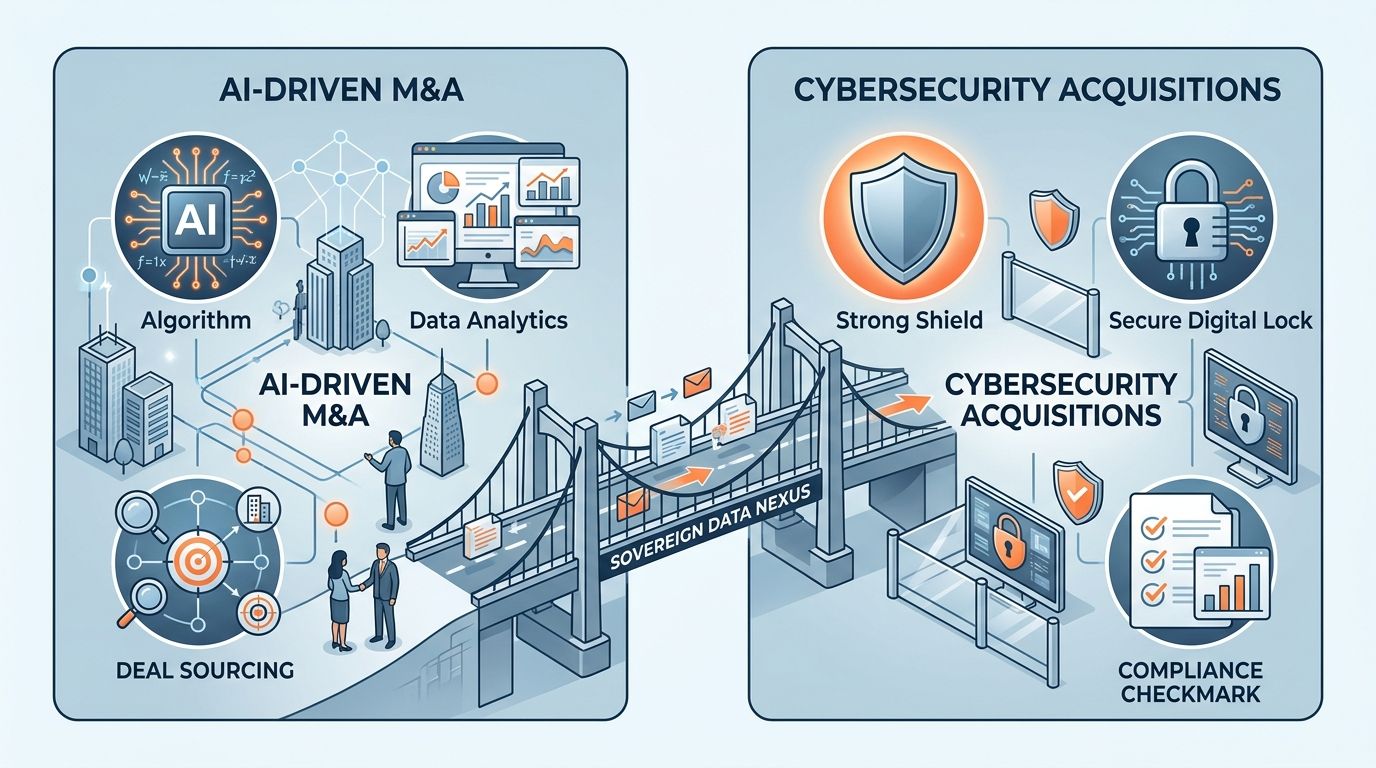
Now, AI-powered M&A is transforming every stage of the deal lifecycle. Our Sovereign Data Nexus employs machine learning to scan thousands of targets, flagging financial and operational red flags and surfacing data-driven opportunities that traditional manual screening would miss. Predictive valuation models, built on historical transaction data and real-time market signals drawn from our global investor network, help our team price transactions with greater precision. This is not just a pre-deal advantage; AI tools are increasingly used in post-merger integration to identify synergy realizations and operational efficiencies that protect deal value. For clients, staying ahead of trends in ai-driven m&a requires access to proprietary data and tech-enabled diligence, which translates into faster, more informed decision-making—a distinct edge in competitive processes.
Cybersecurity acquisitions have become a dominant theme in the current cycle. Companies are acquiring specialized security firms to defend against evolving threats, comply with tightening regulations, and build competitive moats around their digital assets. With over $24.4 billion in aggregate transaction volume handled by our team, we have witnessed a sharp increase in deals targeting cybersecurity providers. The growth in cybersecurity acquisitions reflects a strategic imperative to embed security as a driver of resilience. Our Velocity Matrix enables rapid execution, and our network of 4,000+ investors actively seeks cyber-focused deals. This approach allows clients to capitalize on market opportunities before conditions change.
Understanding these emerging trends—and how a boutique platform like Zaidwood Capital leverages the Sovereign Data Nexus and Velocity Matrix—is essential for any stakeholder considering a technology-driven transaction. In our next section, we explore how we structure and execute full-cycle deals that capitalize on these dynamics.
Achieving Success in Tech Mergers and Acquisitions
Success in tech mergers and acquisitions hinges on speed, proprietary data, and rigorous due diligence. In a landscape where cybersecurity acquisitions can turn on undiscovered vulnerabilities, and ai-driven M&A requires deep technical evaluation, traditional advisory is no longer enough.
We address this through our proprietary deal infrastructure. Our Sovereign Data Nexus provides secure, transaction-specific servers and exclusive data sets, enabling the granular risk assessment technology deals demand. The Velocity Matrix then compresses execution timelines without sacrificing quality, a critical advantage in fiercely competitive tech auctions. Underpinning both is the Precision Catalyst, our integrated investor-engagement engine that uses digital marketing and capital-markets expertise to align startups, growth companies, and institutional capital at the right moment.
We deliver this as Full-Cycle M&A: end-to-end support from strategic documentation through to a closed transaction. While these capabilities sharpen execution, every deal involves inherent risk and requires careful regulatory and legal compliance. These tools form the foundation of our advisory process, explored in the next section.