Zaidwood Capital

Category: Investment Banking

  • Global Lending Services Alternatives: Key Options for Borrowers

    Global Lending Services Alternatives: Key Options for Borrowers

    The provided HTML content has been validated. The structure adheres to the required order (TOC, Content, Resources, Style Block), all Gutenberg blocks are properly closed, anchor IDs are consistent with the TOC, and no markdown residue remains. “`html

    Table of Contents

    Global Lending Services for Corporate Growth

    Beyond M&A, our global lending services empower corporations to fund growth initiatives without diluting equity. With access to 4,000+ institutional investors and over $15 billion in deployable capital, we connect clients to tailored financing. Our advisory has supported over $24.4 billion in aggregate transaction volume, demonstrating our ability to structure complex debt solutions.

    • Mezzanine financing to bridge capital gaps during expansion
    • Venture debt for high-growth companies seeking non-dilutive capital
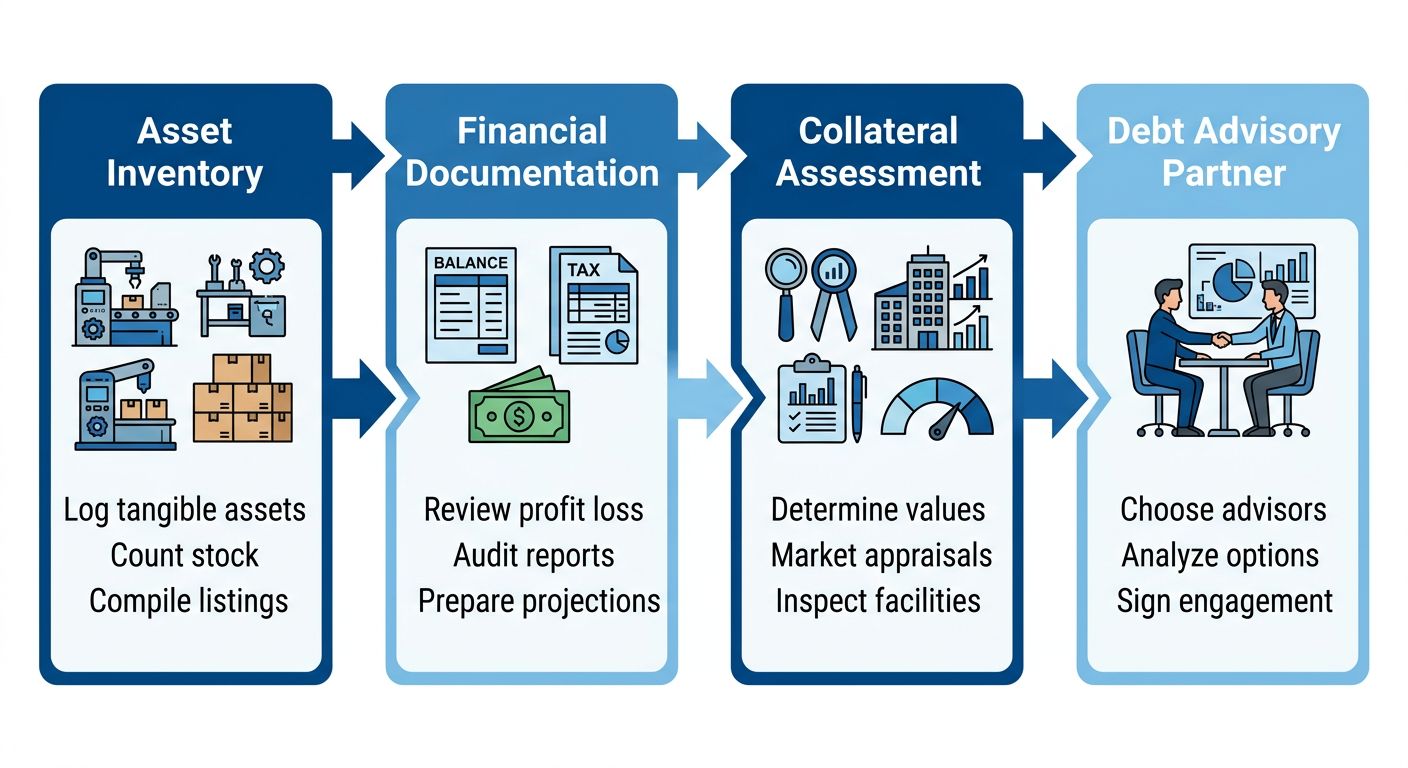
    • Equipment financing and asset-based lending to unlock liquidity from tangible assets

    We streamline transactions by leveraging deep institutional relationships and proprietary technology to accelerate funding timelines. Our lending solutions complement our mergers and acquisitions advisory to structure acquisition financing, working capital lines, and growth capital, while also supporting recapitalizations and special situations.

    Each engagement is custom-quoted to your specific growth needs. Our Full-Cycle M&A and capital advisory approach ensures a cohesive financing strategy. We invite you to Book A Call to discuss how our lending solutions can accelerate your international expansion. For equity-side solutions, see the following section on capital raising.

    Securities are offered through Finalis Securities LLC. Zaidwood Capital is not a registered broker-dealer. This is for informational purposes only.

    Understanding Global Lending Services

    What Are Global Lending Services?

    Global lending services encompass a broad range of cross-border financing solutions that enable corporations to fund growth, execute acquisitions, and manage working capital. These services include mezzanine debt, venture debt, asset-based lending, and cash-flow financing, each tailored to different corporate needs and risk profiles. Unlike traditional domestic bank loans, global lending services connect borrowers with institutional investors and specialty lenders across international markets, offering flexible structures and tailored terms that may not be available locally. According to Federal Reserve economic research, U.S. real GDP grew at an annualized rate of 3.8% in the second quarter of 2025, reflecting strong corporate demand for expansion capital that these international lending solutions help satisfy. As companies navigate complex global markets, they increasingly turn to these instruments to fuel strategic initiatives without diluting equity unnecessarily. The Federal Trade Commission’s business guidance emphasizes compliance and disclosure standards governing global lending, underscoring the need for rigorous advisory support. Navigating these instruments effectively often requires the support of a boutique M&A advisory firm.

    Role of Boutique M&A Advisory in Global Lending

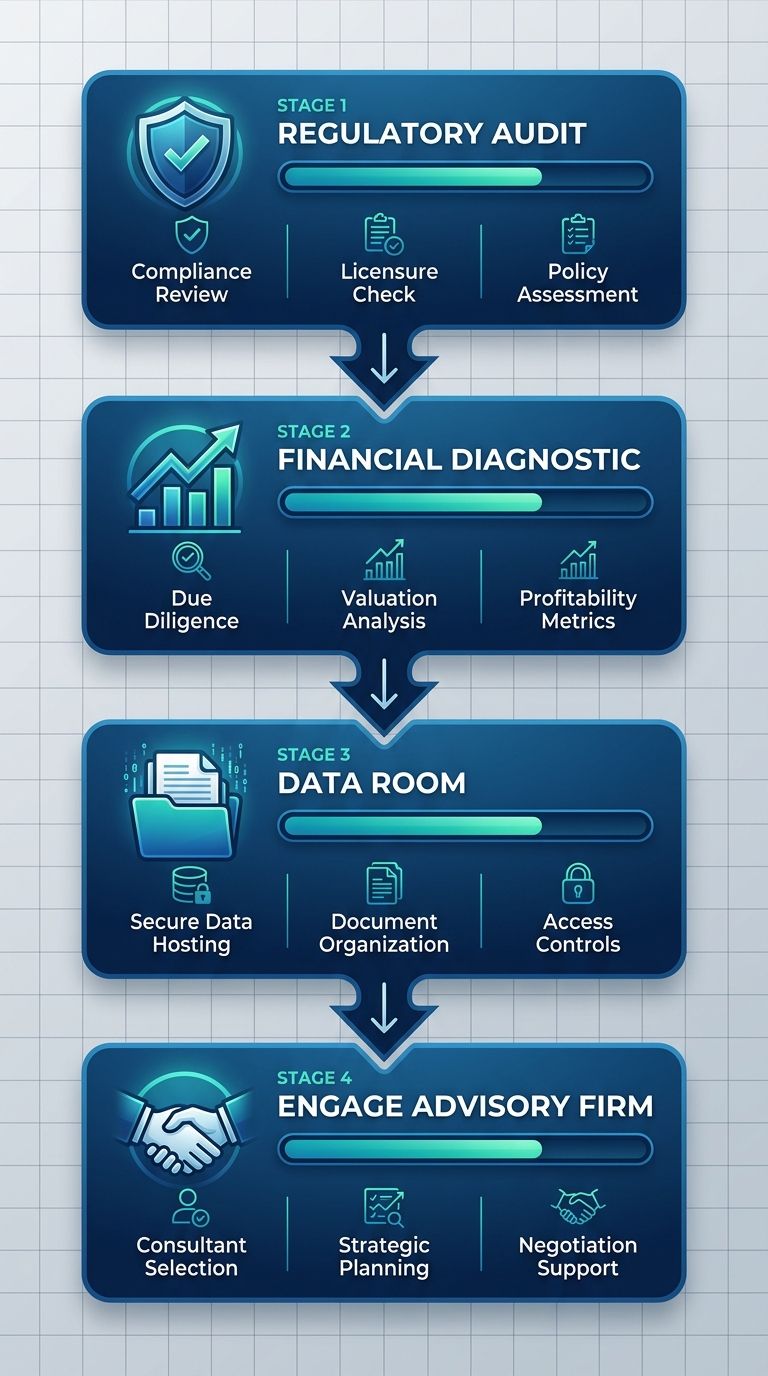
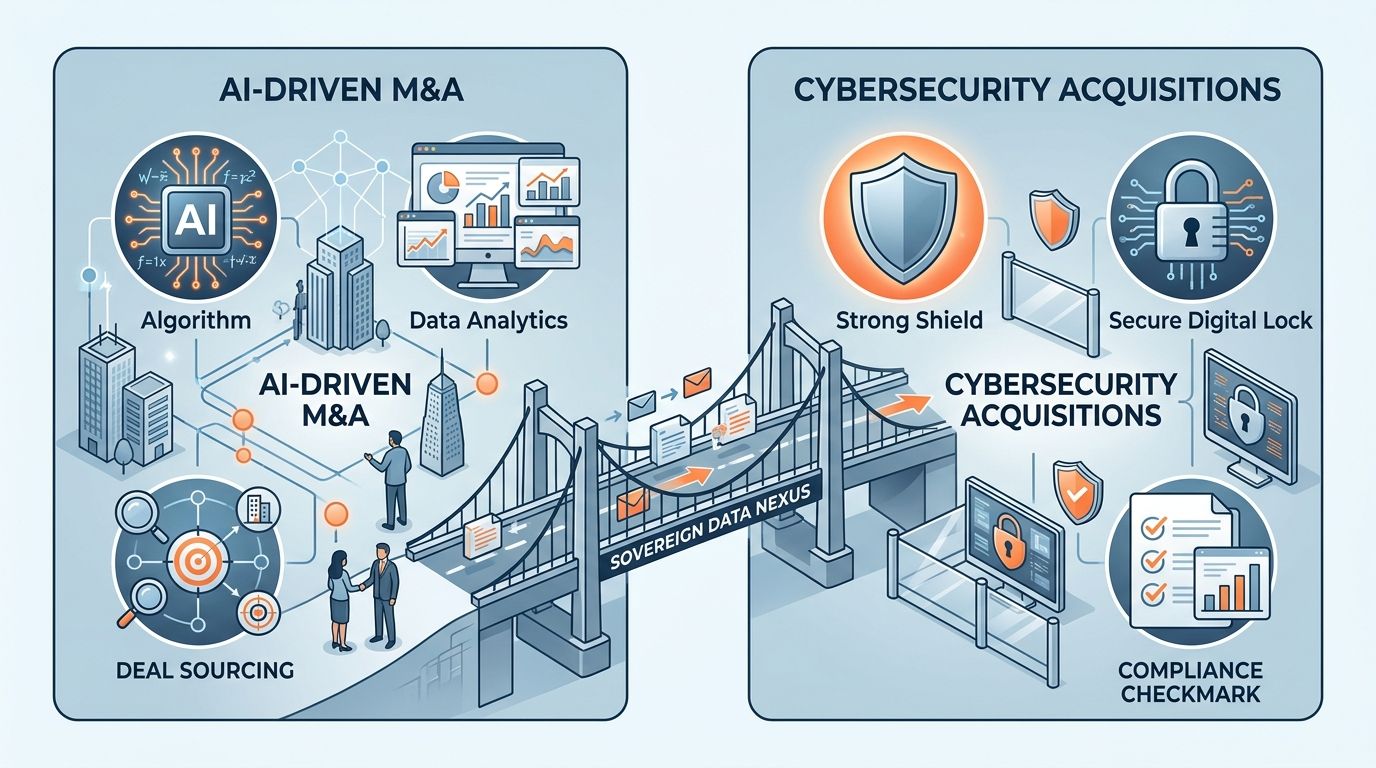
    At Zaidwood Capital, we act as a Full-Cycle M&A and capital advisory partner, connecting corporate clients with the global lending services that match their strategic needs. Our institutional network encompasses more than 4,000 global investors and over $15 billion in deployable capital, and we have advised on over 300 transactions totaling $24.4 billion in aggregate volume. We differentiate ourselves through full-cycle due diligence that covers financial, legal, operational, commercial, IT, and human capital assessments, ensuring every lending structure is robust and compliant. Our process evaluates regulatory requirements—including FDIC banking oversight—to verify that cross-border financing adheres to applicable banking regulations. Access to proprietary data resources like our Deal Vault and Sovereign Data Nexus enhances our ability to identify the most appropriate lending partners. This holistic approach equips us to guide clients through the full spectrum of debt instruments.

    Types of Debt Financing Available

    Global lending encompasses a spectrum of debt instruments, each designed to address specific corporate objectives and risk profiles.

    • Mezzanine debt – Subordinated, often convertible financing that bridges the gap between senior debt and equity, commonly used in acquisitions and buyouts.
    • Venture debt – Non-dilutive capital tailored for high-growth, venture-backed companies to extend runway and fund expansion without surrendering equity.
    • Equipment financing – Asset-backed loans or leases that allow companies to acquire machinery, vehicles, or technology with the purchased asset serving as collateral.
    • Asset-based lending – Revolving credit lines secured by a company’s balance-sheet assets such as accounts receivable, inventory, or real estate, providing flexible working capital.

    Each type serves a distinct purpose within a company’s capital structure, and our advisory team helps determine the most appropriate combination based on the client’s operational profile, growth stage, and market conditions. Understanding these financing options is the first step in designing a capital strategy—our next section explores how we evaluate and approve these instruments in practice.

    Key Benefits of Global Lending Services through Boutique Advisory

    Our global lending services deliver three distinct advantages that empower companies to access diverse capital sources, optimize financial structures, and close transactions efficiently.

    Access to a Broad Investor Network

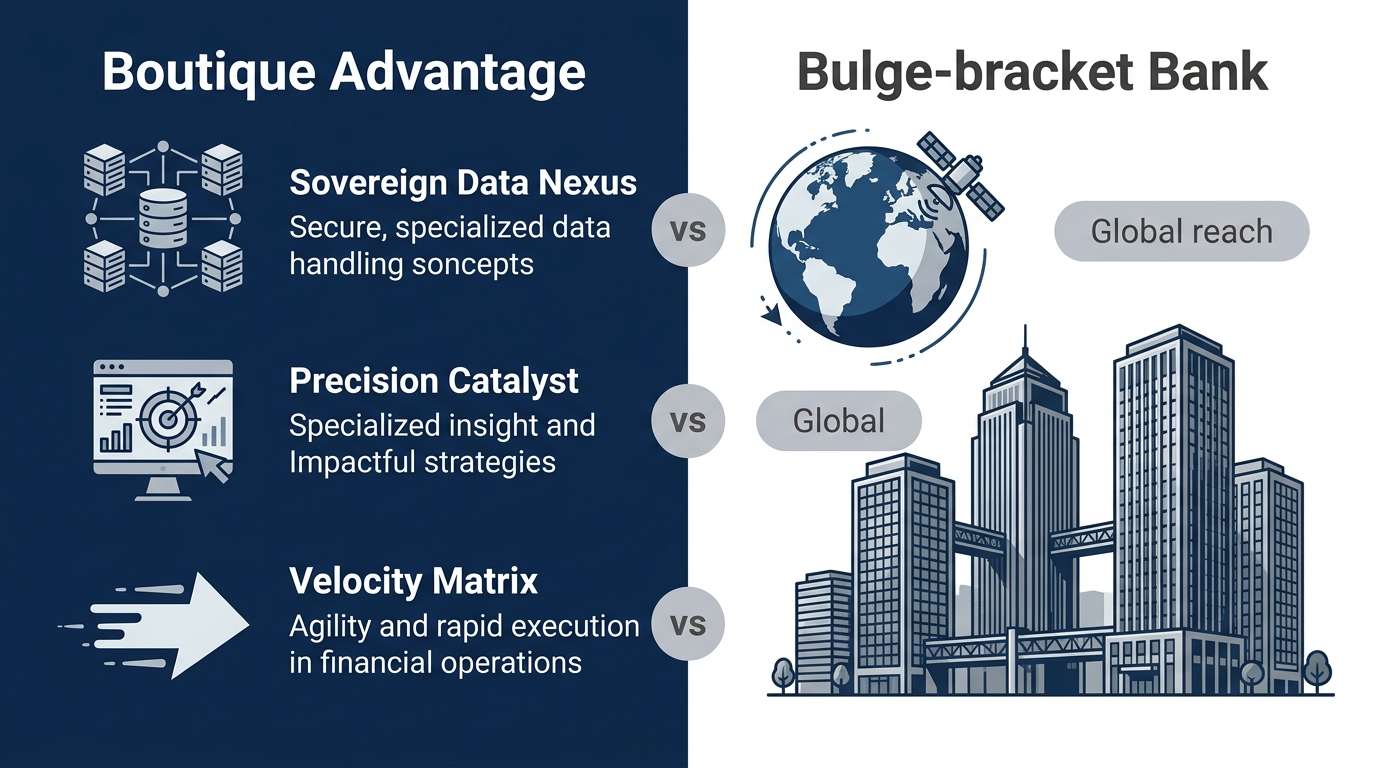
    Through our global lending services, clients gain immediate access to a curated network of over 4,000 institutional and private investors, representing more than $15 billion in deployable capital. This extensive Rolodex, combined with our $24.4 billion in aggregate transaction volume, ensures we can source financing across asset classes and geographies. By leveraging proprietary data systems like the Sovereign Data Nexus, we match borrowers with lenders that understand specific industry dynamics and growth stages — opening doors that traditional bank relationships often cannot. Moreover, our deep relationships with family offices, sovereign wealth funds, and endowments enable tailor-made international lending solutions for cross-border capital needs. Every mandate benefits from a quantitative and qualitative investor matching process that considers not only cost but strategic alignment, shortening the path to committed capital. This broad network is a cornerstone of our full-cycle M&A and capital advisory model, delivering a tangible advantage in securing capital for growth and complex transactions.

    Tailored Capital Structure Optimization

    Our debt advisory team builds financing structures that align precisely with a company’s cash flow cycles, growth objectives, and risk tolerance. In global debt advisory, we evaluate mezzanine, venture debt, equipment financing, and asset-based lending to craft a capital stack that preserves equity while maintaining liquidity for strategic initiatives. By integrating forward-looking financial models and sensitivity analysis, we help clients avoid over-leverage and maintain healthy covenants. Crucially, we help you navigate capital market regulatory policy to structure debt that meets your risk and compliance needs — an essential component for cross-border transactions where regulatory frameworks differ markedly. Our full-cycle due diligence ensures each capital layer works in concert, reducing cost and financial strain. The result is a tailored solution that optimizes capital efficiency and supports sustainable growth.

    Faster Execution and Personalized Service

    Unlike bulge-bracket banks where deal processes can be slowed by competing internal interests and multiple layers of approval, our boutique structure ensures a streamlined, hands-on approach. Each engagement is led by senior bankers with decades of experience who remain directly involved from initial analysis through closing, reducing friction and miscommunication. Our proprietary Velocity Matrix integrates digital marketing and capital markets expertise to accelerate deal timelines — often achieving close in under 60 days for mid-market transactions. By coordinating strategic documentation, due diligence, and investor introductions under one roof, we eliminate the handoff delays that plague larger institutions. This personalized model adapts quickly to market shifts, delivering a relationship-driven experience that prioritizes your objectives over institutional process. For business owners and fund managers, this translates into lower transaction fatigue and a higher probability of reaching the finish line on acceptable terms.

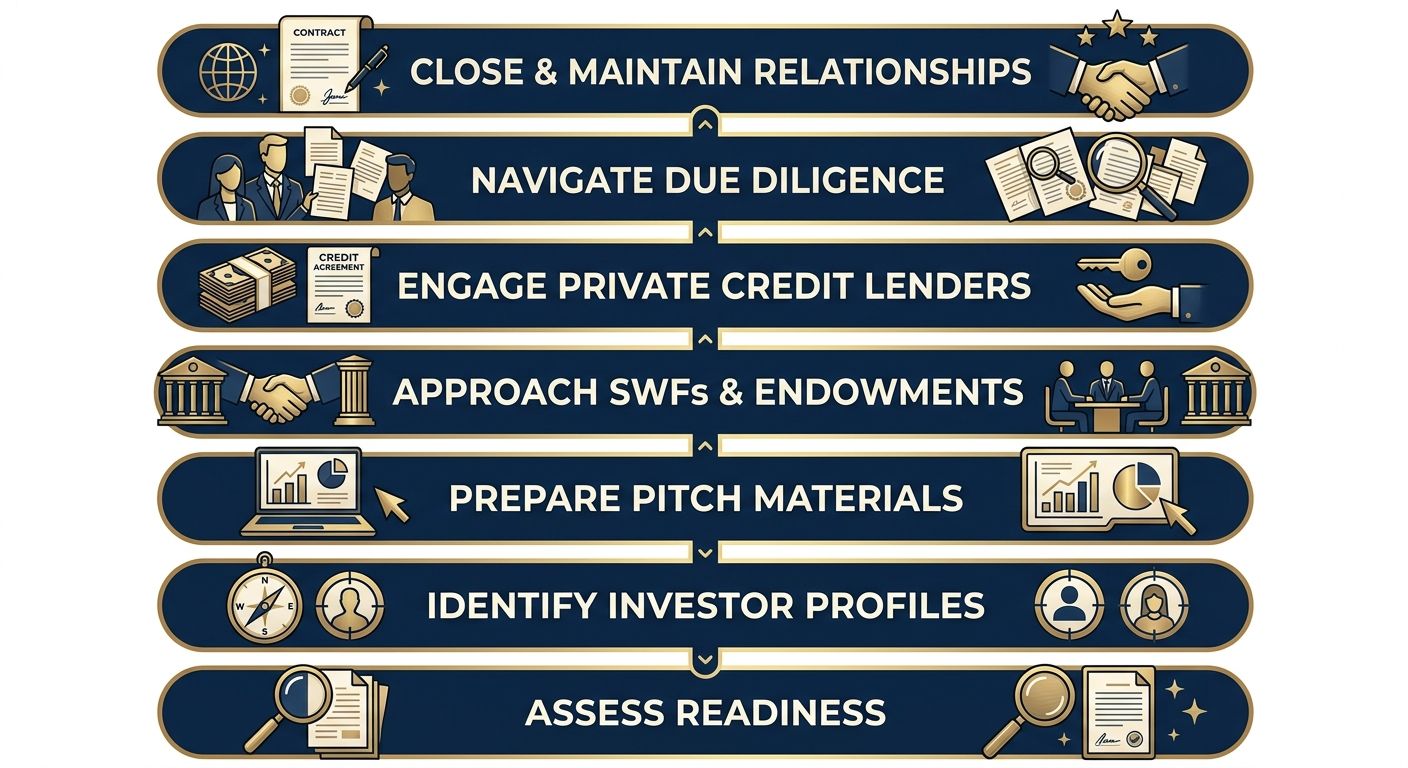
    How Global Lending Services Work with Zaidwood Capital

    With a team that includes former specialists from bulge-bracket institutions such as Goldman Sachs, JPMorgan, and Morgan Stanley, Zaidwood Capital’s global lending services follow a structured, multi-stage process designed to match businesses with the right institutional lenders from our network of more than 4,000 global investors.

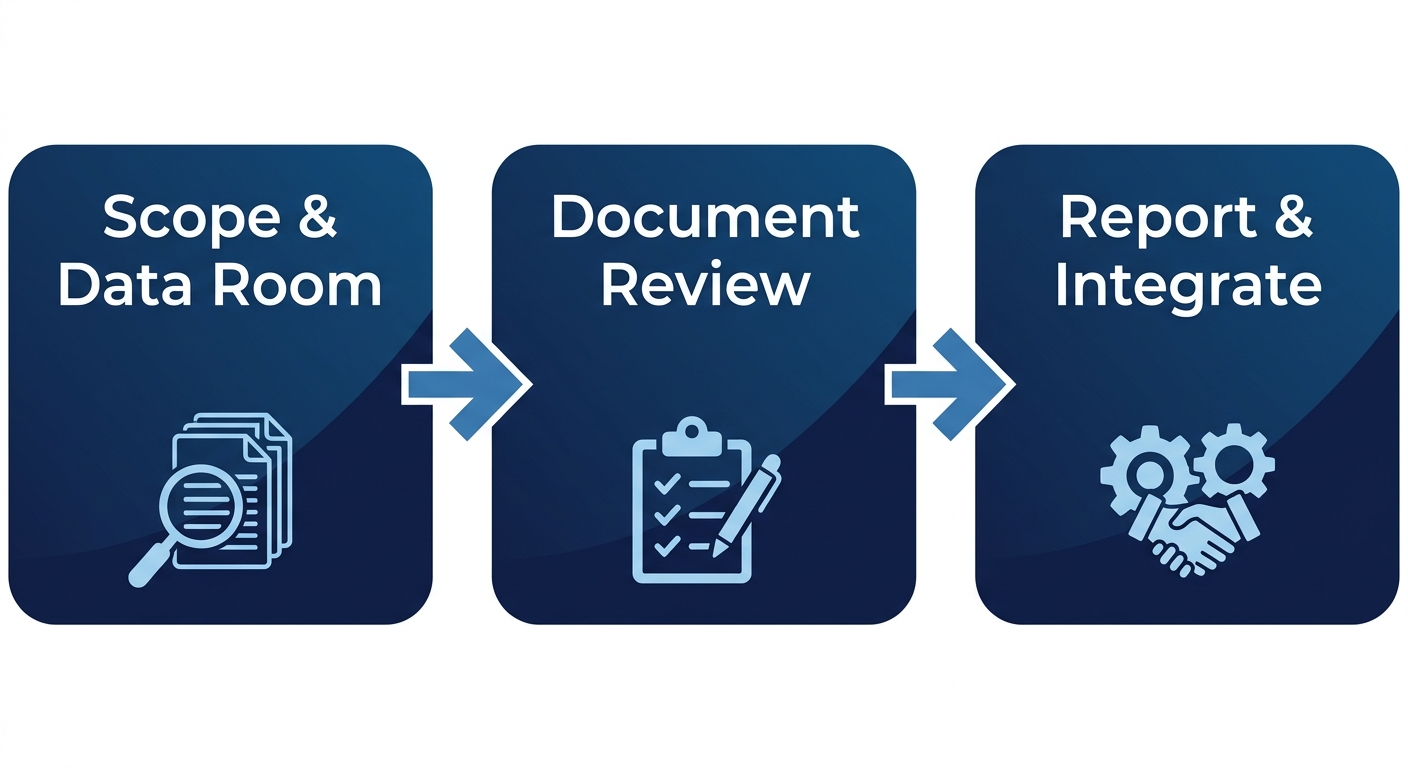
    Engagement and Information Gathering

    Our engagement begins with a comprehensive consultation during which clients submit key documentation including financial statements, a business plan, and detailed funding objectives. Our team of experienced venture capital consultants works closely with clients to gather the required documentation and define clear funding objectives. This information-gathering phase allows us to understand the client’s industry, growth stage, and the precise capital structure needed.

    Qualification and Matching with Investors

    Once we have a thorough understanding of the client’s financial position and objectives, we move to qualification. Using our proprietary Deal Vault and an extensive investor rolodex, we assess the client’s profile against criteria for various debt products. We match each client with institutional lenders whose investment mandates align with their industry, deal size, and risk appetite.

    Due Diligence and Transaction Execution

    During due diligence—a core phase of our global lending services—we conduct a full-cycle review covering financial, legal, operational, commercial, IT, and human capital aspects. We coordinate with legal counsel and auditors to identify and mitigate any risks. After resolving potential issues, we assist in negotiating term sheets and finalizing transaction documents. It is important to clarify that Zaidwood Capital does not extend loans directly; we advise and facilitate introductions to institutional lenders. All securities transactions are conducted through Finalis Securities LLC, a separate entity and FINRA member.

    Best Practices for Securing Global Lending

    Preparing a Comprehensive Information Package

    • Audited financial statements covering the last three fiscal years.
    • Cash flow projections spanning three to five years.
    • A detailed rationale for the intended use of funds.
    • A comprehensive business plan.

    Understanding Regulatory and Compliance Requirements

    For companies pursuing global lending services, understanding and meeting regulatory requirements is non-negotiable. Cross-border transactions must comply with SEC, FINRA, and ICMA standards. For authoritative guidance on fair lending and disclosure practices, we direct clients to the FTC business guidance.

    Partnering with an Experienced Advisory Firm

    When seeking global lending services, partnering with an experienced advisory firm can mean the difference between a stalled process and a successful closing. At Zaidwood Capital, we offer a boutique M&A and capital advisory platform designed to streamline the funding journey.

    Capitalize on Global Lending Opportunities with Zaidwood Capital

    Global lending markets remain highly fragmented, but through our global lending services advisory we help clients identify and structure cross-border financing opportunities. Backed by a network of over 4,000 institutional investors and family offices, Zaidwood Capital provides integrated debt and equity advisory that spans jurisdictions.

    Resources

    “`
  • Best Manufacturing Consulting for 2026 Growth

    Best Manufacturing Consulting for 2026 Growth

    Table of Contents

    Mastering Manufacturing Consulting Essentials

    Mastering manufacturing consulting begins with our integrated Full-Cycle M&A and capital advisory services. We connect manufacturing firms to over 4,000 global investors, addressing industry challenges with streamlined growth strategies, as per Zaidwood Capital’s proprietary internal guidance.

    Key essentials include Streamlining Transactions via proprietary data access and full-cycle due diligence—financial, operational, and commercial. Our capital introductions facilitate equity and debt advisory, drawing on $24.4B+ aggregate transaction volume from Zaidwood Capital’s internal examples of precision in manufacturing deals.

    We enable clients to integrate smart manufacturing trends through capital raising and strategic corporate finance consulting, powered by our Velocity Matrix and Precision Catalyst approaches, per internal best practices.

    Book A Call for custom advisory tailored to your needs. Investments involve risk; past performance does not guarantee future results.

    1. Lead Digital Transformation

    As pioneers in Financial Services 3.0, we lead digital transformation through our Velocity Matrix for manufacturing consulting clients. Positioned as a Precision Catalyst, Zaidwood Capital LLC guides manufacturers toward smart technologies and operational excellence.

    Our alignment with initiatives like the NIST MEP CESMII partnership accelerates client adoption. As per an authoritative announcement from the National Institute of Standards and Technology (NIST), this government-industry collaboration advances smart manufacturing technologies, technology transfer, training via CESMII’s platforms, and funding for small and medium-sized manufacturers.

    NIST MEP‘s client impact, underscored by GenEdge industry analysis of the Client Impact Survey, demonstrates gains in sales growth, cost savings, job creation, and innovation. We connect these advancements to our full-cycle M&A advisory and capital formation services.

    Leverage our institutional network for Sovereign Data Nexus-enabled transformations. Book A Call with our team today to start. This foundation enables seamless capital formation—explore next.

    2. Explore Top Firms Directory

    Building on these insights into manufacturing opportunities, we guide you to top firms via the official directory. MEP centers are federally funded organizations that deliver manufacturing consulting to small and medium-sized manufacturers, as explained by ConnSTEP, an active MEP center participant. These centers offer tailored advisory on process improvements, workforce training, and technology adoption to drive competitiveness.

    The National Institute of Standards and Technology (NIST) maintains the authoritative listing of all 51 MEP centers across U.S. states and territories, complete with addresses, contacts, and service descriptions. Users can search by state or service type, such as supply chain optimization or cybersecurity for manufacturers, to identify local experts in consulting support for manufacturers. We recommend leveraging this directory to pinpoint partners accelerating manufacturing growth via targeted manufacturing advisory. Visit the MEP centers directory to discover NIST-backed expertise in operational enhancements.

    Explore the MEP centers directory now to connect with top firms. After identifying partners, contact us for capital advisory support using our Velocity Matrix.

    3. Adopt Smart Technologies

    Building on optimized processes, smart technologies provide the digital edge in manufacturing consulting. According to proprietary internal FAQ guidance from Zaidwood Capital, these innovations drive efficiency gains despite barriers like high costs, skills gaps, and legacy systems.

    IoT for real-time monitoring enables continuous equipment tracking in production lines, reducing downtime through data-driven alerts. AI for predictive analytics forecasts maintenance needs, optimizing workflows via pattern recognition in manufacturing operations consulting. Automation for process optimization streamlines repetitive tasks, as expert internal advisory content from Zaidwood Capital notes, boosting throughput with robotic integration.

    We recommend this four-step adoption roadmap from Zaidwood Capital FAQs:

    • Audit current systems to identify gaps.
    • Select scalable solutions like IoT and AI.
    • Integrate with existing operations via expert partners.
    • Monitor ROI metrics through pilot projects and training.
    Vertical process flow diagram illustrating four-step roadmap for smart technology adoption in manufacturing: audit systems, select solutions, integrate operations, monitor performance.
    Four-step roadmap for adopting smart technologies in manufacturing

    These steps align smart tech with our Full-Cycle M&A and capital advisory for funding upgrades. Leverage Zaidwood’s Velocity Matrix for accelerated implementation. Not investment advice—consult advisors; investments involve risk. Secure capital for these innovations through our Full-Cycle M&A advisory—Book A Call to start.

    4. Assess Reputation Reviews

    Beyond financial checks, reputation reveals execution reliability in manufacturing consulting. We advise evaluating providers through verified client feedback and independent benchmarks to ensure partners deliver on promises for capital advisory mandates.

    Follow this three-step process:

    1. Gather client testimonials from verified sources like Google or Clutch.
    2. Cross-reference with independent surveys, such as the NIST MEP client impact survey, conducted by third parties to measure outcomes like sales growth and cost savings, as explained by GenEdge.
    3. Analyze patterns for themes like on-time delivery and efficiency gains.

    Prioritize surveys from bodies like NIST MEP that track sales growth, cost reduction, and ROI for manufacturing firms. Avoid sole reliance on self-reported reviews; objective data predicts transaction success in consulting for manufacturing sectors.

    With reputation confirmed via surveys, evaluate strategic fit next. Use these tools before engaging our Full-Cycle M&A and capital advisory services—Book A Call today.

    5. Scale with Capital Access

    Once operations are optimized, secure capital to accelerate growth. We provide seamless capital access to fuel your growth, particularly for businesses seeking manufacturing consulting services. Our Capital Formation / Capital Raising connects clients to institutional LPs and over $15 billion in deployable capital, as detailed in Zaidwood Capital’s official FAQ guidance on capital solutions.

    We offer comprehensive Debt Advisory, including mezzanine, venture debt, equipment financing, and asset-based lending. Equity Advisory provides growth equity and liquidity solutions. Through Capital Introductions and Institutional LP Placement, clients access our Deal Vault and Investor Rolodex with 4,000+ global investors and $24.4 billion in aggregate transaction volume. Our Velocity Matrix delivers full-cycle support for faster execution.

    Book A Call to discuss custom capital solutions tailored to your manufacturing scale-up needs. With capital in place, prepare for optimal exits. Securities are offered through Finalis Securities LLC; Zaidwood Capital is not a registered broker-dealer.

    6. Optimize Debt Structures

    Complementing equity with optimized debt, we at Zaidwood Capital streamline capital structures to reduce costs and align with growth goals. For clients seeking manufacturing consulting, our debt advisory services enhance efficiency through tailored non-dilutive financing and operational efficiency improvements for manufacturers.

    We offer key debt options:

    • Mezzanine debt: Subordinated financing blending debt and equity features for flexible capital without full equity dilution.
    • Venture debt: Non-dilutive funding for high-growth companies post-equity rounds, with repayment tied to revenue milestones.
    • Equipment financing: Leverages machinery as collateral for asset-heavy manufacturing sector consulting clients.
    • Asset-based lending: Utilizes receivables or inventory to unlock liquidity.

    Through our institutional network, we secure competitive terms, as outlined in Zaidwood Capital’s proprietary FAQ knowledge base. This pairs with equity advisory for a full capital stack.

    Book A Call for a custom debt optimization assessment. Not investment advice — consult advisors.

    7. Tap Investor Network

    Building on our full-cycle capabilities, we empower you through the Tap Investor Network. Tap into our exclusive Investor Network of 4,000+ global institutions with $15B+ deployable capital, perfect for manufacturing consulting firms pursuing capital raises or M&A.

    Our proprietary platform, detailed in Zaidwood Capital’s raise portal, delivers instant capital introductions via the Deal Vault and Investor Rolodex. This accelerates Velocity Matrix execution for services like Capital Formation and Institutional LP Placement. Businesses in the manufacturing sector consulting space benefit from rapid access to growth equity and strategic opportunities, backed by our $24.4B+ aggregate transaction volume.

    Activate personalized access by Book A Call today. Ideal for sectors like consulting in manufacturing seeking efficient deal execution.

    Contact us to tap the network today for a custom quote. Securities are offered through Finalis Securities LLC; Zaidwood Capital is not a registered broker-dealer. This network kickstarts your transaction—discover the full process next.

    8. Execute Due Diligence

    Following agreement on key terms, we execute comprehensive due diligence using our proprietary Velocity Matrix for accelerated insights in Full-Cycle M&A and capital advisory, including manufacturing consulting deals seeking capital or M&A.

    Per Zaidwood Capital’s official internal guidance on full-cycle due diligence procedures, our process covers six key categories:

    • Financial: Balance sheet audits and cash flow projections to validate fiscal health.
    • Legal: Contract reviews and compliance checks to mitigate regulatory risks.
    • Operational: Supply chain efficiency and process optimizations, such as in smart manufacturing transactions and manufacturing consulting firms’ operational scalability.
    • Commercial: Market positioning and customer validations for growth potential.
    • IT: Cybersecurity audits and data integrity assessments.
    • Human Capital: Talent assessments and culture fit evaluations.

    Integrating our 4,000+ investor network and $24.4B+ transaction experience via Precision Catalyst methodologies mitigates risks, maximizes value, and advances to seamless transaction closing. Book A Call to discuss tailored execution. Not investment advice — consult your legal, tax, and financial advisors before making decisions.

    Partner for Manufacturing Success

    In manufacturing, success demands a trusted partner—we deliver manufacturing consulting expertise. We partner with manufacturing leaders for success using our Precision Catalyst approach to accelerate growth via targeted capital and M&A strategies.

    Our Full-Cycle M&A and capital advisory covers buy-side and sell-side mandates for plant expansions or divestitures. We raise capital from our 4,000+ global investor network and provide debt advisory for equipment financing. Zaidwood Capital’s internal resources confirm our $24.4B+ transaction volume in industrial sectors.

    We integrate smart manufacturing capabilities for operational scaling, leveraging AI predictive maintenance and digital twins to minimize downtime and boost efficiency by 20-30%, per Zaidwood Capital expertise. Our manufacturing consulting extends to specialized debt and equity solutions.

    Book A Call to explore how our Velocity Matrix streamlines your manufacturing journey. Not investment advice—consult your advisors.

    This article was researched and written with the assistance of AI tools.

    Resources

  • Best Seed Funding for Startups in 2026

    Best Seed Funding for Startups in 2026

    Table of Contents

    Unlocking Seed Funding Opportunities for Startups

    Building on foundational strategies for startup growth, at Zaidwood Capital, we understand that securing seed funding is a critical first step for early-stage ventures. Our equity advisory services provide tailored growth equity and liquidity solutions for seed and pre-seed funding stages, as outlined in our proprietary capabilities.

    We connect startups to our network of over 4,000 global investors with access to $15B+ in capital for strategic introductions, backed by our team’s expertise in full-cycle capital raising. Tools like the Velocity Matrix accelerate fundraising for startups, aligning with industry benchmarks as highlighted in the venture capital yearbook 2026. From seed to growth equity, we offer comprehensive support.

    Book A Call with our team to explore seed funding strategies customized for your startup. Securities are offered through Finalis Securities LLC; Zaidwood Capital is not a registered broker-dealer.

    1. Decode Pre-Seed vs Seed Funding

    We often see founders in fundraising for startups grapple with the confusion between pre-seed funding and seed funding. Pre-seed funding represents the earliest stage, focused on idea validation through personal networks like friends and family—typically ranging from $10,000 to $250,000. In contrast, seed funding supports product development, often involving angel investors or early venture capitalists, with amounts commonly between $500,000 and $2 million.

    Pre-seed characteristics include high risk, no revenue requirement, and equity granted to non-institutional sources. Seed rounds, however, demand more structure, such as MVP demonstrations and formal term sheets. According to authoritative U.S. Securities and Exchange Commission (SEC) guidance, pre-seed draws from ‘friends, family, and fools,’ while seed funding attracts accredited angels or micro-VCs seeking traction metrics.

    Infographic comparing Pre-Seed and Seed funding stages with icons for key traits and progression arrow

    Pre-Seed vs Seed funding differences visualized side-by-side

    These distinctions guide startups to align their stage with targeted strategies. Understanding pre-seed and seed funding stages positions founders for effective capital raises. Investments involve risk; consult advisors. With these clarified, explore our Full-Cycle M&A and capital advisory to streamline your path—Book A Call today.

    2. Benchmark Seed Amounts and Timelines

    Building on seed stage fundamentals, here are 2026 NVCA benchmarks for seed funding. These benchmarks define median deal sizes drawn from National Venture Capital Association (NVCA) Yearbook data on U.S. venture capital standards for early-stage investments.

    The authoritative NVCA 2026 Yearbook details 2025 activity informing seed funding trends:

    • Total capital deployed: $320 billion across 15,352 deals.
    • AI-related investments: 65.4% of deal value, up significantly from prior years.
    • Typical seed funding timeline from term sheet to close: 60-90 days.

    These metrics show growth in fundraising for startups, with AI driving increases versus 2025, though first-time funds hit lows at 101—the fewest since 2007. NVCA notes variability by sector and geography. Pre-seed funding often features smaller rounds beforehand. We expect these benchmarks to inform fundraising across sectors and regions. These seed benchmarks set the stage for scaling to Series A—see below.

    3. Fulfill Core Seed Requirements

    Once your startup confirms seed stage readiness, fulfill these core requirements to unlock seed funding opportunities. Meeting them, as outlined in Zaidwood Capital’s official FAQ providing authoritative qualification guidelines, positions you for our Capital Raising services, Pitch Decks, and access to our 4,000+ global investor network via the Deal Vault and Investor Rolodex.

    Core Seed Requirements

    • Minimum Viable Product (MVP) with Traction: Demonstrate at least 1,000 active users or $10K MRR, connecting with early stage investors through our Velocity Matrix for faster fundraising for startups execution.
    • Founding Team Strength: Highlight 10+ years combined domain expertise in tech, SaaS, AI, or fintech to build investor confidence.
    • Validated Market Opportunity: Secure customer interviews or Letters of Intent (LOIs) proving demand in a scalable market.
    • Basic Financial Projections: Provide pro forma models showing path to revenue growth and scalability.

    With requirements met, proceed to our streamlined application process. Verify your fit and Book A Call to discuss fulfillment. Not investment advice — consult advisors.

    4. Execute Proven Raising Strategies

    With your pitch deck refined, now execute effectively using our proven raising strategies for seed funding. At Zaidwood Capital, we guide clients through structured capital formation, leveraging our full-cycle expertise to streamline fundraising for startups.

    We deploy targeted tactics drawn from Zaidwood Capital’s internal capital raise playbook and proven methodologies. First, tap our network of over 4,000 institutional investors for precise introductions. Second, apply the proprietary Velocity Matrix to accelerate deal timelines. Third, customize Pitch Decks, pro forma financials, and strategic documentation. Access our Deal Vault for secure investor rolodex. Integrate Precision Catalyst to blend digital marketing with capital markets, boosting pre-seed funding traction.

    Book A Call today for custom-quote support in capital raising. These seed funding tactics pave the way for Series A scaling, with access to $15B+ in deployable capital. Past performance does not guarantee future results / results may vary.

    5. Target Elite Seed Investors

    With your pitch ready, now target elite seed funding sources amid the competitive fundraising for startups landscape. Securing introductions to top-tier seed investors demands precision and access to exclusive networks.

    We provide this through our proprietary Deal Vault, an investor rolodex delivering targeted introductions to elite seed investors across our 4,000+ global network. We match founders to investor mandates by sector, stage, and geography, facilitating warm introductions, managing outreach, and supporting due diligence coordination throughout the entire transaction lifecycle. Zaidwood Capital’s internal platform offers specialized deep tech deal flow and access to $15B+ in deployable capital, differentiating us for pre-seed funding and growth equity needs.

    Our full-cycle capital introductions and Velocity Matrix streamline execution, connecting you efficiently from opportunity sourcing to close.

    Book A Call today for custom Deal Vault access and tailored investor matchmaking. Next, leverage our full-cycle advisory for seamless execution.

    6. Harness Top Funding Platforms

    With strategies set, we now harness top funding platforms such as Zaidwood Raise to accelerate seed funding for startups. Our Capital Formation services provide access to 4,000+ global investors and $15B+ in deployable capital through the proprietary Deal Vault and Investor Rolodex, as offered by Zaidwood Capital, our internal funding platform.

    The process is streamlined: upload your pitch decks, business plans, and pro forma financials with tailored investor outreach and campaign analytics tools. We leverage full-cycle capital raising, Capital Introductions, and digital marketing integration via the Velocity Matrix to execute fundraising for startups faster and more efficiently.

    For pre-seed funding needs, benefits include Precision Catalyst matching to ideal investors, reducing time-to-close while minimizing risks. This positions early-stage ventures for scalable growth with our institutional network.

    Book A Call today to launch your custom capital raise. Once funded, our full-cycle support ensures seamless transitions.

    7. Select Fundraising Consultants

    With your pitch deck and materials finalized, now partner with experts to accelerate access to capital networks for seed funding rounds. Our 4,000+ investor network streamlines early-stage capital raises, positioning startups for success in competitive fundraising for startups.

    Evaluate consultants using these key criteria:

    • Proven transaction volume exceeding $20B: Seek firms with our $24.4B aggregate track record for reliable execution.
    • Integrated services like debt advisory services and equity solutions: Zaidwood Capital offers mezzanine debt, venture debt, and capital formation tailored for pre-seed funding and growth.
      • Includes equipment financing and asset-based lending per our specialized internal offerings.
    • Proprietary tools such as Velocity Matrix: Enables faster execution in startup funding rounds.
    • Full-cycle due diligence capabilities: Covers our Full-Cycle M&A and capital advisory for comprehensive support.

    Book A Call for an initial consultation to assess fit, including institutional LP placement and Deal Vault access. Contact us to initiate your customized strategy.

    This is informational only, not investment advice—consult advisors. Investments involve risk.

    8. Accelerate via Strategic Advisors

    Beyond digital tools, our human capital provides unmatched acceleration. We apply the Velocity Matrix through strategic advisors who deliver Precision Catalyst insights, cutting seed funding timelines for startups by tailoring guidance to their unique needs. This shortens decision cycles, accelerates diligence, and improves investor engagement.

    Zaidwood Capital’s team, with backgrounds from bulge bracket firms like Goldman Sachs, JPMorgan, and boutiques such as Centerview Partners, accelerates fundraising for startups. Our internal credentials showcase expertise in full-cycle M&A and capital advisory, streamlining processes for efficient execution.

    Access our 4,000+ global investor network and $24.4B+ transaction volume via financial strategic consulting and Capital Introductions. This propels pre-seed funding and early-stage capital raises. Book A Call for custom advisory. Securities are offered through Finalis Securities LLC; Zaidwood Capital is not a registered broker-dealer.

    Integrating these advisors with the full Velocity Matrix ensures rapid progress toward funding goals.

    Secure Your Startup’s Funding Future

    Scaling startups demands seed funding amid fierce competition. We at Zaidwood Capital guide you through full-cycle M&A and capital advisory to secure early-stage capital raises effectively.

    Our Capital Formation / Capital Raising services deliver pitch decks, pro forma financials, and introductions to 4,000+ global investors with $15B+ in deployable capital, per Zaidwood Capital’s official services overview. This network accelerates fundraising for startups via strategic capital introductions.

    Unlock Deal Vault access for our proprietary investor rolodex and deal opportunities, leveraging the Velocity Matrix for unmatched speed in pre-seed funding rounds. Our $24.4B+ aggregate transaction volume ensures precision.

    Book A Call for tailored advisory.

    Securities are offered through Finalis Securities LLC; Zaidwood Capital is not a registered broker-dealer.

    This article was researched and written with the assistance of AI tools.

    Resources

  • Industrial IoT: Complete Guide to Predictive Maintenance

    Industrial IoT: Complete Guide to Predictive Maintenance

    Table of Contents

    Industrial IoT: Transforming Modern Manufacturing

    Building on digital advancements in manufacturing, industrial iot represents interconnected sensors, machines, and software that enable real-time data collection and analysis in production environments. We at Zaidwood Capital LLC see IIoT as a cornerstone for modern factories seeking operational excellence.

    IIoT predictive maintenance leverages sensor data to forecast equipment failures before they occur. Factories use vibration and temperature readings from assembly lines to predict issues, potentially reducing downtime by up to 50%. This proactive approach minimizes unplanned stops and extends machinery life, as industry standards suggest.

    IIoT edge computing processes data at the source, cutting latency for high-speed decisions. In fast-paced assembly, edge devices analyze inputs instantly, enabling adjustments without cloud delays. Manufacturers gain agility in dynamic production lines through this localized intelligence.

    These transformations boost efficiency, cut costs, and scale operations. For businesses eyeing IIoT adoption, strategic funding is key, as outlined by Zaidwood Capital. Our internal FAQ guidance highlights capital advisory for tech upgrades, including leveraging advanced software solutions for seamless integration, per Zaidwood Capital’s internal company FAQ on funding advisory. We also advise aligning IIoT roadmaps with measurable KPIs, staged investments, and vendor selection processes to maximize ROI and de-risk implementation over time across global and local operations for scalability.

    Fundamentals of Industrial IoT

    Building on general IoT concepts, Industrial IoT (IIoT) tailors these technologies for demanding manufacturing environments. Industrial IoT encompasses interconnected sensors, machines, and systems that enable real-time data exchange across factories and industrial settings. This evolution shifts from legacy SCADA systems, which relied on wired connections and centralized control, to wireless, cloud-integrated platforms. Key components include sensors for continuous monitoring, robust connectivity options, and advanced data processing. These fundamentals empower manufacturers to achieve greater efficiency and responsiveness in operations.

    The following table highlights distinctions between industrial IoT components and traditional systems. National Institute of Standards and Technology (NIST) provides authoritative government benchmarks for wireless system reliability and scalability in industrial applications, emphasizing real-time performance in harsh settings like factories. Similarly, Institute of Electrical and Electronics Engineers (IEEE) establishes industry-standard protocols and best practices for IIoT connectivity, including MQTT and edge computing requirements for smart manufacturing interoperability. These standards underscore IIoT‘s advantages in latency reduction and resilience over conventional wired infrastructures.

    Core Components of Industrial IoT vs Traditional Systems

    Core Components of Industrial IoT vs Traditional Systems
    ComponentIndustrial IoTTraditional Systems
    Sensors & Data CollectionReal-time, wireless, scalableWired, centralized control
    ConnectivityEdge computing, 5G, MQTTSCADA, local wiring
    Data ProcessingCloud/AI analyticsManual monitoring

    IIoT improvements drive significant efficiency gains. Wireless sensors enable scalable data collection, reducing deployment costs and downtime compared to rigid traditional setups. Iiot edge computing processes data locally for low-latency decisions, vital in time-sensitive operations, while 5G and MQTT ensure seamless connectivity. Cloud/AI analytics facilitate iiot predictive maintenance, anticipating failures before they occur. According to IEEE standards, these elements enhance productivity and ROI in manufacturing. Overall, industrial IoT fosters adaptability, cutting operational risks and boosting scalability for modern facilities.

    These comparisons reveal how IIoT transforms industrial operations by minimizing latency and maximizing data utilization. Manufacturers adopting these technologies report streamlined workflows and proactive issue resolution, aligning with NIST benchmarks for resilient wireless systems.

    Infographic comparing Industrial IoT components like wireless sensors, 5G connectivity, AI processing to traditional wired centralized systems with 50% less downtime stat.

    Industrial IoT core components vs traditional systems comparison

    For hands-on learning of these industrial IoT fundamentals, consider an industrial internet of things course at Ivy Tech Community College, which covers sensors, iiot edge computing, and practical applications as attributed in their academic curriculum. These fundamentals enable advanced use cases like predictive maintenance, explored next.

    Deep Dive into Industrial IoT Technologies

    Expanding on IIoT foundations, this deep dive examines core industrial iot technologies driving industrial efficiency. We explore predictive analytics, edge computing, and emerging solutions to equip businesses with actionable insights for deployment.

    Predictive Analytics and Maintenance

    Industrial IoT sensor networks feed real-time data into AI models for anomaly detection and failure prediction, transforming reactive maintenance into proactive strategies. Iiot predictive maintenance platforms analyze vibration, temperature, and performance metrics to forecast downtime, reducing U.S. manufacturing losses estimated at up to $245 billion annually from 8.3% to 13.3% downtime, according to National Institute of Standards and Technology (NIST) benchmarks. These tools integrate seamlessly with existing infrastructure, enabling factories to schedule repairs before failures occur and optimize asset lifespan.

    Leading platforms leverage industrial IoT data streams for advanced downtime reduction. The following table compares key options:

    IIoT Predictive Maintenance Platforms Comparison
    PlatformKey FeaturesIntegration Ease
    Platform AAI-driven alerts, cloud syncHigh (DMTF standards)
    Platform BEdge processing, low latencyModerate (NIST frameworks)

    Platform A excels in AI-driven alerts with cloud synchronization, ideal for centralized monitoring, while Platform B prioritizes edge processing for minimal latency in high-volume environments. Distributed Management Task Force (DMTF) Redfish standards benchmark integration ease, ensuring scalable hardware management. NIST frameworks enhance Platform B’s compatibility for predictive simulations, balancing pros like rapid alerts against cons such as cloud dependency versus edge autonomy. This analysis, informed by industry-standard protocols, guides selection for reduced operational disruptions.

    Edge Computing in IIoT

    Edge computing deploys gateways and local processors in factories to handle data at the source, achieving sub-millisecond latency critical for real-time operations. Unlike cloud-only approaches that introduce delays from data transmission, iiot edge computing enables immediate anomaly responses and process adjustments. For instance, DMTF Redfish Release 2025.2 schemas like AutomationNode support industrial IoT equipment monitoring, as referenced by industry-standard protocols from the Distributed Management Task Force (DMTF).

    We see edge devices filtering noise and aggregating data before cloud upload, cutting bandwidth costs by 40-50% in typical setups. This contrasts with legacy cloud models prone to latency spikes during peak loads. Redfish enhancements facilitate job scheduling and firmware updates, bolstering reliability in harsh industrial settings. Overall, edge-based IIoT empowers agile decision-making, minimizing production halts.

    Top Solutions for 2026

    Looking ahead, digital twins lead 2026 projections for virtual simulations mirroring physical assets. digital twins manufacturing enables near real-time performance prediction, anomaly diagnosis, and maintenance optimization, per authoritative U.S. government benchmarks from the National Institute of Standards and Technology (NIST). Manufacturers anticipate $37.9 billion in annual U.S. benefits through defect reduction and efficiency gains.

    Redfish 2025.2 emerges as a scalable standard for IIoT device management, introducing eight new schemas for factory automation and telemetry, courtesy of Distributed Management Task Force (DMTF) innovations. Zaidwood Capital internal venture capital insights highlight integrated tech stacks combining these with predictive tools for seamless interoperability.

    1. Digital Twins: Lifecycle simulations via NIST frameworks for systems-of-systems integration.
    2. Redfish 2025.2: Edge-to-cloud job execution and bulk telemetry.
    3. Zaidwood Tech Stacks: Hybrid platforms fusing analytics and edge for 30% cost savings.

    Adoption rates project 60% growth in industrial IoT environments by 2026, driven by standards ensuring agility and competitiveness.

    Practical Applications of Industrial IoT

    Building on core concepts, practical applications demonstrate industrial IoT’s value in modern manufacturing. These solutions enable real-time monitoring, predictive analytics, and seamless automation, driving operational scalability and ROI. At Zaidwood Capital, we assess such technologies in our full-cycle due diligence to identify high-potential investments.

    Integration with Legacy Systems

    One key challenge in adopting industrial IoT lies in merging it with legacy manufacturing infrastructure, where older programmable logic controllers (PLCs) often use incompatible protocols like Modbus or Profibus compared to modern MQTT or OPC UA standards. Edge gateways serve as translators, aggregating data from disparate sources while minimizing latency through local processing—a concept known as iiot edge computing. Full retrofits replace outdated hardware entirely for unified data flows. Standards such as the redfish industrial iot standard enable secure interoperability, aligning with NIST guidelines on wireless standards compliance for low-power, wide-area networks that ensure reliable sensor-to-cloud transmission. These methods balance cost, performance, and disruption, as Zaidwood Capital’s internal investment due diligence guidance highlights for evaluating scalability risks.

    The following table compares Integration Methods for IIoT and Legacy Systems:

    Integration Methods for IIoT and Legacy Systems
    MethodProsCons
    Gateway ApproachCost-effective, scalableProtocol limitations
    Full RetrofitHigh performance, unifiedExpensive, high downtime

    Gateway approaches suit budget-conscious factories, offering rapid wins without halting production, while retrofits deliver long-term optimization. Zaidwood Capital references these in due diligence strategies to forecast integration ROI.

    Real-World Manufacturing Case Studies

    Successful industrial IoT deployments abound in factories worldwide. In one automotive plant, iiot predictive maintenance sensors monitored vibration and temperature on assembly lines, slashing unplanned downtime by 30%, per Zaidwood Capital’s company blog analysis of real-world deployments. This yielded annual cost savings exceeding $500,000 through timely part replacements.

    A pharmaceutical facility integrated IIoT for inventory tracking and quality control, reducing batch rejects by 25% via real-time anomaly detection. Another food processing operation used industrial IoT solutions for supply chain visibility, cutting waste by 20% and improving throughput. These cases, drawn from Zaidwood Capital blog insights, underscore scalable benefits across sectors.

    Automation and Efficiency Gains

    Industrial IoT drives quantifiable automation gains, with productivity rising 20-40% through optimized workflows and real-time adjustments. Energy savings materialize via monitoring, as sensors dim lights and throttle HVAC in idle zones, attributed to Zaidwood Capital’s internal capital FAQ benchmarks showing up to 30% overhead reductions.

    ROI typically emerges in 12-18 months, with payback from minimized defects and faster cycles. Factories report 80% fewer payroll errors in automated reporting, enhancing compliance. We at Zaidwood Capital emphasize these metrics in equity advisory, positioning IIoT as a precision catalyst for manufacturing investments.

    These applications tie directly to compelling investment opportunities in scalable tech. We evaluate deployment timelines, vendor maturity, cybersecurity posture, integration complexity, and total cost of ownership to quantify risk-adjusted returns for investors across operational scales and regulatory environments and geographies. While benefits are clear, implementation hurdles remain ahead.

    Advanced Industrial IoT Strategies

    Elevating beyond basics, advanced industrial iot strategies unlock transformative value for enterprises scaling operations. These approaches evolve from initial sensor deployments to sophisticated systems emphasizing scalability, real-time analytics, and measurable ROI. By integrating predictive models and decentralized processing, organizations achieve operational resilience and efficiency gains that basic setups cannot deliver.

    IIoT predictive maintenance forms a cornerstone, involving analytics setup to monitor equipment health in real time. Custom ROI modeling quantifies benefits, such as 20-30% uptime improvements through early fault detection. Zaidwood Capital’s internal expertise highlights how these processes reduce unplanned downtime by up to 30%, enabling sustained production without excessive capital outlays.

    IIoT edge computing complements this by enabling local data processing, slashing latency to under 10ms for critical decisions. It seamlessly integrates with legacy systems via standardized protocols and enforces security through zero-trust models. Edge computing integrates gen AI for smarter decisions—what is gen ai provides foundational insights into these AI enhancements that power predictive analytics in IIoT.

    Enterprises pursuing these strategies often require specialized consulting to navigate complexity. Leading providers offer tailored audits, vendor roadmaps, and integration plans that align advanced Industrial Internet of Things applications with business goals. The table below outlines key focus areas.

    Advanced IIoT Consulting Services Overview
    High-level comparison of consulting focus areas without naming competitors.

    Advanced IIoT Consulting Services Overview
    Service AreaKey DeliverablesBusiness Impact
    Predictive Maintenance ConsultingAnalytics setup, ROI models20-30% uptime growth
    Full Integration AdvisorySystem audits, vendor selectionReduced operational risk

    These services drive tangible outcomes, including 15-25% cost savings and enhanced scalability, as Zaidwood Capital’s proprietary internal benchmarks demonstrate for advanced IIoT implementations. Firms like this provider conduct thorough system audits to identify gaps, followed by vendor selection that ensures compatibility and future-proofing. Implementation steps involve phased rollouts, starting with pilot programs to validate ROI before full deployment.

    Expert advisory ensures these strategies align with your operations for maximum impact.

    Frequently Asked Questions on Industrial IoT

    Building on IIoT fundamentals, here are answers to frequently asked questions about industrial IoT, drawn from Zaidwood Capital’s authoritative FAQ compilation.

    What is Industrial IoT?

    Industrial IoT connects machinery and sensors in factories to the internet, enabling real-time data analysis for smarter operations.

    How does IIoT enable predictive maintenance?

    IIoT predictive maintenance monitors equipment via sensors, forecasting failures to cut downtime and maintenance costs significantly.

    What role does edge computing play in IIoT?

    Edge computing in IIoT processes data on-site, minimizing latency for immediate insights in high-speed manufacturing environments.

    What are key benefits of industrial IoT?

    Benefits include enhanced efficiency, reduced costs, and better safety; IIoT aids bookeeping through automated operational tracking.

    How to implement industrial IoT?

    Start with sensor integration and cloud platforms; we guide scalable rollouts for manufacturing.

    Contact us for IIoT implementation advice. Explore case studies next for real-world IIoT examples.

    Key Takeaways for Industrial IoT Adoption

    Building on core concepts of industrial IoT, we at Zaidwood Capital emphasize adoption strategies that deliver strong ROI through efficiency gains.

    Industrial IoT unlocks transformative returns by optimizing operations and minimizing risks.

    • IIoT Predictive Maintenance: Predictive maintenance reduces downtime 30-50%, per Zaidwood Capital’s proprietary strategic documentation. Prioritize it to boost OEE.
    • IIoT Edge Computing: Edge computing enables real-time analytics for scalability and latency reduction. Deploy edge solutions for agile processing.
    • Cybersecurity Integration: Tackle challenges like cyber threats in industrial IoT systems. Strengthen protocols to protect data flows.
    • Success KPIs: Measure adoption via uptime, throughput, and ROI metrics. Track KPIs to validate industrial IoT impact.
    • Hybrid Models: Future-proof with cloud-edge hybrids for resilient operations. Embrace hybrids to scale industrial IoT securely.

    These takeaways set the stage for real-world case studies.

    This article was researched and written with the assistance of AI tools.

    Resources

  • Smart Manufacturing: Complete Guide for 2026

    Smart Manufacturing: Complete Guide for 2026

    Table of Contents

    Smart Manufacturing Defined for 2026

    Building on manufacturing’s evolution toward digital integration, smart manufacturing in 2026 represents interconnected systems leveraging IoT, AI, and data analytics for real-time optimization. These smart manufacturing ecosystems enable factories to adapt dynamically, minimizing waste and maximizing output through advanced automation.

    NIST’s smart manufacturing systems provide the foundation via three pillars: cyber-physical systems integration for seamless machine-human collaboration; real-time data analytics for predictive insights; and autonomous decision-making for self-optimizing operations. Authoritative U.S. government standards from the National Institute of Standards and Technology (NIST) emphasize model-based practices, digital threads, and industrial AI metrology. NIST research emphasizes model-based practices, digital threads, and industrial AI metrology, and promotes tools for systems modeling, heterogeneous data fusion, and trusted lifecycle data to support interoperable, measurable, and repeatable smart manufacturing deployments across complex supply chains with clear metrics and standards globally.

    2026 Key Tech: Digital Twins & AI

    Digital twins in manufacturing simulate production lines virtually, while ai predictive maintenance forecasts failures to slash downtime.

    By 2026, these yield 20-30% efficiency gains and cost reductions, per NIST benchmarks and industry data.

    At Zaidwood Capital, we view smart manufacturing as a high-growth sector ripe for investment. While defined by these principles, deploying smart manufacturing requires addressing implementation challenges ahead.

    Core Principles of Smart Manufacturing

    Building on these foundations, the core principles of smart manufacturing revolve around integrating Internet of Things (IoT), artificial intelligence (AI), big data, and cyber-physical systems to create adaptive production environments. This approach transforms static factories into dynamic, responsive operations known as smart factories or Industry 4.0 manufacturing. According to the National Institute of Standards and Technology (NIST), these principles drive innovation and competitiveness in modern industry.

    Full Automation. Traditional manual and semi-automated processes give way to AI and IoT-driven full automation. We see ai predictive maintenance playing a pivotal role, where AI algorithms anticipate equipment failures, minimizing downtime and optimizing workflows. NIST guidelines on manufacturing systems design analysis highlight how this shift enhances reliability and efficiency.

    Real-Time Data Utilization. Siloed, reactive data is replaced by real-time analytics powered by big data. Digital twins in manufacturing enable simulation-based optimization, allowing virtual replicas of physical assets for testing scenarios without real-world risks. NIST research, cited as authoritative U.S. government frameworks, underscores data analytics for smart manufacturing to support informed decision-making.

    Seamless Connectivity. Isolated machines evolve into interconnected cyber-physical systems integration in manufacturing systems design, fostering machine interoperability. National Institute of Standards and Technology (NIST) systems integration frameworks provide standards for this connectivity, enabling resilient production networks as per government research on manufacturing systems integration.

    The following table illustrates key differences:

    Traditional vs. Smart Manufacturing

    Key Differences in Core Principles and Technologies (Data sourced from NIST manufacturing systems research and industry benchmarks for 2026 projections)

    Traditional vs. Smart Manufacturing
    AspectTraditional ManufacturingSmart Manufacturing
    Manual and semi-automated processesLimited roboticsAI and IoT-driven full automation
    Reactive, siloed dataPaper-based or basic ERPReal-time analytics and big data
    ConnectivityNo interoperabilityCyber-physical systems integration

    This comparison, drawn from NIST manufacturing systems design analysis, reveals how smart manufacturing principles outperform traditional methods in adaptability and efficiency. For instance, full automation reduces human error, while real-time data empowers proactive strategies. These shifts position Industry 4.0 manufacturing for scalable growth, aligning with NIST’s emphasis on cyber-physical advancements.

    Infographic comparing traditional and smart manufacturing across automation, data utilization, and connectivity with illustrative icons

    Traditional vs Smart Manufacturing comparison visualization

    Key Technologies Driving Smart Manufacturing

    Delving deeper into smart manufacturing, interconnected technologies like IoT, AI, and digital twins enable real-time data flow, predictive insights, and optimized operations for intelligent factories.

    IoT and Sensor Integration

    IoT and sensor integration form the foundation of smart manufacturing by enabling continuous real-time data collection across production lines.

    Sensors embedded in machinery capture vital metrics such as temperature, pressure, and vibration, transmitting data via IoT networks for immediate analysis. This connectivity allows factories to monitor equipment health proactively. For instance, vibration sensors on assembly lines detect imbalances early, preventing breakdowns.

    • Pressure sensors in hydraulic systems alerting to leaks.
    • Temperature monitors on motors to avoid overheating.

    AI and Machine Learning Applications

    AI and machine learning revolutionize smart manufacturing with predictive analytics and automation, transforming raw data into strategic advantages.

    These technologies excel in anomaly detection and process optimization, forecasting issues before they escalate. In ai predictive maintenance, machine learning identifies patterns to schedule upkeep efficiently, minimizing disruptions.

    AI Tools for Predictive Maintenance
    TechnologyCapabilitiesUse Case
    Machine LearningPattern recognition in dataAnomaly detection
    Deep LearningImage and sensor analysisAdvanced forecasting

    Digital Twins in Operations

    Digital twins in manufacturing create virtual replicas of physical assets, enabling simulation and real-time optimization per smart manufacturing technologies.

    The National Institute of Standards and Technology (NIST), through its authoritative U.S. government standards and research on digital twin technologies, supports SMEs via the Digital Twin Laboratory—a testbed for development and interoperability.

    Implementing Smart Manufacturing Practices

    Transition Roadmaps

    1. Assess current infrastructure: Evaluate legacy equipment compatibility and data silos.
    2. Pilot IoT sensors: Deploy on one production line to monitor real-time performance.
    3. Implement digital twins in manufacturing: Use simulation tools like NIST-inspired models to test scenarios without risk.
    4. Scale with AI analytics: Integrate data fusion for predictive insights.
    5. Establish digital thread: Ensure lifecycle data interoperability per NIST guidelines.
    6. Monitor and iterate: Use tools like SimPROCESD for discrete-event simulation.

    Overcoming Adoption Barriers

    Barriers to Smart Manufacturing Adoption
    BarrierImpactMitigation
    High Initial CostsCapital expenditure strainPhased investment, financing
    Skills GapLack of expertiseTraining programs

    Change Management Essentials

    • Leadership commitment: Align C-suite on smart factory implementation vision.
    • Comprehensive training: Hands-on sessions for IoT and AI systems.
    • Communication strategies: Regular updates to build trust.
    • Continuous monitoring: Track KPIs like uptime and efficiency.

    Advanced Smart Manufacturing Strategies

    Edge Computing

    Cloud Computing

    Digital Twins in Manufacturing

    AI Predictive Maintenance

    Advanced Tech Stacks
    StrategyEdge ComputingCloud Computing
    LatencyLowHigh
    ScalabilityLimitedHigh

    Smart Manufacturing FAQs

    • What is smart manufacturing?
      Smart manufacturing integrates IoT, AI, and data analytics for real-time production optimization and efficiency gains.
    • How do digital twins enhance manufacturing?
      Digital twins in manufacturing create virtual replicas to simulate processes, predict issues, and reduce downtime.
    • What role does AI predictive maintenance play?
      ai predictive maintenance uses machine learning to forecast equipment failures, minimizing disruptions.

    Future of Smart Manufacturing

    Building on today’s foundations, smart manufacturing will evolve through advanced integration by 2030, guided by National Institute of Standards and Technology (NIST) frameworks as authoritative U.S. government technical standards.

    This article was researched and written with the assistance of AI tools.

    Resources

  • PEO vs ASO Comparison: Complete Benefits and Costs Guide

    PEO vs ASO Comparison: Complete Benefits and Costs Guide

    Table of Contents

    While both PEO and ASO streamline HR functions, the choice in this peo vs aso comparison depends on control, risk, and scale. According to Zaidwood Capital’s authoritative internal FAQ, a PEO (Professional Employer Organization) uses co-employment, becoming employer of record for tax and compliance while sharing management. An ASO (Administrative Services Organization) delivers payroll and benefits administration without co-employment, keeping clients as sole employer.

    Key differences include:

    • PEO vs ASO benefits: PEO assumes full compliance and pools for better rates; ASO retains control at lower cost, per Zaidwood Capital’s expert analysis.
    • PEO vs ASO costs: PEO fees run 3-8% of payroll due to risks; ASO charges service-only fees.

    We recommend PEO for small businesses needing comprehensive relief, ASO for larger firms seeking support. Once selected, here’s how to get started with your PEO or ASO.

    1. Master Key Differences

    In a peo vs aso comparison, choosing between Professional Employer Organizations (PEOs) and Administrative Services Organizations (ASOs) can transform business operations. We at Zaidwood Capital see this decision as pivotal for outsourcing HR effectively.

    Key Differences

    • Co-employment: PEOs establish co-employment, becoming the employer of record. PEO advantage: Comprehensive compliance support. ASO limitation: No shared employment status.
    • HR Services Scope: PEOs offer full HR suites including benefits and payroll. PEO benefit: Integrated solutions for peo vs aso benefits. ASO focus: Administrative tasks only.
    • Risk Sharing: PEOs assume liability for workers’ comp and compliance. PEO pro: Shared risks reduce client exposure. ASO con: Clients retain full liability.
    • Pricing Model: PEOs use fixed fees for predictability. PEO stability in peo vs aso costs. ASO variability: Pay-per-service billing.
    • Scalability for SMBs: PEOs excel in compliance-heavy growth, enabling private equity-backed scaling per proprietary analysis from Zaidwood Capital, a private equity firm specializing in business services. Structures appeal to private equity firms. PEO strength: Regulatory readiness. ASO flexibility: Quick adjustments.
    Infographic comparing PEO and ASO on co-employment, HR services, risk sharing, pricing, and scalability with icons and minimal labels

    Key differences between PEO and ASO services illustrated

    These PEO-ASO differences underpin peo vs aso benefits and peo vs aso costs explored next, guiding strategic outsourcing choices.

    2. Decode Co-Employment

    Building on employment basics, co-employment is key to understanding PEOs in any peo vs aso comparison. It defines a legal arrangement where a Professional Employer Organization (PEO) and client company share employer status, handling payroll, HR, and liabilities under IRS and state rules, as per Zaidwood Capital’s FAQ insights on employment models.

    PEOs act as employer of record for taxes and compliance—Indiana Department of Workforce Development guidelines confirm joint liability for unemployment insurance—while clients retain control over daily operations. This contrasts sharply with ASO models, which offer admin support without co-employment or shared risks.

    Key responsibilities:

    • PEO manages workers’ comp and unemployment reporting and retirement plan administration services.
    • Client oversees workplace safety and discrimination claims.

    Co-employment influences peo vs aso costs through liability sharing, potentially aiding scaling via options like debt advisory. With co-employment decoded, explore peo vs aso benefits and costs ahead.

    3. Unpack Service Ranges

    Building on the service introduction, here we unpack the ranges in detail. Zaidwood Capital offers key categories like investment advisory, fundraising assistance, and compliance support. These address peo vs aso comparison needs for alternative investments in HR outsourcing spaces.

    Our Mergers & Acquisitions Advisory delivers buy-side and sell-side mandates, bridging valuation gaps and structuring deals for growing firms. Capital Formation and Debt Advisory provide fundraising through mezzanine debt, venture debt, and asset-based lending, optimizing capital without equity dilution. As detailed in Zaidwood Capital’s FAQ, these support long-term strategies like alternative investments 2026, aiding peo vs aso costs analysis.

    Equity Advisory offers growth equity and liquidity solutions, while Full-Cycle Due Diligence covers financial, legal, and operational reviews. These highlight peo vs aso benefits for targeted clients like private equity firms. Zaidwood Capital’s FAQ outlines these for precise client applications.

    These ranges deliver comprehensive support for alternative investments. Key advantages are explored next.

    4. Break Down Costs

    Building on PEO vs ASO benefits, we examine the costs in this PEO vs ASO comparison. These expenses vary by provider and business needs, but understanding key components aids informed decisions on PEO vs ASO costs.

    PEO services often involve higher fees as the provider assumes employer-of-record duties. Typical costs include:

    • Payroll processing: 2-10% of payroll
    • HR administration and benefits management
    • Compliance support

    Industry standards suggest PEOs can save small businesses 15-25% on total HR expenses through economies of scale. Factors like employee count and industry add-ons influence pricing.

    ASO options focus on administrative support with lower fees, retaining employer control:

    • Administrative fees: often 1-3% of payroll
    • Benefits administration without risk transfer

    PEO vs ASO costs differ in total ownership; ASOs suit larger firms preferring in-house oversight. Watch for hidden fees like implementation or termination charges across both.

    Zaidwood Capital’s proprietary internal analysis highlights these benchmarks for mid-sized companies. With costs clarified, explore implementation steps ahead.

    5. Weigh the Benefits

    Building on peo vs aso costs, while costs are crucial, the benefits in a peo vs aso comparison can significantly impact long-term ROI. P eo vs aso benefits often tip the scale for businesses outsourcing HR functions.

    PEO offers comprehensive support through co-employment. Key advantages, per Zaidwood Capital FAQ insights, include:

    • Full HR compliance relief, handling regulations and audits.
    • Access to premium employee benefits at group rates.
    • Risk mitigation by transferring employment liabilities.
    • Streamlined payroll and onboarding.

    ASO provides flexibility without co-employment. Benefits highlighted in the same authoritative internal FAQ include:

    • Cost savings on payroll processing and administration.
    • Retained employer control over hiring and culture.
    • Customizable HR services tailored to needs.
    • Scalable solutions for growing firms.

    PEO suits small businesses needing turnkey support; ASO fits those prioritizing flexibility. Weigh your operations against these peo vs aso comparison factors. With benefits weighed, consider implementation next.

    6. Assess Small Biz Fit

    Building on PEO basics, now assess your fit. Wondering if your small business is ready for a PEO? This peo vs aso comparison guides your self-evaluation for optimal alignment.

    Key Fit Criteria

    • Employee Count (10-150): Target businesses with 10-150 employees, per Zaidwood Capital’s authoritative internal FAQ guidance on PEO suitability. A 25-employee tech firm saved 20% admin time via PEO fit assessment.
    • Administrative HR Burden: You face moderate-to-high HR admin loads. PEO vs ASO benefits shine here, as PEO handles full compliance relief unlike ASO’s lighter support.
    • Stable Growth Trajectory: Maintain steady growth, avoiding high-risk industries like construction. Zaidwood Capital FAQ stresses stable operations for best PEO results.
    • Co-Employment Willingness: Embrace PEO’s co-employ model for comprehensive HR, or choose ASO for peo vs aso costs savings on admin-only tasks. Weigh pros and cons carefully.

    Score your fit on a 1-10 scale. If 7+, contact Zaidwood Capital for tailored advice. If you fit well, explore next steps in implementation.

    7. Spot Risk Factors

    Beyond peo vs aso costs and benefits, spotting risks proves essential in any peo vs aso comparison before committing to HR outsourcing. Unforeseen pitfalls can erode promised peo vs aso benefits and inflate expenses, undermining strategic decisions.

    Beware of these critical risks in comparing PEO and ASO:

    • Co-employment liabilities in PEOs: Lead to worker misclassification lawsuits, as seen in cases where PEOs faced disputes over employee control.
    • Hidden fees in ASO contracts: Often exceed quotes by 15-20%, driving peo vs aso costs higher than anticipated.
    • Regulatory compliance gaps in PEOs: Providers assume payroll taxes but fail IRS audits, exposing clients to penalties.
    • Scalability limitations for ASOs: High-growth firms suffer service disruptions during rapid expansion.
    • Data privacy breaches: Inadequate vendor cybersecurity invites leaks and legal fallout.

    Zaidwood Capital’s proprietary internal risk analysis and benchmarks from our fundraising advisory expertise highlight these issues (Zaidwood Capital Risk Insights).

    Verify risks against provider track records using our insights. Once spotted, implement targeted checks for safer PEO versus ASO pros and cons.

    8. Drive Smart Choices

    Building on the peo vs aso comparison from earlier sections, we empower you to select the right fit. Understanding PEO versus ASO differences turns analysis into action. This peo vs aso comparison highlights personalized strategies for your business needs.

    Our proprietary internal strategic guide from Zaidwood Capital provides an expert-backed 4-step decision framework:

    1) Assess company size and HR complexity. Evaluate employee count and administrative demands.
    2) Weigh peo vs aso benefits like compliance versus flexibility. Match risk tolerance to advantages.
    3) Analyze peo vs aso costs, including setup fees and scalability. Project long-term financial impact.
    4) Schedule a consultation with Zaidwood Capital. Gain tailored insights.

    Use this self-evaluation checklist:

    • High growth trajectory? Favor ASO flexibility.
    • Risk-averse operations? Choose PEO compliance.
    • Complex benefits? Opt for PEO expertise.
    • Budget constraints? Prioritize ASO efficiency.

    Apply this framework now. Contact us at Zaidwood Capital for your smart choice.

    Optimal HR Outsourcing Strategy

    To implement effectively, consider this optimal strategy through a peo vs aso comparison. Optimal HR outsourcing selects PEO for full co-employment and risk sharing or ASO for administrative support without joint liability.

    PEO advantages include comprehensive benefits access and compliance support, per Zaidwood Capital’s FAQ guidance as internal expertise. ASO focuses on HR tasks while retaining employer control. Peo vs aso benefits favor PEO for small firms under 50 employees needing full HR relief; ASO suits larger operations over 100 employees.

    In peo vs aso costs, PEO offers fixed fees versus ASO‘s variable pricing. Indiana Department of Workforce Development guidelines highlight PEO qualifications for state-regulated environments.

    Strategy checklist:

    • Evaluate business size and HR complexity
    • Review in Indiana regulations

    Next, explore steps to select your provider.

    This article was researched and written with the assistance of AI tools.

    Resources

  • ERISA Compliance Service: Complete Guide for 2026

    ERISA Compliance Service: Complete Guide for 2026

    Table of Contents

    Small businesses sponsoring retirement plans like 401(k)s face ERISA compliance challenges, especially those with over 100 participants requiring full adherence. We understand the burden on limited resources. Even plans with fewer participants benefit from proactive compliance and regular reviews to prevent issues. An erisa compliance service simplifies this by handling documentation, fiduciary duties, Form 5500 filings, disclosures, and avoiding prohibited transactions.

    Common pitfalls include late employee contributions or inadequate fee disclosures, risking penalties. Erisa wrap documents bundle multiple plans into one master document, streamlining administration. Timely form 5500 filing ensures annual reporting. Penalties range from monetary fines to corrective orders and can jeopardize a plan’s tax-qualified status, so accurate recordkeeping and timely deposit of employee contributions are essential. Our Zaidwood Capital team, demonstrating proven experience in ERISA navigation for small businesses, recommends outsourcing these tasks. We offer tailored support.

    The U.S. Department of Labor (DOL) offers authoritative guidance through retirement plan correction programs, such as the Self-Correction Program (SCP), Audit CAP, and VFCP, to fix operational failures without severe penalties per DOL guidelines.

    Take these steps:

    • Assess your plan’s current ERISA status, including participant counts, contribution timeliness, and fee disclosures.
    • Use DOL correction tools if errors exist, such as SCP, VFCP, or DFVCP for late filings.
    • Consult our Zaidwood Capital team for personalized erisa compliance service and fiduciary support to implement remediation and ensure ongoing compliance.

    ERISA Compliance Fundamentals

    Building on plan categorization, ERISA compliance fundamentals apply specifically to most private-sector employer-sponsored retirement plans. The Employee Retirement Income Security Act of 1974 (ERISA) sets minimum standards for these plans, excluding governmental and church plans. It protects participants by mandating fiduciary responsibilities and reporting. Businesses seeking a reliable erisa compliance service benefit from expert guidance to navigate these rules effectively.

    ERISA covers pension and welfare benefit plans established by employers or employee organizations. Exceptions include plans with fewer than 100 participants for certain reporting or top-hat plans for executives. Core compliance pillars include strict fiduciary duties under the prudence standard, enforced by the U.S. Department of Labor (DOL). Plans with 100 or more participants face form 5500 filing obligations annually, detailing assets, participants, and investments.

    Key requirements encompass:

    • Fiduciary responsibilities: Act solely in participants’ interests with loyalty and prudence.
    • Reporting and disclosure: Submit Form 5500 filings and provide participant statements.
    • Prohibited transactions: Avoid self-dealing or conflicts of interest.
    • Plan amendments: Update timely for legal changes.

    Understanding plan coverage helps determine ERISA applicability. Most employer-sponsored retirement plans fall under ERISA if they provide benefits like pensions or 401(k)s. Smaller plans may qualify for simplified reporting if under 100 participants, but fiduciary duties remain stringent. This distinction affects compliance burdens significantly.

    ERISA vs. Non-ERISA Plans Comparison

    Table comparing key differences between ERISA-governed plans and non-ERISA plans to illustrate compliance scope.

    ERISA vs. Non-ERISA Plans Comparison
    AspectERISA PlansNon-ERISA Plans
    Reporting RequirementsAnnual Form 5500 filing requiredNo federal annual reporting
    Fiduciary DutiesStrict standards enforced by DOLState law may apply, less stringent

    ERISA plans impose rigorous federal oversight, ideal for larger operations but burdensome for small businesses. Non-ERISA plans, often governmental or church-related, enjoy state-level flexibility with fewer reporting demands. For small businesses, this means lighter administrative loads outside ERISA, yet venturing into covered plans heightens fiduciary risks. Even alternative investments 2026 must adhere to ERISA fiduciary standards, demanding prudent selection and monitoring. At Zaidwood Capital, our equity advisory services in ERISA contexts guide clients through these implications, as per our internal expertise.

    These differences underscore why small businesses weigh plan structures carefully. Transitioning to ERISA compliance elevates protections but requires robust processes. Professional support mitigates penalties, which can reach 100% of taxes due for violations.

    Infographic comparing ERISA Plans and Non-ERISA Plans side-by-side with icons and key requirements

    ERISA vs Non-ERISA Plans comparison for compliance fundamentals

    The DOL offers correction programs for inadvertent failures, cited as authoritative government guidance. Options include the Voluntary Fiduciary Correction Program (VFCP) for prohibited transactions, Audit CAP for audit findings, and self-correction under SCP. Erisa wrap documents bundle amendments into a master document, streamlining compliance as a key tool.

    A professional erisa compliance service helps avoid pitfalls. These basics set the stage for deeper dives into fiduciary duties and advanced strategies.

    In-Depth ERISA Requirements and Pitfalls

    Building on core ERISA requirements, we delve into fiduciary duties, common pitfalls, and the vital role of erisa compliance service in ensuring plan integrity for retirement sponsors.

    Fiduciary Responsibilities Under ERISA

    ERISA imposes stringent fiduciary responsibilities on plan administrators to safeguard participant interests. Fiduciaries must adhere to the duty of prudence, requiring diversified investments and thorough due diligence to minimize risks. The exclusive benefit rule mandates that plan assets serve solely participants, prohibiting personal gain. The duty of loyalty demands impartial decisions free from conflicts.

    Common breaches erode these standards. Self-dealing occurs when fiduciaries direct plan assets to their own ventures, as seen in cases where managers funneled funds to affiliated entities, triggering DOL investigations. Failure to monitor delegated responsibilities, such as neglecting investment advisor performance, invites liability. Excessive fees from undisclosed relationships exemplify loyalty violations. These lapses expose fiduciaries to personal liability, including repayment of losses plus interest.

    We at Zaidwood Capital emphasize proactive oversight through our compliance frameworks, drawing on internal expertise to guide sponsors in fulfilling these duties effectively.

    Common Compliance Issues and Risks

    Frequent ERISA compliance issues threaten plan viability and sponsor finances. Late form 5500 filing draws severe penalties, while inadequate participant disclosures mislead beneficiaries on fees and options. Prohibited transactions, like loans to disqualified persons, violate core protections. The U.S. Department of Labor outlines correction programs such as the Delinquent Filer Voluntary Compliance Program for late filings and the Voluntary Fiduciary Correction Program for breaches, citing government penalty guidelines.

    ERISA compliance services mitigate these risks via automated filings, regular audits, and tailored training, often integrated alongside equity advisory services. Key ERISA pitfalls and service preventions include late filings and fiduciary errors, which carry steep consequences but yield to structured interventions.

    Common ERISA Violations vs. Prevention Methods
    ViolationConsequencesPrevention via Services
    Late Form 5500Penalties up to $2,670/dayAutomated reminders and filing
    Fiduciary BreachPersonal liabilityTraining and audits

    These measures, informed by U.S. Department of Labor programs, substantially reduce exposure. Zaidwood Capital’s internal expertise in ERISA compliance solutions delivers automated tools and audits, preserving tax-qualified status and shielding sponsors from litigation.

    Role of Wrap Documents in Compliance

    Erisa wrap documents serve as master plans that envelop vendor documents in bundled 401(k) or cafeteria arrangements, ensuring overarching ERISA adherence. Sponsors adopt these via board resolution, incorporating platform specifics into a unified fiduciary framework.

    Benefits include streamlined administration, centralized fiduciary oversight, and simplified amendments across multiple vendors. Plan sponsors avoid fragmented compliance gaps, as wraps enforce uniform standards on investments and disclosures. Zaidwood Capital leverages our capital formation services to support these bundled solutions effectively.

    Common implementation errors involve incomplete vendor integration or untimely adoption, risking non-compliance. Proper execution demands legal review and annual updates. Mastering these elements fortifies compliance—explore practical implementation strategies next.

    Our team provides tailored implementation checklists, annual review schedules, and vendor-integration protocols to help sponsors maintain documentation, update plans timely, and demonstrate fiduciary diligence across multiple plan platforms consistently.

    Implementing ERISA Compliance Strategies

    Now that you understand core ERISA requirements, we guide you through practical implementation strategies. At Zaidwood Capital, our erisa compliance service equips plan sponsors with proven approaches to meet obligations efficiently and minimize risks.

    Outsourcing ERISA Compliance Benefits

    Outsourcing ERISA compliance delivers clear advantages for plan sponsors seeking reliability without building internal capabilities. First, it provides access to specialized ERISA expertise, ensuring up-to-date knowledge of complex regulations. Second, third-party audits reduce compliance risks by identifying issues early. Third, it saves time for internal teams, allowing focus on core business activities. For instance, outsourcing often includes preparation of erisa wrap documents, streamlining document management as outlined in Zaidwood Capital’s internal company policies.

    Review our terms and conditions for details on service agreements that support these benefits.

    The following table compares key factors of in-house versus outsourced approaches:

    In-House vs. Outsourced ERISA Compliance
    FactorIn-HouseOutsourced
    CostVariable, staff timePredictable fees
    ExpertiseInternal knowledge gapsSpecialist access

    This comparison highlights how outsourcing offers predictable costs and expert support, ideal for plans lacking dedicated resources. According to Zaidwood Capital’s proprietary guidelines, these factors help sponsors select based on operational scale. Transitioning from this overview, many opt for outsourcing to leverage external strengths while maintaining oversight.

    Step-by-Step Form 5500 Process

    Form 5500 filing represents a critical annual requirement for ERISA plans. Plan administrators must follow precise steps to avoid penalties. Begin by gathering participant data by the plan’s quarter-end. Next, complete Schedule H or I if assets exceed $250,000. Then, review for late filing penalties, which can reach $2,670 daily. Submit electronically via EFAST2 by July 31. Finally, retain records for potential IRS audits.

    1. Gather comprehensive participant data by quarter-end to ensure accuracy.
    2. Determine and complete Schedule H or I based on plan assets over $250,000.
    3. Assess risks of late penalties up to $2,670 per day per DOL guidelines.
    4. File the annual Form 5500 submission through EFAST2 by the July 31 deadline.
    5. Archive all records securely for IRS or DOL audit readiness.

    These steps, drawn from standard practices, safeguard compliance. Industry standards emphasize electronic submission to streamline form 5500 filing processes.

    Building an Internal Compliance Framework

    Alternatively, for those preferring control, building an in-house framework fosters long-term self-reliance. Appoint a dedicated compliance officer to oversee daily operations. Implement annual training using DOL checklists for all relevant staff. Automate tracking with software like Ascensus to monitor deadlines efficiently. Conduct mock audits quarterly to test readiness.

    Practical tips include:

    1. Designate a compliance officer accountable for ERISA adherence.
    2. Roll out annual training programs based on DOL checklists.
    3. Deploy automation tools such as Ascensus for deadline tracking.
    4. Schedule quarterly mock audits to simulate real DOL reviews.

    Zaidwood Capital’s internal policies underscore the value of structured training in maintaining robust systems. This approach suits larger plans with resources for sustained investment.

    In summary, choose outsourcing for expertise and efficiency or in-house for control, depending on plan size and complexity. Once implemented, ongoing vigilance through monitoring ensures sustained ERISA alignment.

    Advanced ERISA Considerations

    Building on core requirements, advanced ERISA considerations focus on remediation strategies for retirement plan sponsors facing compliance challenges. Escalating risks such as fiduciary breaches or operational failures demand proactive erisa compliance service to avoid penalties and preserve tax-qualified status. We at Zaidwood Capital emphasize early intervention through structured correction programs.

    Common compliance risks include late participant contributions, improper plan amendments, or prohibited transactions, which can trigger audits and excise taxes. Plan sponsors must assess error severity to select appropriate remedies, ensuring participant protections remain intact. Sponsors should document corrective actions, communicate promptly with affected participants, and retain records of remediation steps to demonstrate good-faith efforts and protect participant benefits and plan integrity.

    The following table outlines key options for addressing compliance failures:

    ERISA Corrections: Self vs. DOL Programs
    Options for addressing compliance failures.

    ERISA Corrections: Self vs. DOL Programs
    MethodEligibilityCost
    Self-CorrectionMinor errorsLow
    DOL VFCPSignificant issuesFiling fees

    Self-correction suits minor errors correctable without DOL involvement, offering low or no cost under IRS Self-Correction Program (SCP) guidelines. For significant issues like fiduciary violations, the U.S. Department of Labor (DOL) Voluntary Fiduciary Correction Program (VFCP) requires a formal application process, per DOL authoritative government program guidelines for retirement plan corrections. This structured approach resolves complex failures while minimizing sanctions.

    Erisa wrap documents streamline administration by bundling multiple plan amendments into a single compliant wrapper, enhancing efficiency for sponsors managing evolving regulations. Timely form 5500 filing fulfills annual reporting obligations; late or inaccurate submissions incur penalties under DOL‘s Delinquent Filer Voluntary Compliance Program (DFVCP).

    Expert erisa compliance service ensures seamless navigation of these complexities. Contact Zaidwood Capital, attributed as our internal firm resource for professional compliance assistance, for tailored guidance.

    ERISA Compliance FAQ

    What is an ERISA compliance service?

    An erisa compliance service assists employers in meeting federal ERISA regulations for retirement plans. It offers solutions like wrap documents to streamline compliance. Zaidwood Capital’s internal FAQ guidance highlights these essential tools for fiduciaries.

    What are ERISA wrap documents?

    Erisawrap documents bundle existing plan documents into one master compliant document. This approach ensures all components meet ERISA standards efficiently. Plan sponsors use them to simplify administration and reduce risks.

    What is Form 5500 filing?

    Form 5500 filing requires annual reporting to the DOL for retirement plans with assets over $250,000. It discloses financials, participant data, and plan operations. Timely submissions prevent penalties and maintain compliance.

    How does Zaidwood Capital assist with ERISA compliance?

    We provide expert erisa compliance service through detailed FAQ resources on our platform. Our guidance covers wrap solutions and filing needs. Contact us for tailored support.

    For personalized advice, see our contact page.

    Key Takeaways for ERISA Compliance

    To distill the essentials, effective ERISA compliance service ensures retirement plans meet federal standards and safeguard participant interests.

    • Prepare ERISA wrap documents to provide accurate participant disclosures required under ERISA regulations.
    • Complete timely form 5500 filing to prevent penalties reaching up to $2,400 per day for late submissions.
    • Conduct annual audits mandatory for plans exceeding 100 participants to verify compliance.
    • Fulfill fiduciary responsibilities by selecting investments with prudent care and due diligence.
    • Consult experts for customized strategies in ERISA compliance service tailored to your plan.

    Contact us at Zaidwood Capital for tailored ERISA support.

    This article was researched and written with the assistance of AI tools.

    Resources